
Pests
Leafhoppers
Small jumping insects that leave fine white stippling on leaves.
Leafhoppers are small sap-feeding insects, 3 to 15 mm (about 0.12 to 0.6 in) long, that quickly jump or fly away when disturbed. They pierce plant tissue to suck sap, causing many small white or yellow dots on the leaf surface. An uncontrolled infestation weakens the plant, slows growth, and may cause yellowing and premature leaf drop.
Signs to check
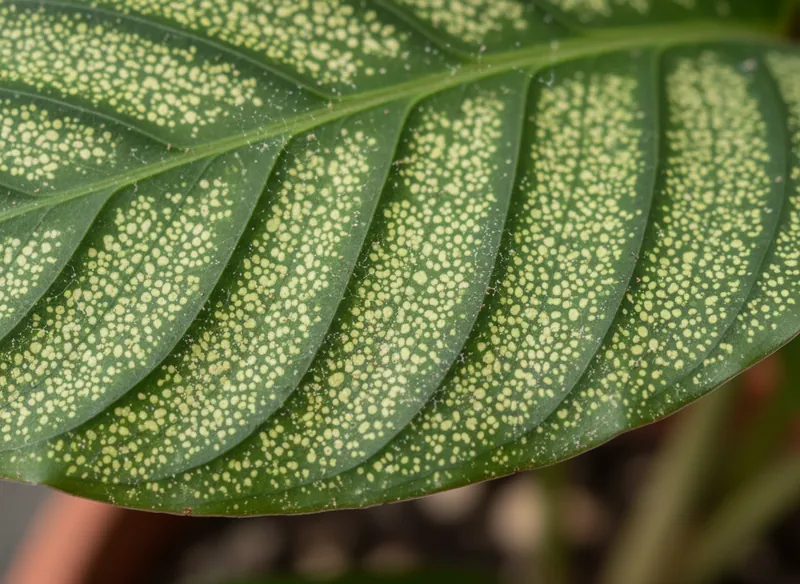
- Many tiny white or yellow dots, 1 mm (about 0.04 in) across, on upper leaf surfaces.
- Wedge-shaped insects, 3 to 15 mm (about 0.12 to 0.6 in) long, often under leaves, that jump or fly quickly at the slightest touch.
- Fine, white, translucent shed skins, or exuviae, under leaves.
- General weakening and discolored foliage without fine webbing.
What you may notice
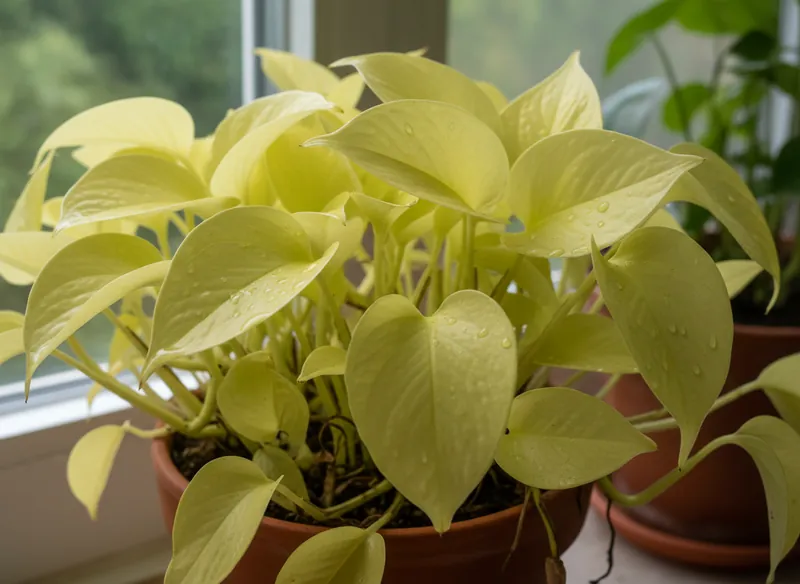
- General leaf yellowing · Pale yellow discoloration spreads through the foliage, often affecting the oldest leaves first.
- Yellow stippling and fine webbing · Tiny yellow or white dots cover leaves, giving them a speckled appearance, often accompanied by fine webs.
What to do now
Control leafhoppers
- Immediately isolate the infested plant. Place it far from others to prevent spread by jumping and flying adults.
- Shower your plant. Use room-temperature water to dislodge as many nymphs and adults as possible, focusing on leaf undersides.
- Prepare a black soap solution. Mix 15 mL (about 1 US tbsp) of liquid black soap into 1 liter (about 1.06 US qt) of lukewarm water. Black soap kills insects by contact, blocking their breathing openings.
- Spray the solution generously over the whole plant. Cover every surface: both sides of leaves, stems, and even the potting mix surface.
- Repeat the black soap treatment every 4 to 7 days for at least 3 weeks. This frequency is essential to eliminate new nymphs hatching from eggs protected inside plant tissue.
Prevention
- Carefully inspect every new plant before bringing it into your home.
- Check leaf undersides once a week when watering.
- Maintain good humidity, since leafhoppers often favor dry conditions.
- Place yellow sticky traps near susceptible plants to catch adults.