
Pests
Longhorn beetles
Beetles whose larvae tunnel inside stems.
Longhorn beetles are insects whose larvae develop by tunneling into the wood of stems and trunks to feed. This cuts the vessels carrying sap, interrupting the plant's supply of water and nutrients. An untreated infestation causes branch dieback and general weakening, and can kill parts of the plant above the tunnels.
Signs to check
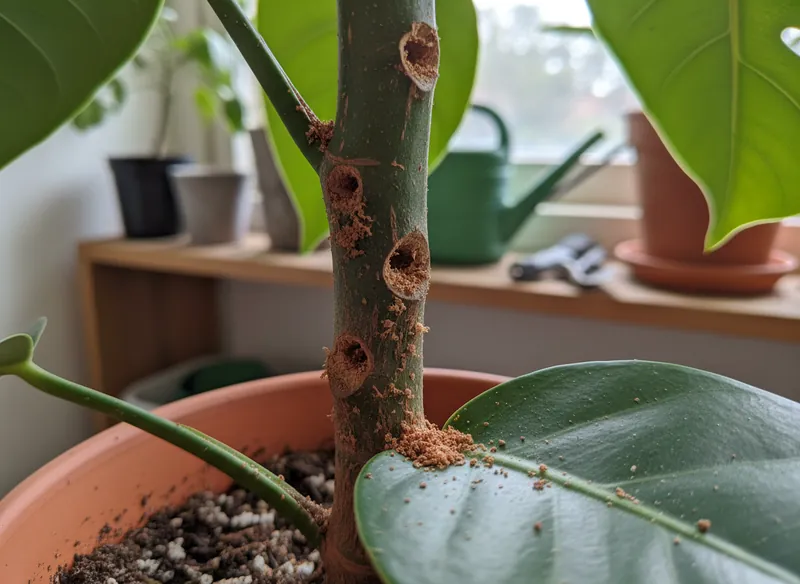
- Fine sawdust, called frass, at the plant's base or coming out of small stem holes.
- Round or oval exit holes in the bark, 2 to 12 mm (about 0.08 to 0.47 in) across.
- Sudden, unexplained dieback of one or more branches.
- Sap leakage and cracks or swellings in the bark around the attacked area.
What you may notice
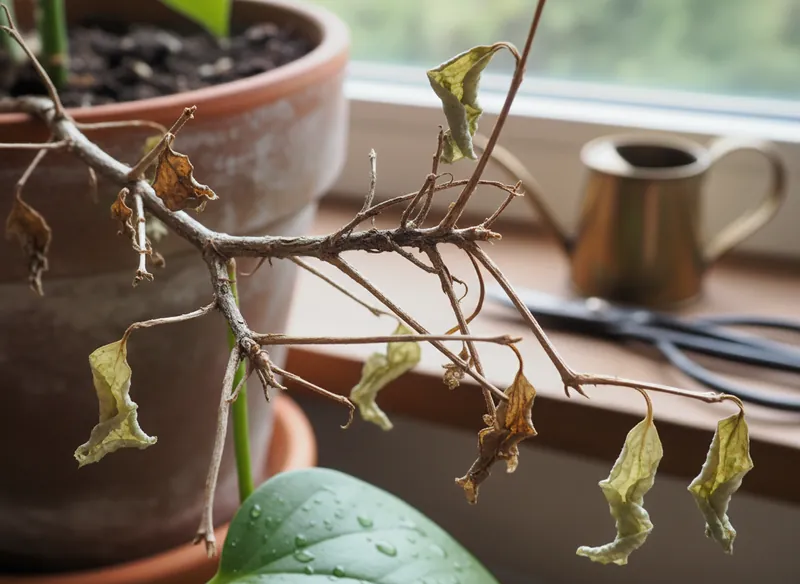
- Twig and stem dieback · Stem or twig tips turn brown, dry out, and gradually die back toward the plant's base.
- Holes and sawdust on stems · Round holes appear in stems or the trunk, often with fine wood dust accumulated at their openings.
What to do now
Sanitation pruning for longhorn beetle damage
- Identify affected branches precisely. Look for exit holes 4 to 10 mm (about 0.16 to 0.4 in) across, bark cracks, and piles of sawdust.
- Prepare your tools. Use a sharp saw or loppers and disinfect the blade with 70% alcohol to avoid spreading disease.
- Cut the infested branch at least 10 to 15 cm (about 4 to 6 in) below the last visible hole or tunnel sign. This safety margin is crucial to remove the entire larva and its tunnel.
- Examine the cut. The wood should be completely healthy, with no tunnels or abnormal discoloration. If a tunnel remains, cut farther down until you reach clean wood.
- Destroy the cut branches immediately. Never compost them or store them nearby. The best option is to burn them or shred them finely to kill all remaining larvae.
Prevention
- Inspect the trunk and main branches twice a year, in spring and fall where these are distinct local seasons.
- Avoid injuring bark while mowing or maintaining the garden.
- Keep the plant healthy with suitable watering and fertilizer to increase its resistance.
- Promptly remove dead or declining wood that attracts egg-laying females.