
Pests
Flea beetles
Small jumping beetles that make many holes in leaves.
Flea beetles are small jumping beetles, 2 to 5 mm (about 0.08 to 0.2 in) long, that feed on leaf tissue. As they chew through the leaf blade, they make many small round holes, giving foliage a peppered appearance, as if hit by fine hail. A heavy infestation weakens the plant by reducing photosynthesis, slows growth, and can kill young seedlings.
Signs to check
- Many small round holes, 1 to 3 mm (about 0.04 to 0.12 in) across, giving leaves a shot-hole appearance.
- Small beetles, 2 to 5 mm (about 0.08 to 0.2 in) long, often dark and shiny, that jump quickly when the plant is touched.
- Leaf edges may also be chewed into scallops.
- Increased activity in hot, dry weather.
What you may notice
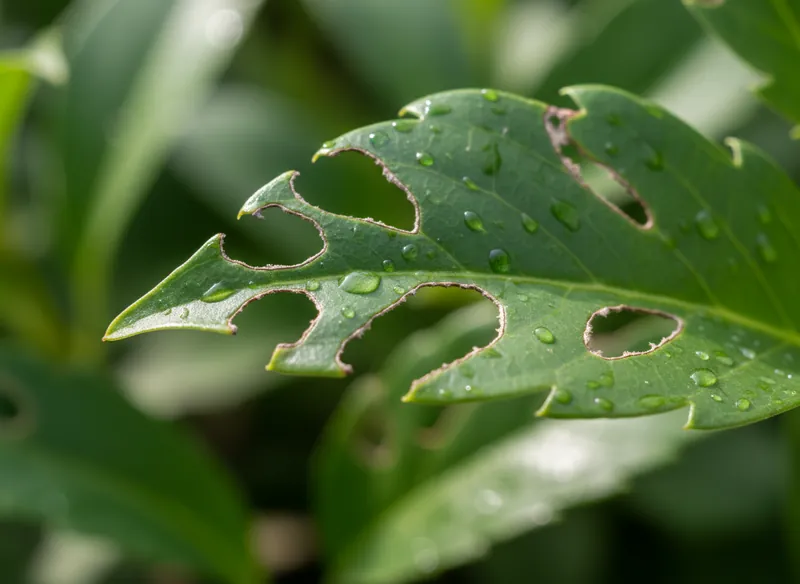
- Scalloped leaf edges · Regular, clean semicircular cuts appear around the leaf edge, as though punched out.
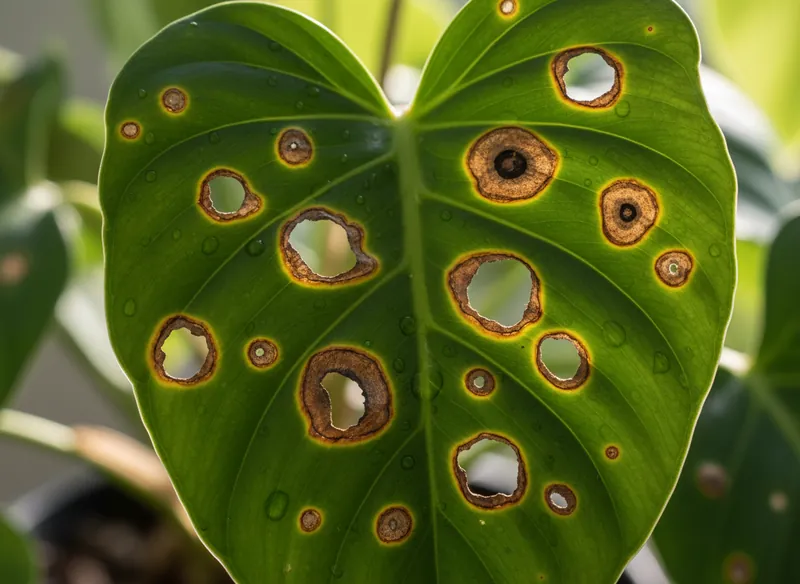
- Leaves riddled with holes · Small circular spots dry out and fall away, leaving clean holes and a shot-hole appearance.
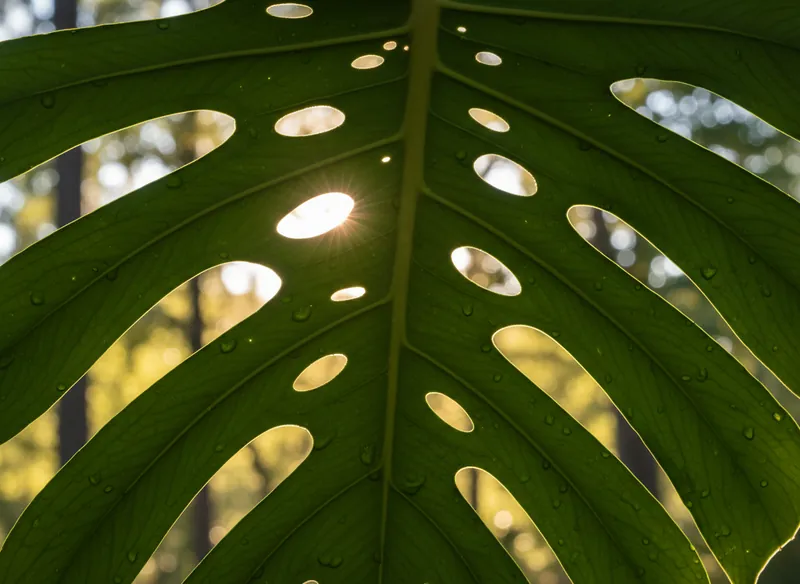
- Clean holes in leaves · Round or oval holes with clean edges appear in leaf blades, without discoloration around them.
What to do now
Install an insect barrier
- Choose fine-mesh insect netting. A 0.8 × 0.8 mm (about 0.031 × 0.031 in) mesh works against most weevils and larger flea beetles. For the smallest flea beetles, choose 0.4 × 0.6 mm (about 0.016 × 0.024 in) mesh.
- Cut a piece large enough to enclose the entire plant and pot, leaving 15 to 20 cm (about 6 to 8 in) extra for closing it.
- Gently drape the netting over the plant. Avoid pressing it tightly against leaves so air can circulate.
- Gather the extra fabric around the base of the pot, below the rim.
- Secure the netting firmly with string or a large rubber band. Make sure there are no gaps where an insect could slip in underneath.
- Inspect the setup weekly for tears or openings.
Prevention
- Carefully inspect every new plant, especially leaf undersides and the potting mix surface.
- Always quarantine new plants for 2 to 3 weeks away from others.
- Remove dead leaves and debris from the pot surface, where adults may shelter.