
Stable cultivar
Raven ZZ plant care
Zamioculcas zamiifolia ‘Raven / Dowon’
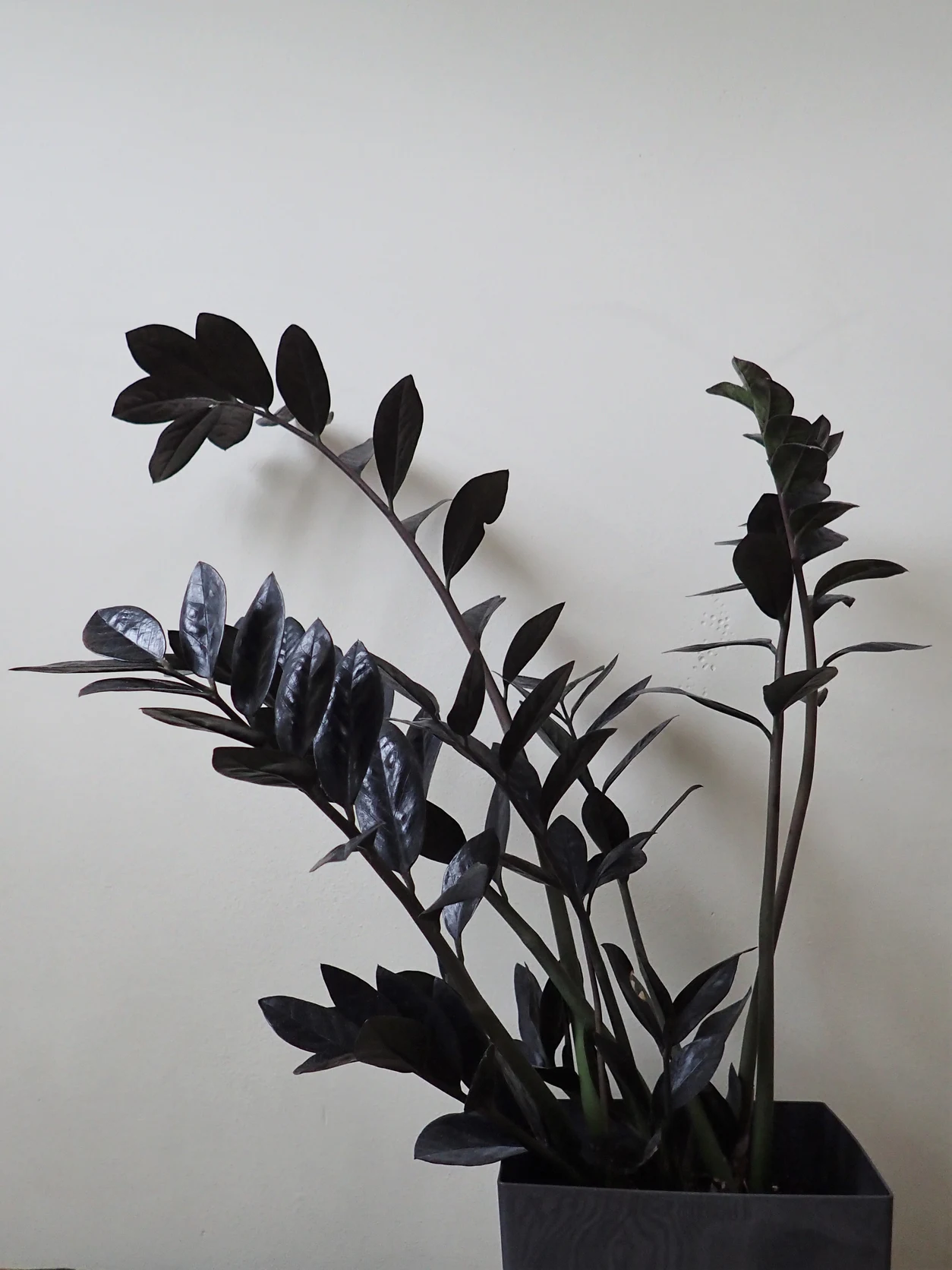
Choose Raven for its almost black leaves and upright habit. New leaves emerge green before darkening, even in shade. This ZZ can reach a meter: allow floor space rather than choosing it as a miniature.
What changes
How to recognize Raven
Choose a plant labeled Raven or 'Dowon': its mature leaves turn very dark purple, almost black. Raven ZZ (Zamioculcas zamiifolia 'Dowon') is a color selection of the ZZ plant. 12
The petiole and rachis can also become almost black at maturity. The color change therefore affects the whole leaf, whereas the ordinary ZZ plant keeps green leaf stalks. 3
Recognizing Raven and choosing where to display it
| Feature | What it changes |
|---|---|
| Green young leaves | The contrast with mature leaves is normal 1 |
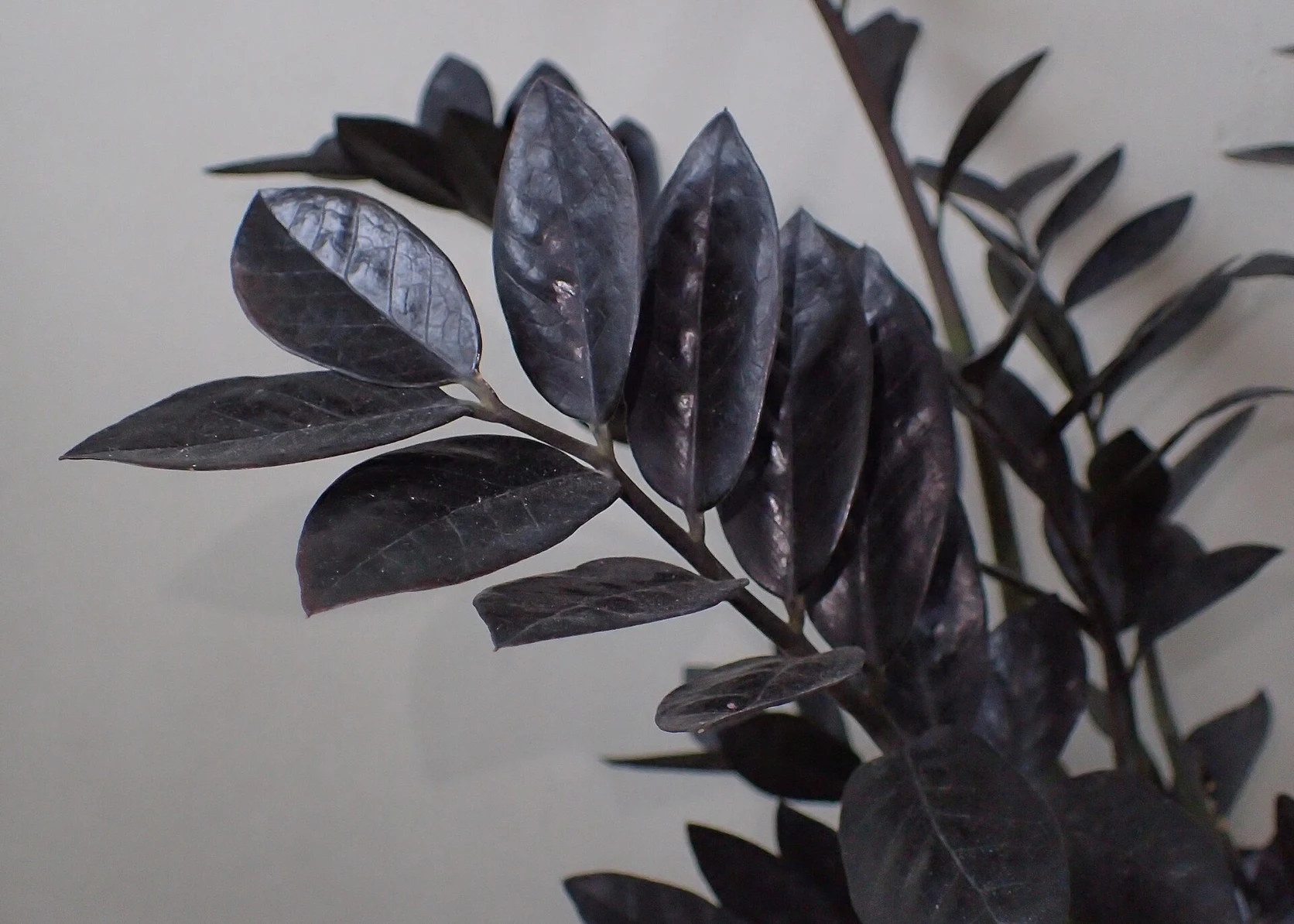
| Dark leaf axes and leaflets at maturity | The whole outline takes on an almost black color 3 |
| Glossy elliptical leaflets without variegation | Choose for uniformly dark foliage 4 |
| Upright, spreading habit | Leave space around the stiff leaves 3 |
How much room does Raven need
Allow up to 1 m (about 3 ft 3 in) in height and width: Raven needs a position where its clump can spread. 2 It differs from compact selections: in the variety trial, 'Dowon' was taller than 'Heemsprix' and bore about sixteen leaflets per leaf, compared with ten on that comparator. 4
Compared with another dark ZZ, 'Dark Zamicro', Raven is more vigorous, with larger leaflets. 3
Where to put Raven while its leaves darken
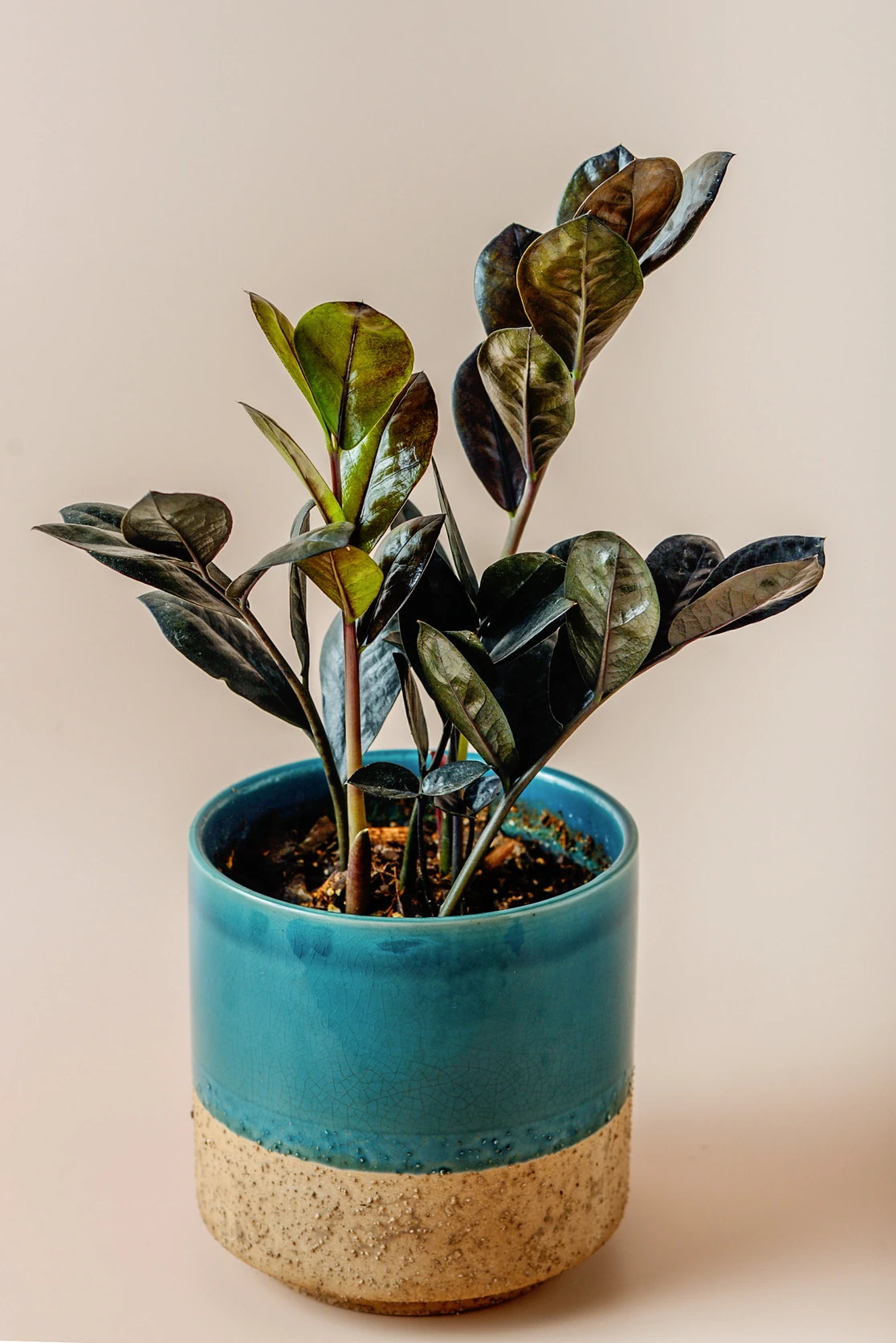
Keep it in indirect light: new leaves can darken even in shade. Their initial green gradually becomes olive green, then dark. Darker patches can appear during this transition. 53
Young foliage turns from green to dark in six to eight weeks, even in shade. 5 The patent summary also describes a transition in one to two months. Its photographic series follows a slower maturation: the leaf in figure 5 becomes entirely black around twelve months after emerging. These timings describe distinct observations. 3
A firm, green young leaf calls for patience. A bleached or brown patch after direct sun, however, calls for moving the pot out of the rays. 1 Choose a window using the ZZ plant light guidelines.
How often to water Raven
Wait until the entire root ball is dry: for Raven, allow roughly two waterings a month in summer and one in winter, postponing watering if the potting mix is still damp. 1 After moistening the mix, check the saucer after 15 minutes and remove the drainage water. 6
17 cL every 16 days
After the potting mix has dried completely
About twice a month, after complete drying
About once a month, if the potting mix is dry
What temperature and humidity Raven needs
Keep Raven between 15 and 24 °C, away from cold drafts; ordinary household humidity is enough. 7 Skip misting: ZZ plants do not need it. 6
When to repot Raven
Wait until the roots are crowded, generally two to three years, then choose a free-draining mix and a pot with drainage holes that is only slightly wider. 7 Follow the steps for unpotting and repotting a ZZ plant when the root ball runs out of room.
How to keep Raven's traits when propagating it
A leaflet cutting reproduces the dark character of 'Dowon', but new leaves start green. This behavior persists through the generations of cuttings observed in the cultivar. 3 A green shoot from a dark leaflet can therefore still develop its mature color.
Division is also possible with Raven. 2 The ZZ propagation method explains the handling, growing medium and wait for a rhizome to form.
Which fertilizer and leaf care Raven needs
Limit balanced liquid fertilizer to one or two feeds a year, during Raven's growth. 1 To maintain its shape, remove only yellow or damaged leaves with clean scissors; keep the green young leaves that will develop their dark color. 71
Black or damaged leaves: what to check on Raven
A leaf that darkens while staying firm is developing Raven's color. The change from green through olive to black can produce uneven patches before the leaf darkens completely. 3
Yellowing in a damp pot or a soft base calls for a root check, because excess water encourages rot. 6 Use the ZZ plant diagnostic table to distinguish these signs from a maturing leaf.
Raven's care calendar
From April to September, in a northern-hemisphere home, time Raven's infrequent feeds to coincide with growth. 7 If it has spent summer outdoors in shade, bring it in before nights fall below about 16 °C. 1
| Task | January | February | March | April | May | June | July | August | September | October | November | December |
|---|---|---|---|---|---|---|---|---|---|---|---|---|
| Watering | high | high | high | high | high | high | high | high | high | high | high | high |
| Growth | resting | resting | resting | resting | resting | resting | resting | resting | resting | resting | resting | resting |
| Feeding | no | no | no | yes | no | no | no | no | yes | no | no | no |
| Repotting | no | no | favorable window | favorable window | favorable window | no | no | no | no | no | no | no |
Frequently asked questions
Are dark patches on a young Raven leaf normal?
Yes, if they accompany the change from green to black on a healthy leaf. Maturation can pass through olive-green and almost black areas before the color becomes uniform. 3 Soft tissue or deterioration at the base points instead to the species diagnosis.