
Care guide
Snake plant care
Dracaena trifasciata
A snake plant can live for years with one rule: let the potting mix dry before watering again. Give it a bright room, shelter from scorching midday sun and a pot with drainage holes that fits its roots. In winter, it uses very little water. Keep its leaves out of reach of children and pets.
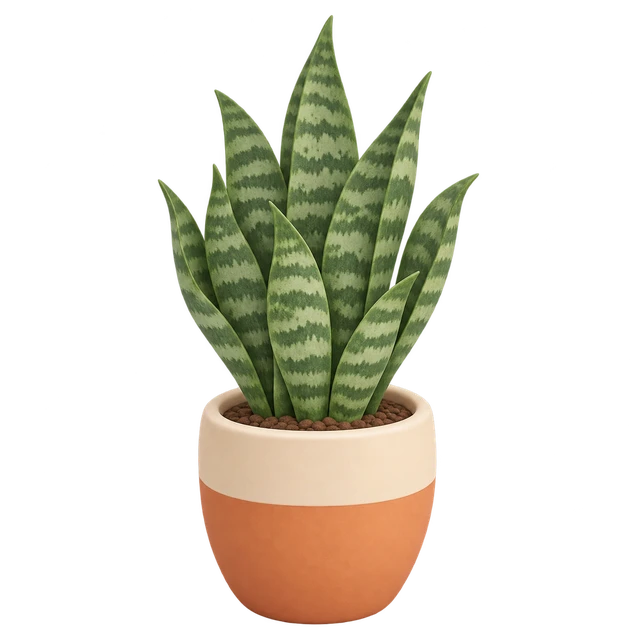
How often should you water a snake plant?
Wait until the potting mix has dried before watering, then empty the saucer. Snake plant (Dracaena trifasciata) stores water in its fleshy leaves; its roots suffer most in a mix that stays wet1. Letting it dry fully between waterings is the simplest guide for an established potted plant2.
17 cL every 24 days
Water only once the potting mix is dry
Water once every one to two months
Push a finger into the potting mix and lift the pot: if the soil is still damp, put off watering. The weight helps you track drying from one check to the next. Soil that feels dry on top can still hold water lower down. Check the bottom of the decorative outer pot too, where forgotten water keeps the roots wet1.
Watering an established snake plant: adjust these guidelines to how quickly the pot dries.
| Season or sign | Guideline | What to do |
|---|---|---|
| Spring and summer | Let the soil dry between waterings2 | Water the soil, then let it drain |
| Winter | Roughly one watering every one to two months3 | Check the pot before watering again |
| Winter, wrinkling leaves | Minimal watering to maintain the leaves2 | Confirm that the soil is dry |
| Soft leaf, damp soil | Possible overwatering and damaged roots4 | Examine the rootball |
The calculator gives a Floralens estimate based on your pot and the season; checking the soil determines whether to water. In winter, the leaves supply some of the water the plant needs as its growth slows sharply1.
Water the soil and let it drain
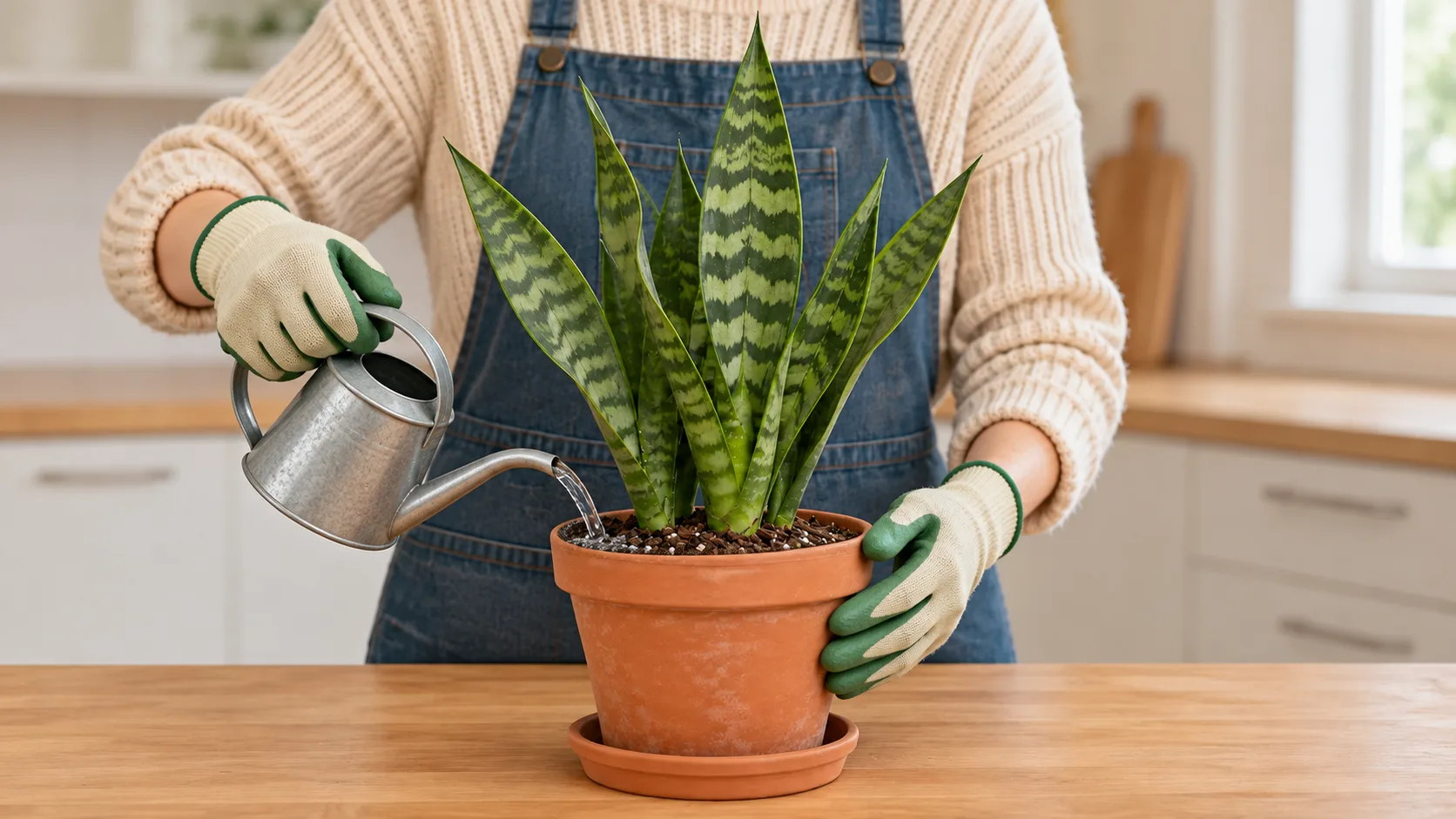
Water from above, at the base, keeping the centre of the rosette dry1. Let water escape through the drainage holes; return to empty the saucer after 15 minutes4. Then give the pot a quarter turn to spread the light exposure and reduce leaning towards the window1.
A small watering can with a narrow spout lets you reach the soil between the leaves. Lift the growing pot out of its decorative cover if water is hard to see inside. The plant watering advice helps you compare the needs of your different pots.
Where should you put a snake plant indoors?
Place it near a window in bright, filtered light, protected from midday sun in summer1. A sheer curtain filters scorching rays. Snake plant tolerates a dimmer spot, but its growth slows; it still needs moderate light to produce new leaves4.
Leaves can grow longer in shade and stay more compact in sun1. If they start bending, check both moisture in the pot and light levels. Damp soil points towards a root problem; a healthy clump kept far from a window benefits from a gradual move into brighter light4.
Acclimatise the leaves when moving the plant: a sudden move from shade into strong sun causes scorching4. If you take the pot outside for summer, start in a spot sheltered from scorching sun, then increase exposure gradually. The plant can also stay indoors all year1.
Choosing a variety for lower light
For a dimmer room, green ‘Hahnii’ is one suitable choice. ‘Moonshine’ survives there too, but its silver colour darkens faster; ‘Laurentii’ may lose its variegation156. Choose the variety for the appearance you want as well as its ability to survive in the spot.
What air humidity does a snake plant need?
Low humidity suits snake plant: save the mister for other plants. Avoid steamy bathrooms, maintain normal air circulation and keep the leaves away from cold draughts1.
Which soil should you use, and when should you repot?
Repot when the roots and rosettes fill the pot or start distorting it. A recently bought plant can stay in its container for several years if it is growing well1. The rhizome widens the clump sideways7.
- When to repot
- In springSource: Home - Snake Plant (Dracaena) - Research Guides at New York Botanical Garden
- The new pot
- 2,5 to 5 cm widerDiameter and depth <25 cm; increase ≤1/3Source: RHS
Choose a peat-free cactus and succulent potting mix. To make your own, combine two parts loam-based potting compost with one part fine horticultural grit1. Measure each part with the same container. Loam gives the mix weight; the mineral fraction helps maintain an airy structure around the roots.
Choosing the next pot size
Move up just one pot size: a large volume of soil without roots stays wet and encourages rot1. For containers under 25 cm (about 9.8 in) in diameter and depth, the general repotting guideline is an extra 2.5 to 5 cm (about 1 to 2 in) in width and depth, without exceeding one third more than the current pot8. For this plant, which likes a snug pot, use the smaller increase and fit it to the rootball.
A pot with drainage holes is essential. A decorative cover is an outer shell; you need to be able to lift out the growing pot for watering and draining1. Prepare the mix and new pot before removing the plant, in spring as growth resumes4.
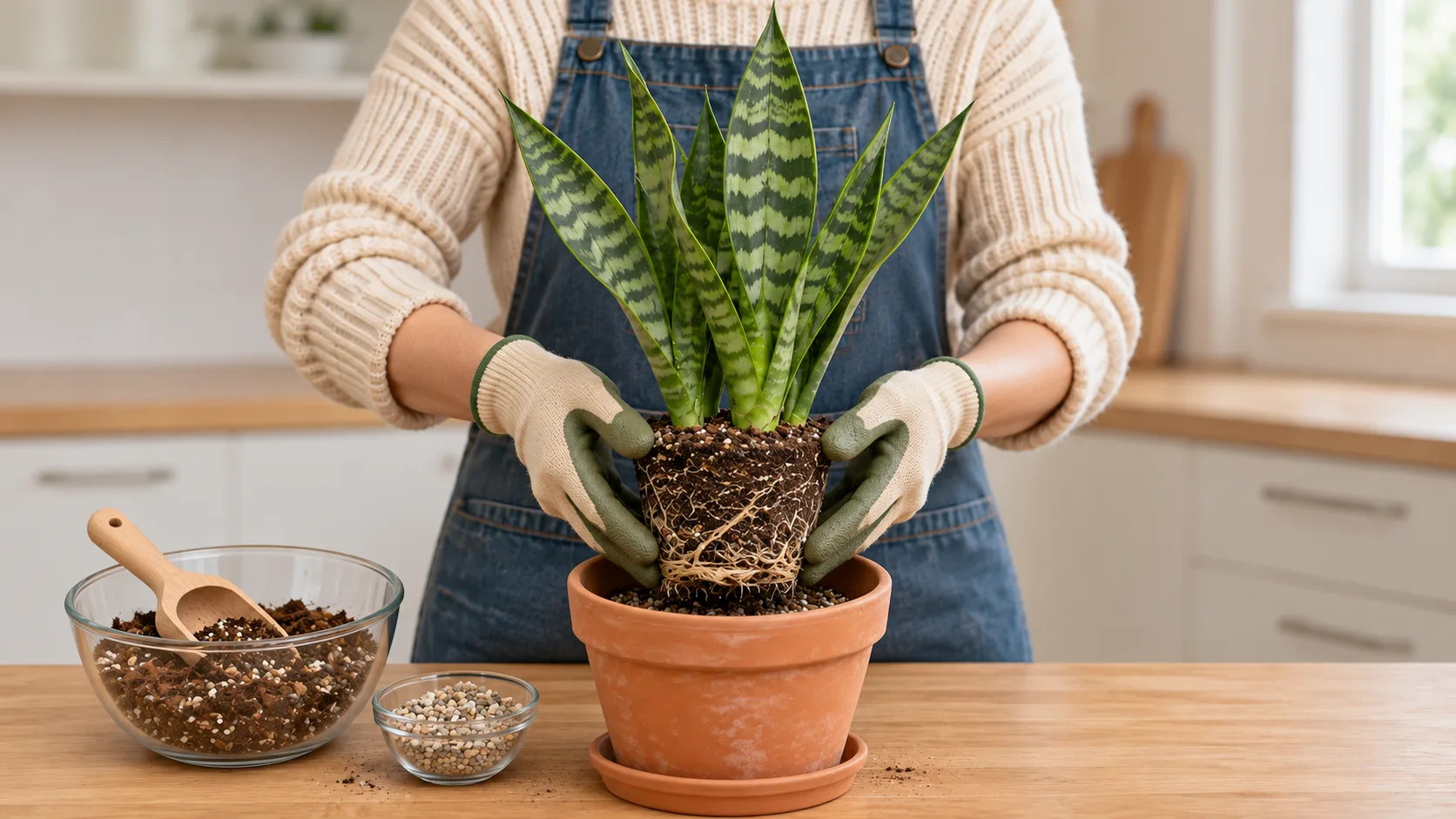
- Support the rootball as you lift out the plant, without pulling on the leaf tips.
- Examine the roots and remove soft or rotten sections8.
- Separate rooted offsets if you want to reduce the width of the clump; keep only healthy sections1.
- Set the rootball in the free-draining mix, then resume watering according to how quickly it dries1.
The repotting guide explains how to judge whether roots have filled a pot. If the clump still has room, replacing a little of the surface compost lets you wait; work around the rosettes without damaging the rhizomes4.
Which fertiliser should you give a snake plant?
Apply liquid fertiliser once a month during growth, from April to September in a northern temperate growing season. A houseplant or cactus fertiliser from a garden centre is suitable1. Dilute a conventional liquid feed to half the usual concentration; follow the directions for your chosen product4.
- Feeding
- April to Septemberin a potSource: How to grow sansevierias / RHS Growing Guide
- No fertilizer
- During dormancySource: Home - Snake Plant (Dracaena) - Research Guides at New York Botanical Garden
- Frequency
- Once a month, at half strengthin a potSource: Home - Snake Plant (Dracaena) - Research Guides at New York Botanical Garden
Stop feeding during winter rest4. A plant stalled in a dark corner needs more light before extra nutrients. Growth is naturally slow: if you want a tall plant from the start, choose one that is already well grown1. The fertilising advice helps distinguish feeding frequency from dilution.
Does a snake plant need pruning?
Remove damaged leaves at their base and keep healthy ones. Each leaf can live for several years; the clump thickens through offsets rather than shaping cuts1. Wear gloves, because the sap irritates skin1.
To rejuvenate a badly damaged plant, cut back gradually: remove no more than a quarter of the total leaf area at a time, preferably in spring. Wait for new leaves before continuing4. A spent flower stalk can also be cut at its base1.
An isolated leaf bending in a dark spot may lack support; a whole clump tipping over calls for a root check1. Correct the cause before making further cuts. The pruning advice helps you choose between removing damaged growth and reducing a plant's size.
What temperature does a snake plant need in winter?
Aim for a room at 15 to 24 °C, away from radiators and cold draughts1. The French horticultural society SNHF recommends keeping snake plants above 15 °C in winter9. A cool conservatory used for Mediterranean plants can therefore be too cold for this tropical houseplant.
The minimum growing temperature of about 13 °C given by the New York Botanical Garden is a precautionary limit, separate from the comfortable range. Winter draughts can cause rot and sudden collapse4. Keep the pot away from icy glass and move it when airing the room.
How tall does a snake plant grow?
Allow headroom for an upright form reaching 1 to 1.5 m (about 3.3 to 4.9 ft), with a horticultural spread of 0.1 to 0.5 m (about 3.9 to 19.7 in). It reaches maturity in 5 to 10 years10. Dwarf forms have a very different outline: choose a named cultivar from the start if you want to fill a low shelf.
- Mature height
- 1 to 1,5 m
- Spread
- 10 to 50 cm
- Growth
- Slow; clumps spread through rhizomes
The clump spreads through rhizomes and lateral offsets7. Division reduces its width while each cultivar keeps its growth habit. ‘Golden Hahnii’ reaches 10 to 15 cm (about 3.9 to 5.9 in); ‘Laurentii’ has long, upright leaves1112.
The month-by-month care calendar
Propagate from March to May and feed from April to September if your growing season follows a northern temperate calendar, always making watering depend on dry soil1. In France, snake plants generally grow from March to early October9.
| Task | January | February | March | April | May | June | July | August | September | October | November | December |
|---|---|---|---|---|---|---|---|---|---|---|---|---|
| Watering | reduced | reduced | high | high | high | high | high | high | high | high | reduced | reduced |
| Growth | resting | resting | resting | active | active | active | active | active | active | resting | resting | resting |
| Feeding | no | no | no | yes | yes | yes | yes | yes | yes | no | no | no |
| Repotting | no | no | favorable window | favorable window | favorable window | no | no | no | no | no | no | no |
In spring, check how tightly the pot is filled before planning to repot. In summer, watch sunlight through the glass and the drying mix. In autumn, bring an outdoor pot inside and reduce watering as growth slows. Winter brings the greatest risks of persistently wet soil and cold draughts14.
How do you propagate a snake plant without losing its colour?
Divide rooted offsets to preserve a cultivar. In ‘Laurentii’, a leaf cutting loses the yellow margins; in ‘Moonshine’, it can produce a ‘Robusta’-type plant135. Division keeps a rosette with its tissues and roots.
- Leaf cutting
- March to MaySource: How to grow sansevierias / RHS Growing Guide
- Division
- March to MaySource: How to grow sansevierias / RHS Growing Guide
Separating a rosette in spring
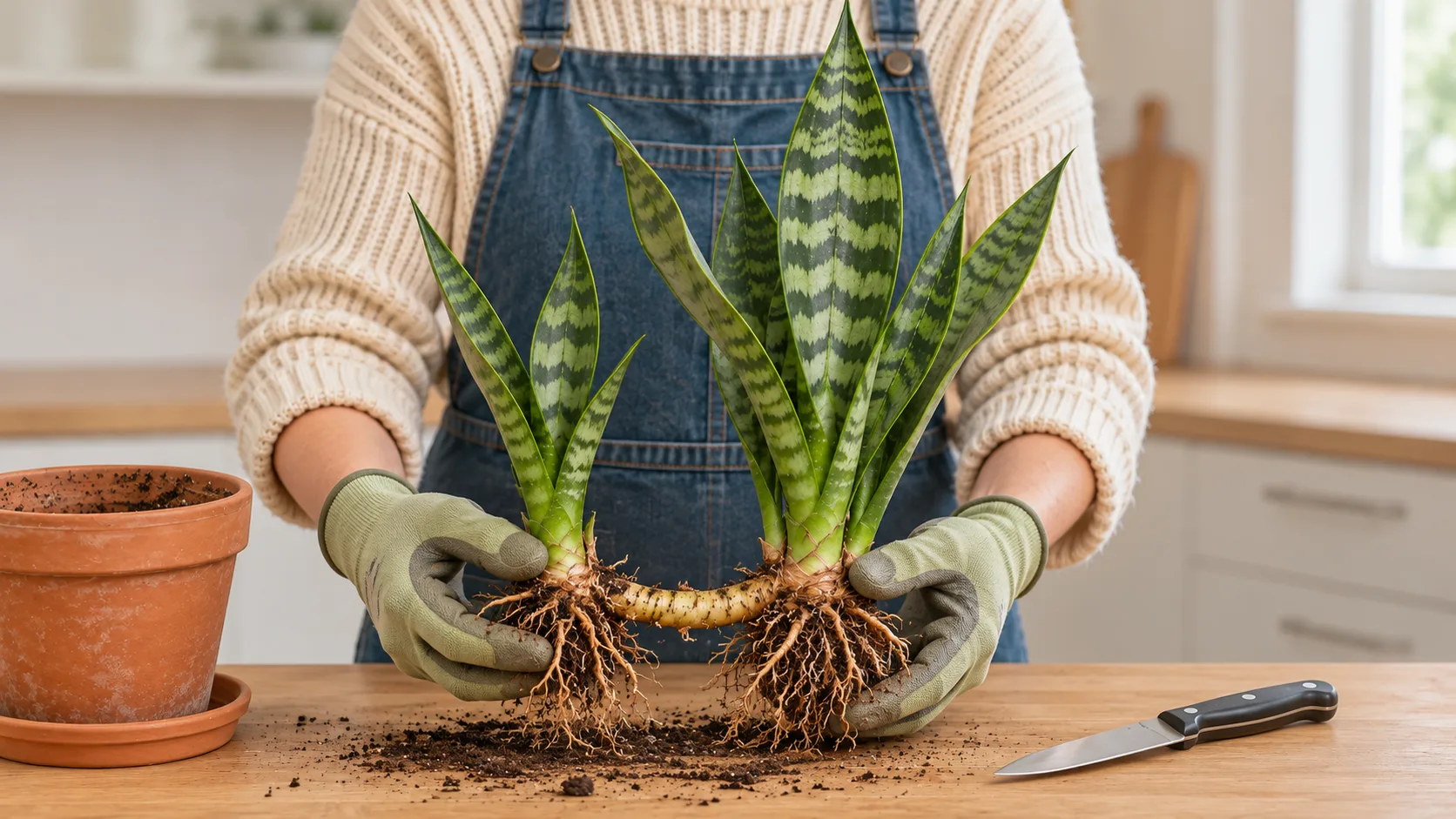
Remove the plant from its pot between March and May in a northern temperate spring, then find a well-rooted offset. Separate it by hand, or use a clean blade if the rhizome resists. Keep healthy sections and plant each division in a pot fitted to its roots; several small offsets can be grouped to form a clump1.
An offset with four or five leaves and its own roots is easier to establish than a fragment without roots. For a rootless piece, let the wound dry for several days, then treat it as a cutting in warmth and indirect light4.
Taking a green leaf cutting
Take a healthy, mature leaf, cut it at the base, then into 5 cm (about 2 in) sections. Keep track of their orientation and let the cuts dry for one to two days. Insert half of each section, basal end down, into moist propagation mix1. An upside-down section roots poorly: the basal end must be buried14.
Use peat-free propagation compost or equal parts loam-based potting compost and horticultural grit. Bottom heat of 18 °C helps rooting1. Keep the mix slightly damp while roots form, avoiding waterlogging.
A method using longer sections produces plantlets at around two months13. Give the first buds time rather than repeatedly lifting the sections. The propagation methods explain the differences between leaf cuttings and division.
Common problems: diagnosis
Feel the soil and examine the base before watering a soft leaf again. Excess water rots the roots; too little light can also make the leaves bend4.
Snake plant problems: what you see, the likely cause and the first action to take.
| What you see | Cause to check | First action |
|---|---|---|
| Clump tipping over, wet soil | Root rot1 | Empty the outer pot and lift out the plant to examine its roots |
| Wrinkled leaves, dry soil | Water reserves depleted2 | Water the soil, then drain |
| A few long leaves bending in a dark spot | Insufficient light1 | Move gradually closer to a window |
| Discolouration after a sudden move into sun | Scorching4 | Filter scorching sunlight |
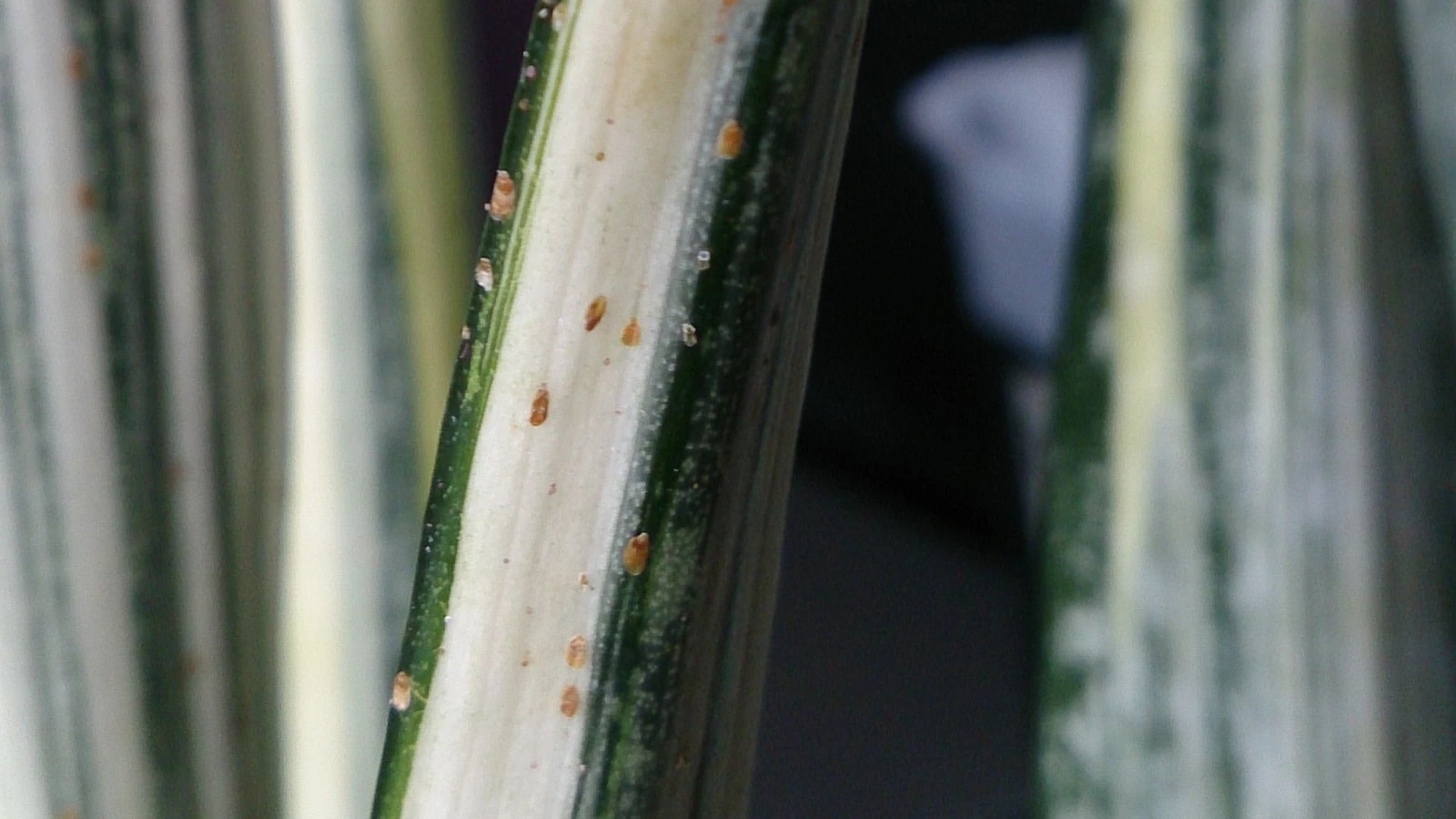
| Small brown bumps attached to a leaf | Scale insects15 | Isolate the pot and inspect nearby leaves16 |
| White cottony clusters at leaf bases | Mealybugs1 | Isolate the plant and inspect neighbouring rosettes |
| Pale speckling, fine webs, tiny mites beneath leaves | Spider mites17 | Move the pot away from other plants and confirm with a hand lens |
| Collapsed leaves, chewed roots | Vine weevil larvae1 | Inspect the rootball and fleshy roots |
Yellow leaves and soft roots
Lift the growing pot out of its decorative cover, then inspect the roots if the clump is coming loose. Remove soft or rotten roots and keep healthy sections when repotting81. A healthy side rosette can help you rebuild the plant. The overwatering diagnosis explains why wet soil can make leaves look thirsty.
Scale insects and mites
Inspect the gaps between leaves, where scale insects and mealybugs hide. For spider mites, look for pale speckling and fine webs, then check the undersides with a ×10 hand lens117. Isolate the affected plant, watch its neighbours and remove plant debris that can shelter pests16. This first step limits spread without continually wetting the rosettes.
A spotted leaf or a collapsing rosette? Take a photo: Floralens helps identify the problem before you change the care routine.
| What you see | Likely cause | What to do |
|---|---|---|
| Soil stays soggy, suffocating roots and causing rot. | OverwateringExternal Factors | Treating Waterlogged Soil |
| Small, immobile waxy shells (1–3 mm) on stems and leaves. | Armored ScalePests | Eliminate Armored Scale Insects |
Is snake plant toxic?
Keep it out of reach of children and animals. Its toxicity is rated as low severity; saponins can cause digestive upset318. After human ingestion in France, call a poison centre on 01 45 42 59 59; for an animal, call a vet19. See also the snake plant profile.
Which snake plant variety should you choose?
Choose for height and available light first, then leaf pattern. A dwarf rosette suits a low piece of furniture; an upright form needs room above the pot. Division preserves the features of ‘Laurentii’ and ‘Moonshine’135.
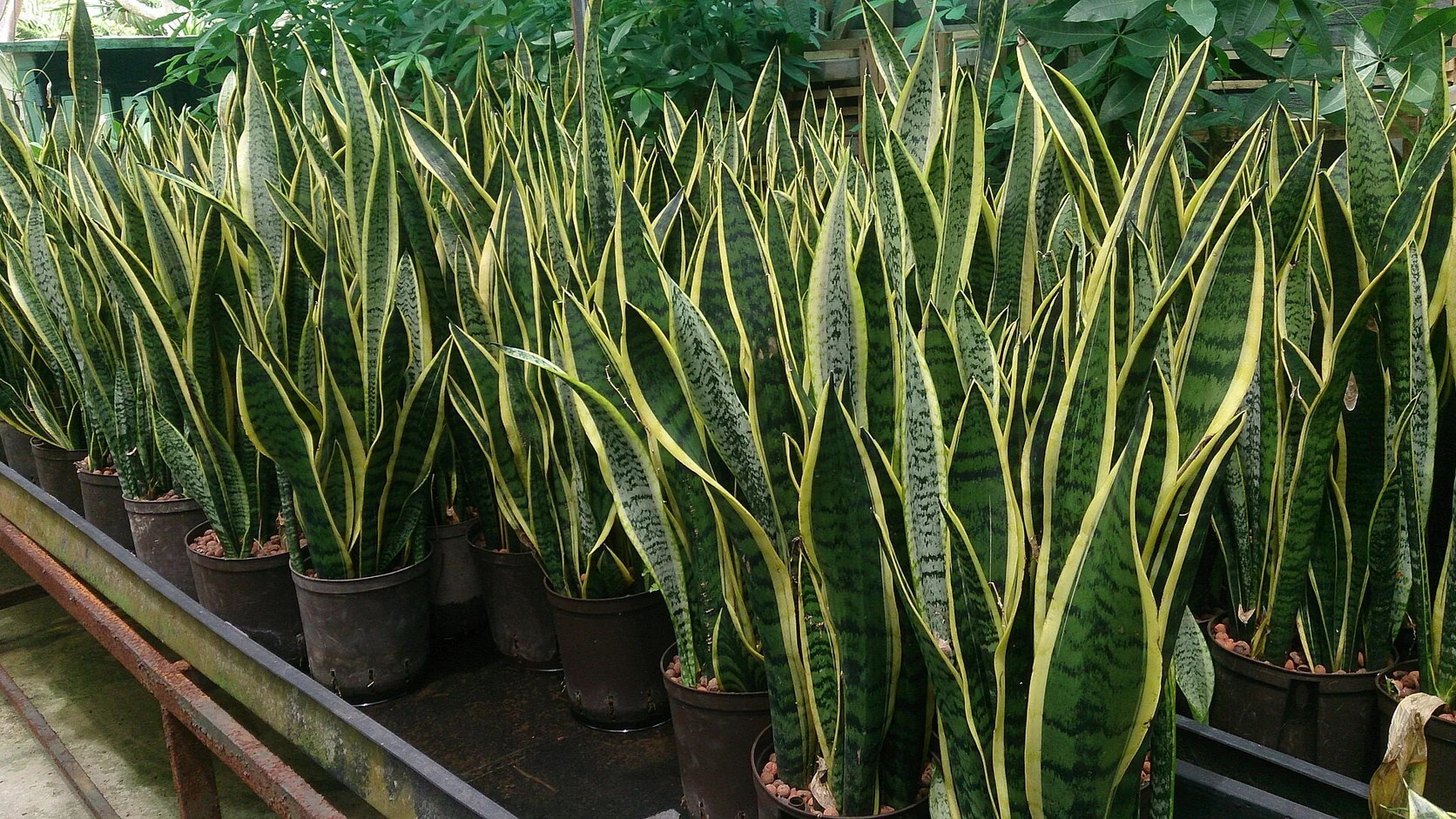
Stable cultivar
Upright, yellow-edged leaves; propagate by division to preserve these margins.
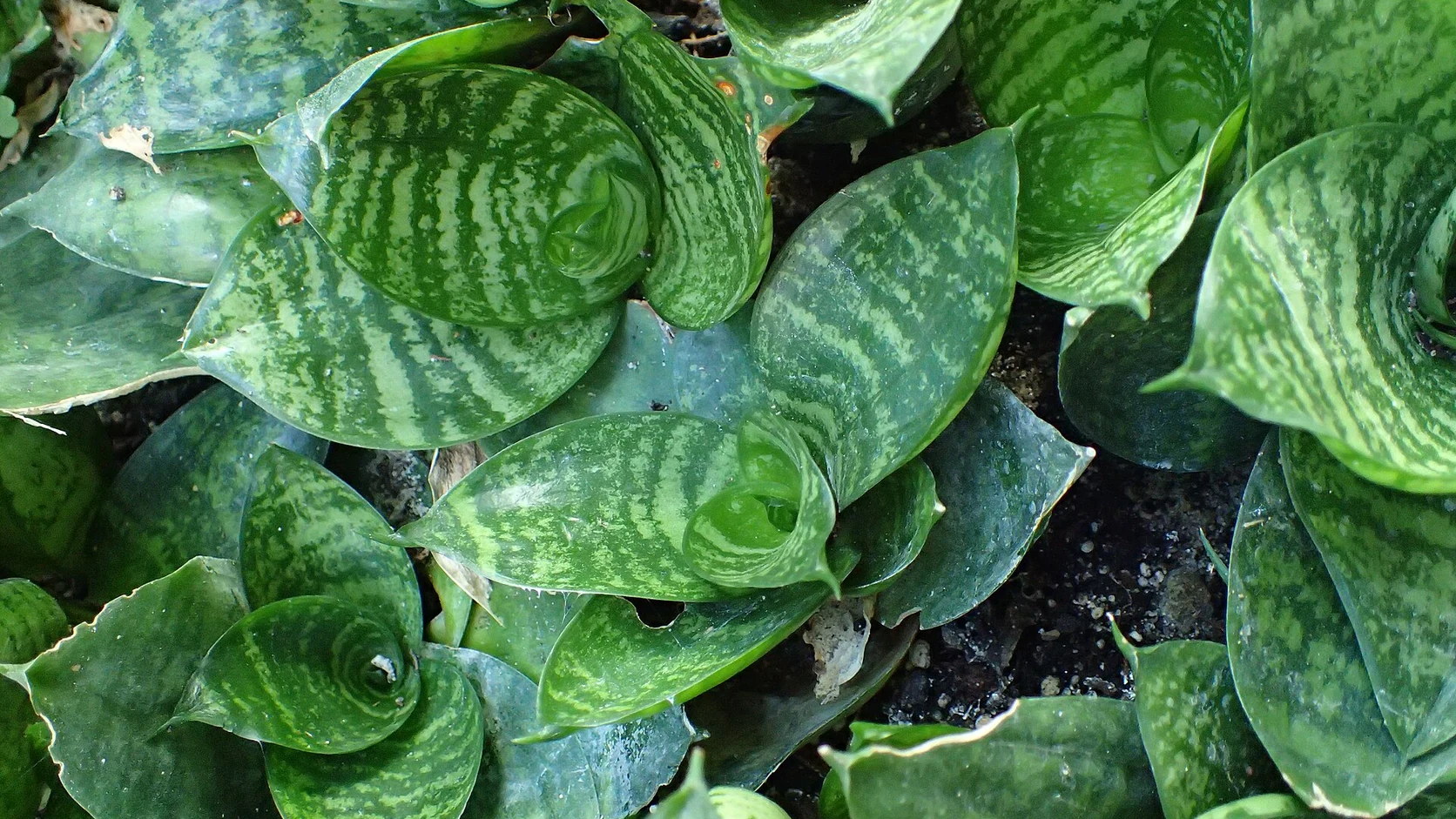
Stable cultivar
Compact bird’s nest rosette with silver crosswise bands.
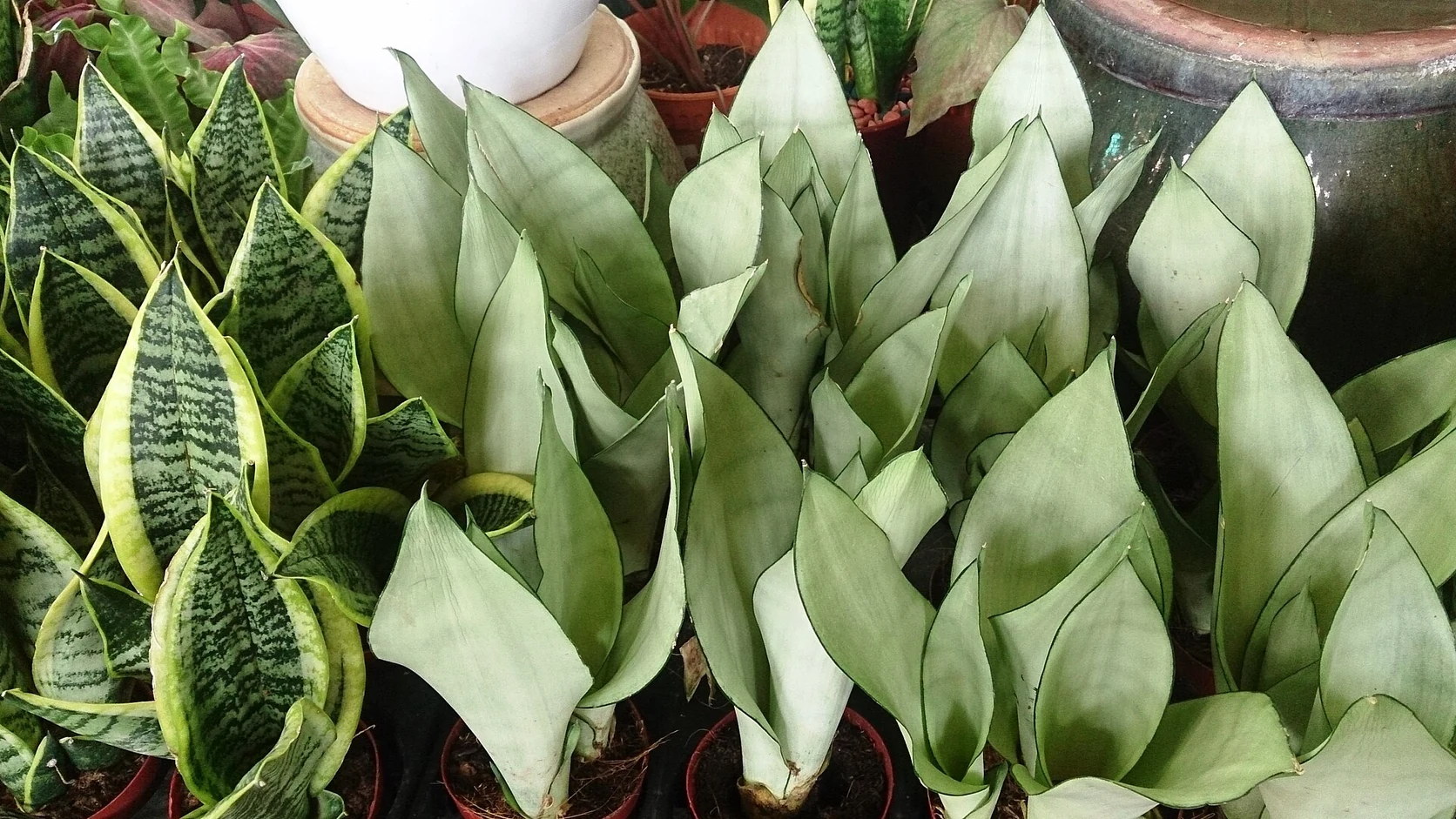
Stable cultivar
Upright silver leaves that darken with age, faster in low light; propagate by division.
Golden Hahnii
Stable cultivar
Dwarf grey-green rosette with golden margins, 10 to 15 cm (about 4–6 in) tall.
Bantel's Sensation
Stable cultivar
Narrow, dark green leaves with lengthwise cream stripes.
Black Coral
Horticultural name
Sales name for darker foliage; check the actual plant before buying.
1 more varieties documented in the botanical profile.
Snake plant varieties: useful differences to check before buying.
| Cultivar | Habit and foliage | Distinctive choice or care need |
|---|---|---|
| ‘Laurentii’ | Upright, up to 75 cm (about 29.5 in), with yellow margins12 | Bright light to preserve variegation; division to pass it on613 |
| ‘Hahnii’ | Low, dark green rosette with silver-grey stripes20 | For a small, dimmer space; water around the crown1 |
| ‘Golden Hahnii’ | Gold-edged rosette, 10 to 15 cm (about 3.9 to 5.9 in) tall11 | Keep the leaves dry: this form rots if they stay wet11 |
| ‘Bantel's Sensation’ | Narrow leaves with vertical cream stripes, up to 60 cm (about 23.6 in)21 | For a lengthwise pattern rather than a yellow border |
| ‘Moonshine’ | Upright silver leaves with a fine dark edge22 | Choose a bright spot: leaves darken faster in low light5 |
For a different shape with firm leaves and modest care needs, compare the ZZ plant. If you prefer a flowering clump, the peace lily has a different outline; check the soil of each pot separately.
Frequently asked questions
Keep healthy tips intact and give the plant enough light for strong growth.