Stable cultivar
Moonshine snake plant care
Dracaena trifasciata ‘Moonshine’
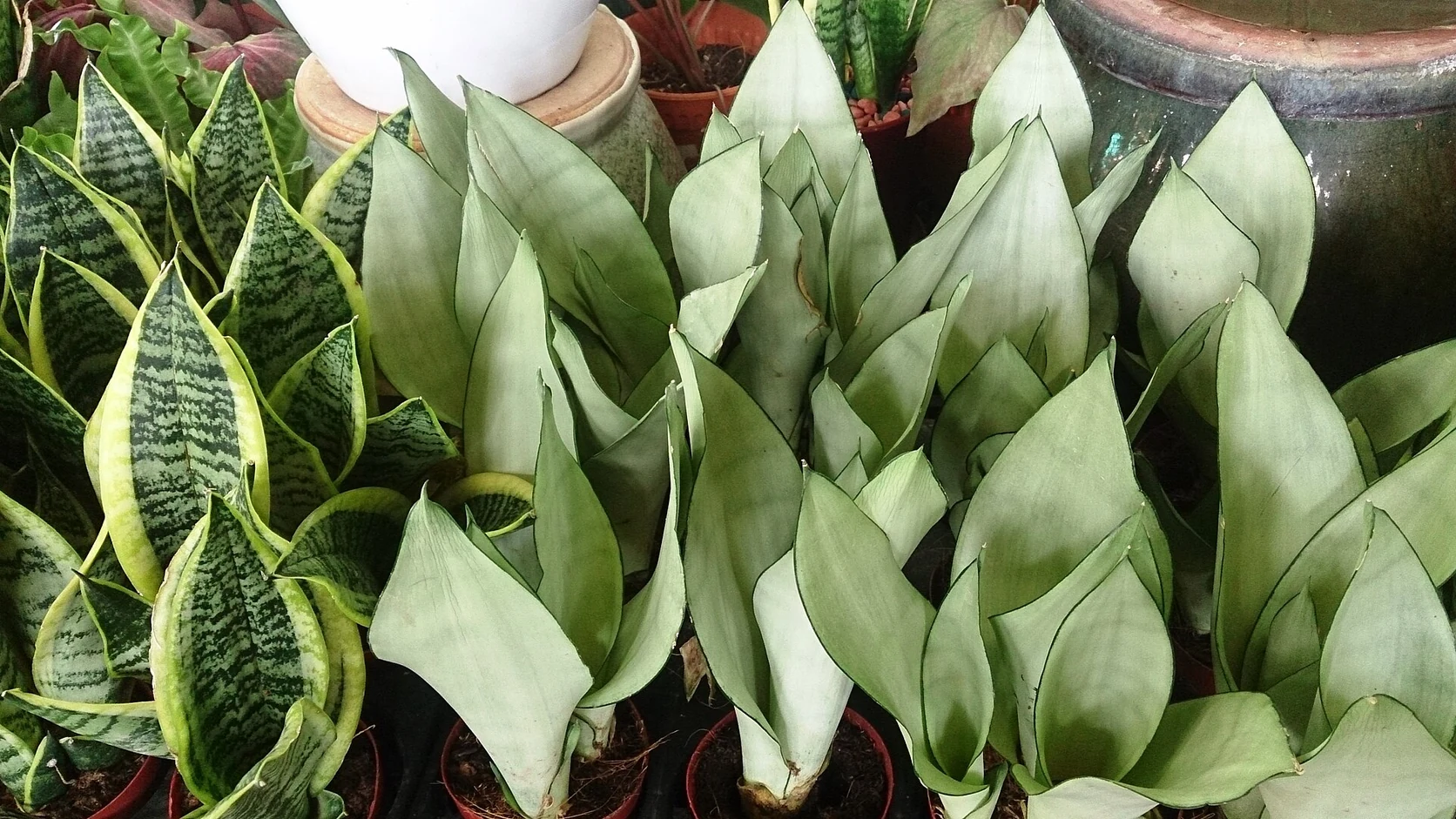
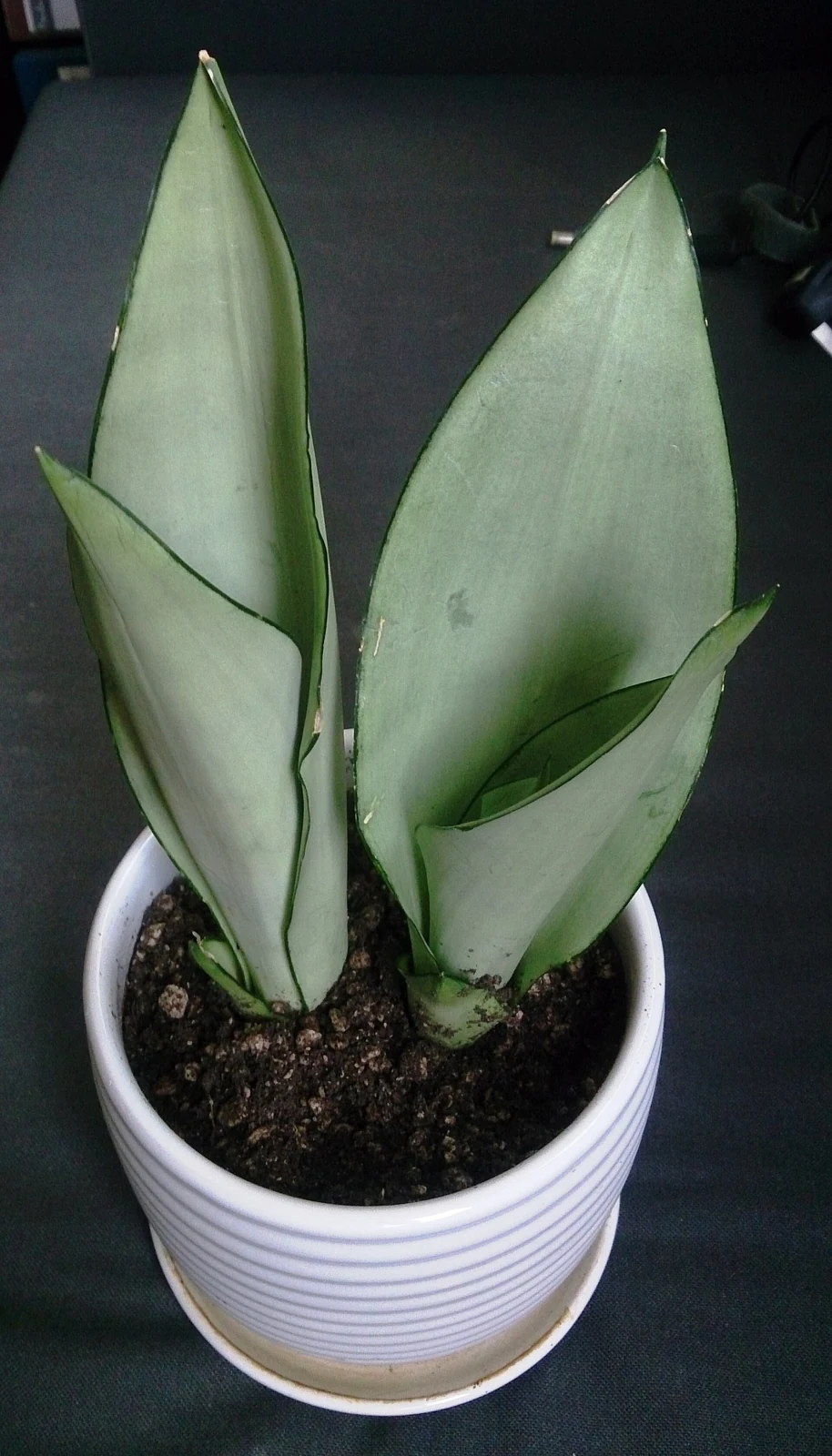
Moonshine snake plant stands out for its upright, silvery-green leaves with fine dark green edges. Its pale young leaves darken with age, faster when light is low. Division preserves its silver foliage.
- An upright form, 0.5 to 1 m (about 20–39 in) tall
- What changes
What changes
A silvery-green leaf blade
The pale silvery-green, lance-shaped leaves have a fine dark green edge and faint crosswise markings.1
An upright form, 0.5 to 1 m (about 20–39 in) tall
The plant reaches 0.5 to 1 m (about 20–39 in) tall, with a spread of 0.1 to 0.5 m (about 4–20 in).1
Young leaves are more silver
The silvery-green foliage naturally darkens with age; compare young and older leaves.2
Divide to preserve Moonshine
Leaf cuttings produce Robusta-type plants; rhizome divisions preserve Moonshine.2
Choosing Moonshine for its broad silver leaves
‘Moonshine’ forms an upright clump with broad, silvery-green leaves and fine dark green edges1. Its broader leaves and greater number of leaves per rosette give it a denser habit than the classic tall forms of Dracaena trifasciata2. When choosing a shelf or table, allow space for the whole clump as well as the pot.
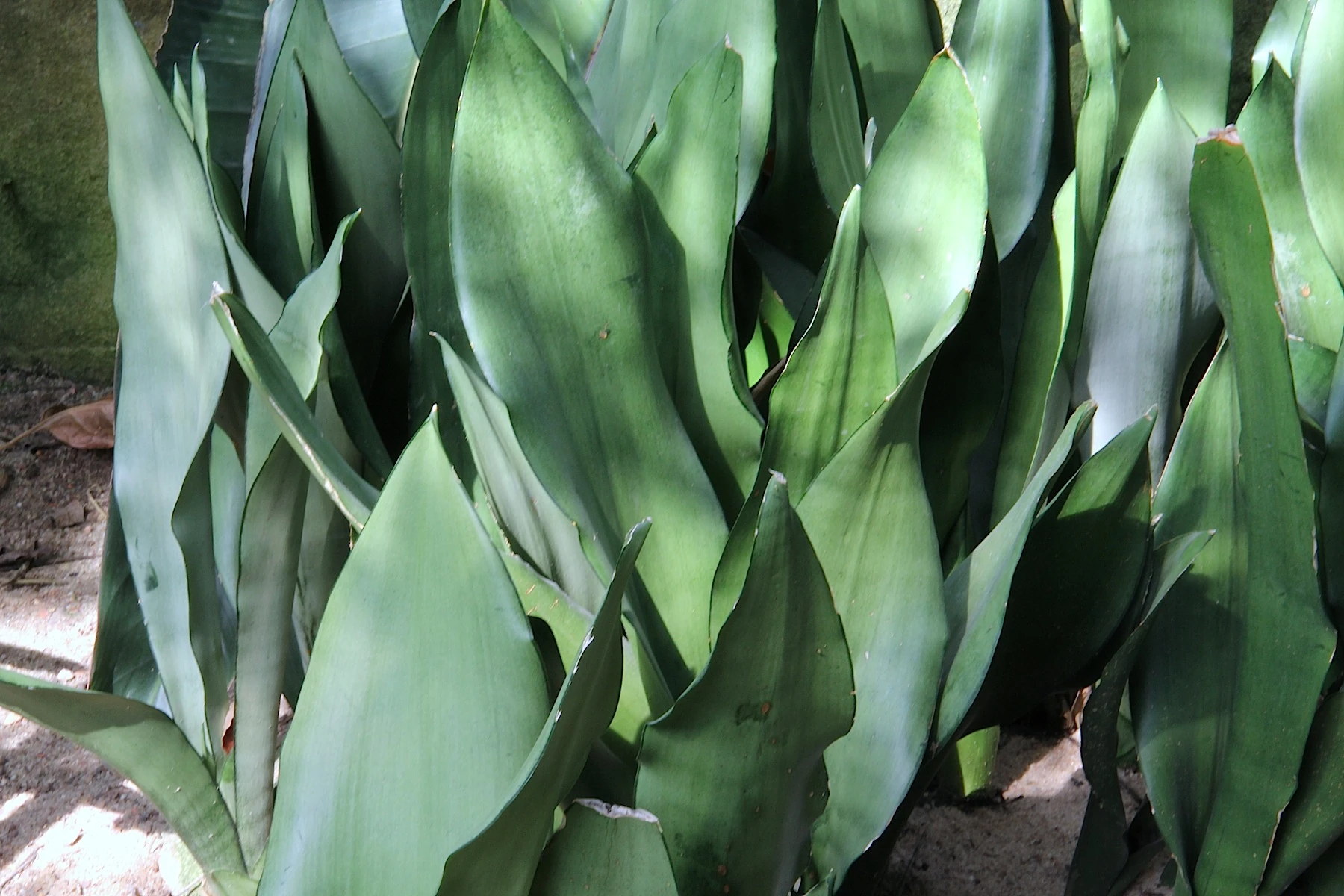
The horticultural range reaches 0.5 to 1 m (about 1.6 to 3.3 ft) tall, with 0.1 to 0.5 m (about 3.9 to 19.7 in) in spread1. Allow that space above and around the leaves. For a truly dwarf outline, bird’s nest ‘Hahnii’ is a better fit than a Moonshine you would need to shorten3.
‘Silver Moon’ is a synonym of ‘Moonshine’ in the RHS profile1. The name ‘Moonglow’ has also been used to market it2. Always compare the label with the broad silver leaves and their fine dark margins, especially on a plant whose older leaves have turned green.
For a different pale pattern, ‘Laurentii’ has yellow along the edges, around a mottled grey-green centre4. Choose Moonshine for the silver background of the leaf blade, rather than a coloured margin.
Why do Moonshine leaves turn green?
Young silver leaves darken as they age. This can be normal: compare new leaves at the centre with older ones before looking for a nutrient deficiency2. The dark edge and faint crosswise markings also belong to the cultivar1.
Low light speeds up greening2. Moonshine tolerates these conditions, but a bright spot better preserves its silver appearance. Give it bright, filtered light, protected from scorching midday sun in summer5. Acclimatise it gradually if it comes from a shaded shop shelf6.
Letting Moonshine dry before watering
Wait until the soil has dried before watering the rootball, then let water escape through the bottom of the pot, keeping it out of the leaf crown5. Check the saucer 15 minutes later and discard any water in it6.
17 cL every 24 days
Water only once the potting mix is dry
Water once every one to two months
Moonshine in a warm room with low humidity
Keep Moonshine within 15 to 24 °C, sheltered from cold draughts5. Dry indoor air suits it: leave the foliage unmisted and avoid a steamy bathroom5.
Choosing a free-draining pot for Moonshine
Change the pot when roots and rosettes fill it or start distorting it, choosing the next size up with drainage holes5. A mix of 2 parts peat-free loam-based potting compost to 1 part fine horticultural grit helps drainage5.
Dividing Moonshine to preserve its foliage
Take a rhizome division to keep ‘Moonshine’. Leaf cuttings produce ‘Robusta’-type plants, whereas division preserves ‘Moonshine’2. A green plant grown from a silver leaf can therefore be the result of the method you chose.
From March to May if your spring follows a northern temperate calendar, find a healthy, rooted rosette, then separate it with its section of rhizome. Use a pot fitted to its roots5. The shared instructions are in snake plant propagation.
Feeding Moonshine during growth
Apply liquid feed once a month at half strength during growth, from April to September in a northern temperate season56. Remove damaged leaves with a cut at the base, protecting your hands with gloves5.
A greener leaf or a softened base?
A greener Moonshine with firm leaves may simply be ageing: young leaves darken with age, and faster in low light2. A soft base or collapsing clump calls for a rootball and root check, following the snake plant diagnosis guide5.
The calendar for a silver-leaved clump
Separate Moonshine offsets between March and May if your growing season follows a northern temperate calendar, and limit feeding to once a month from April to September5. In winter, water very sparingly, adjusting to how the pot dries in a heated room5.
| Task | January | February | March | April | May | June | July | August | September | October | November | December |
|---|---|---|---|---|---|---|---|---|---|---|---|---|
| Watering | reduced | reduced | high | high | high | high | high | high | high | high | reduced | reduced |
| Growth | resting | resting | resting | active | active | active | active | active | active | resting | resting | resting |
| Feeding | no | no | no | yes | yes | yes | yes | yes | yes | no | no | no |
| Repotting | no | no | favorable window | favorable window | favorable window | no | no | no | no | no | no | no |
Frequently asked questions
Age, light and propagation method explain three different changes in Moonshine.
Why has my Moonshine darkened since I bought it?
Its leaves darken with age, and faster in low light2. Check the light if it has moved from a bright greenhouse to a dark corner. A firm, greener leaf first calls for comparison with the young silver leaves.
Will a Moonshine leaf cutting stay silver?
Choose division to keep the cultivar: Moonshine leaf cuttings produce ‘Robusta’-type plants2. Take a rosette with its rhizome rather than a simple leaf section.
Is Silver Moon different from Moonshine?
The two names refer to the same cultivar in the RHS profile1. When buying, check the silver background and fine dark green edge; a large yellow-edged leaf has a different pattern.