
Variegated
Marble Queen pothos care and light
Epipremnum aureum
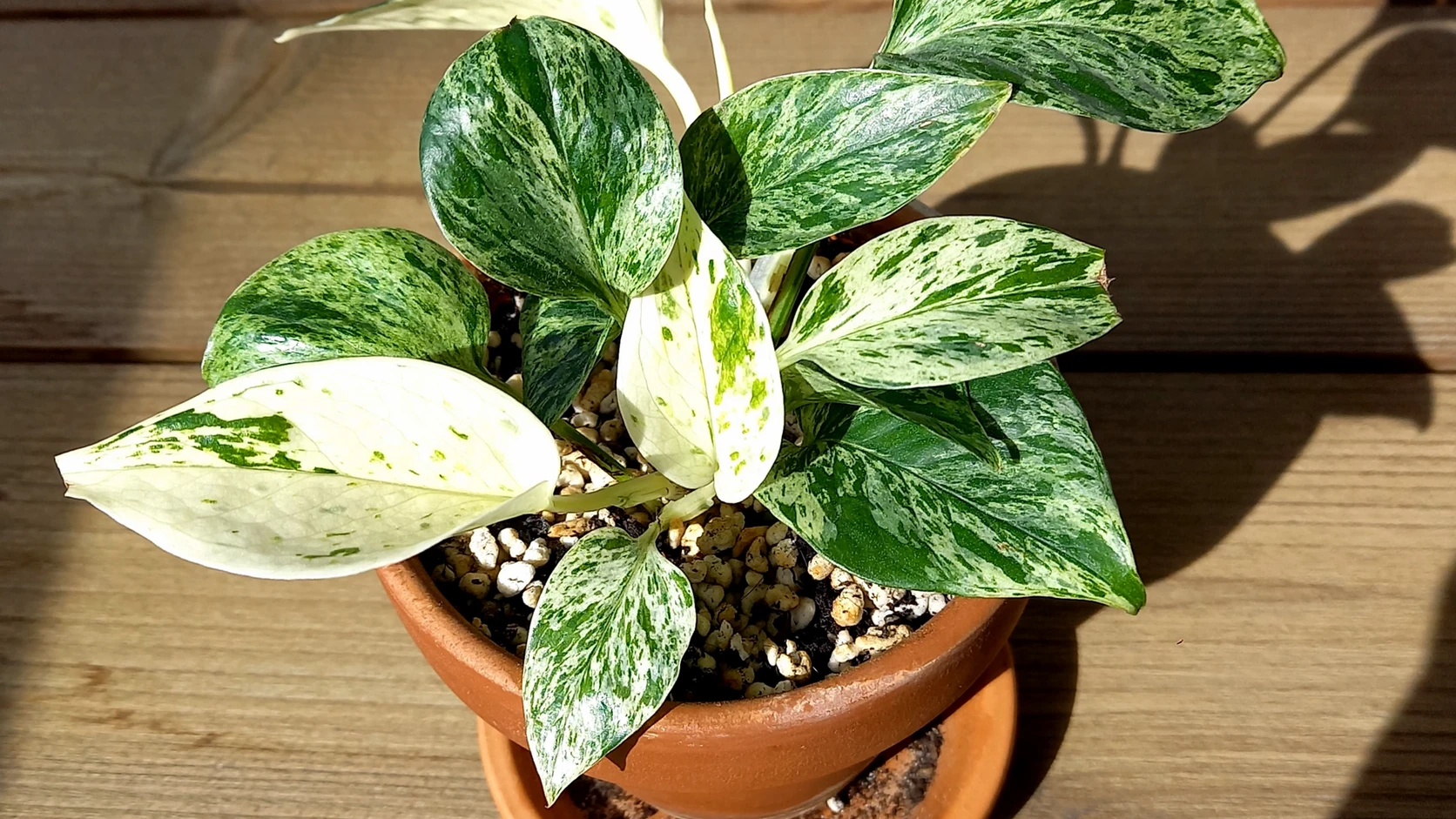
Marble Queen pothos has pointed leaves and stems marked with green, white and cream. It needs more light than other varieties. Greener and faster-growing than Snow Queen, it keeps its marbling in bright, indirect light away from scorching sun.
What changes
More indirect light
This white-and-cream selection needs more light than other varieties.1
More bright, indirect light
Give it more bright, indirect light than the green form: the white areas lack chlorophyll, so the plant produces energy only through its green leaf area.
Slower growth
Growth is a little slower than in the green form: repot less often and reduce feeding slightly.
No direct sun
Keep it out of full, direct sun, just like the green form: direct sun marks the foliage.
Marble Queen: identification
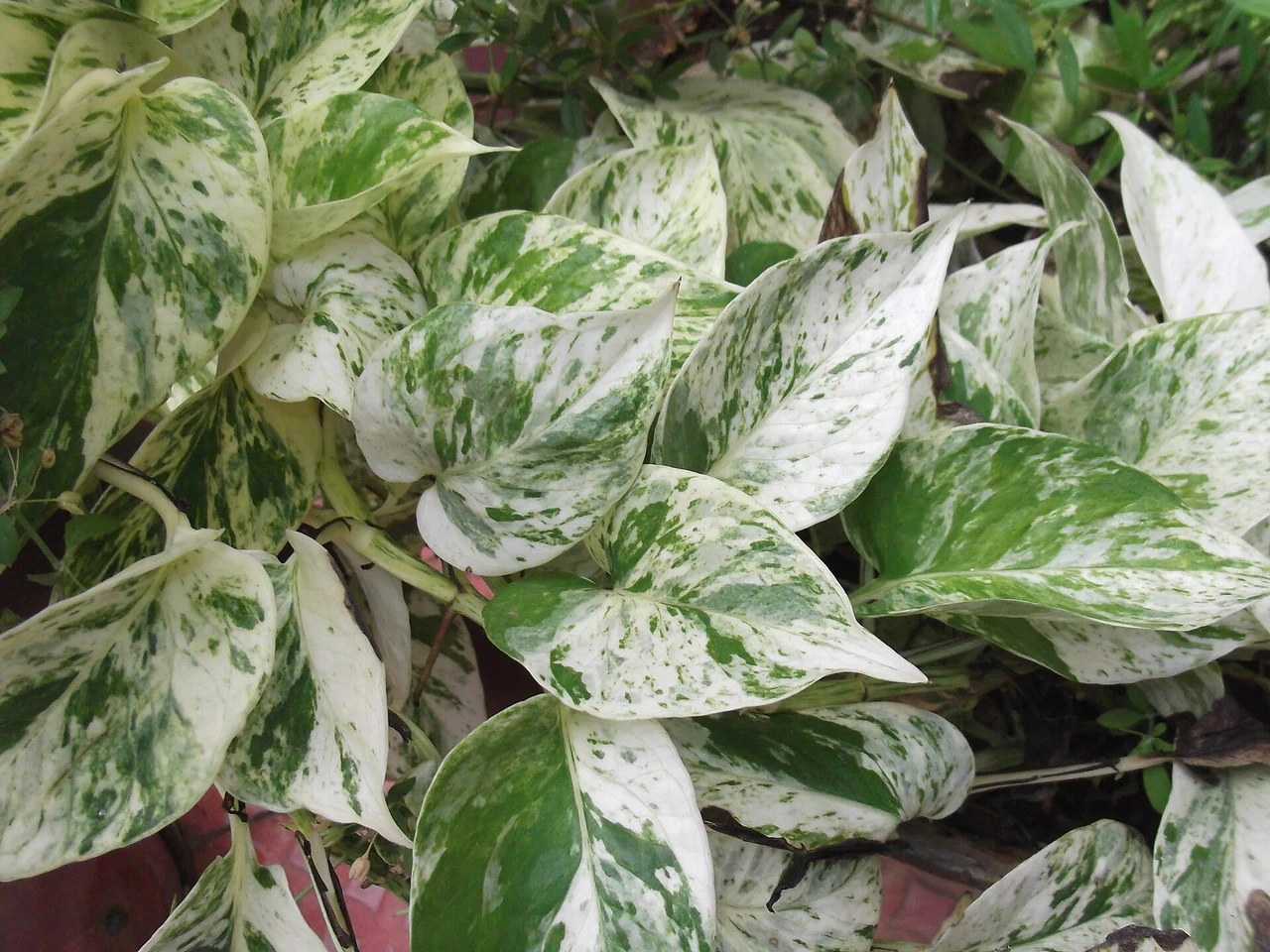
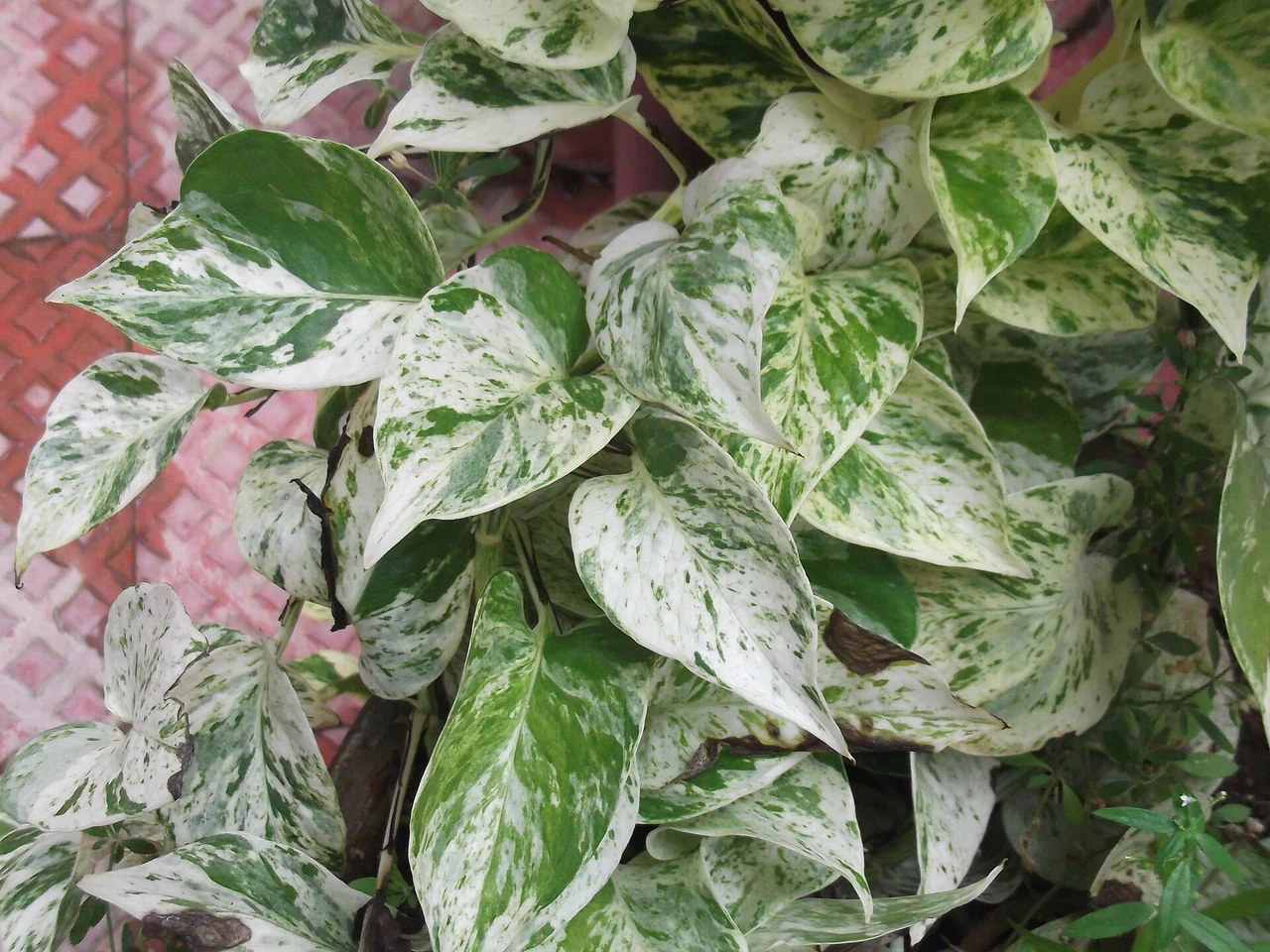
Marble Queen has pointed green leaves marbled with white or cream. On this pothos (Epipremnum aureum 'Marble Queen'), the stems are streaked with white too12.
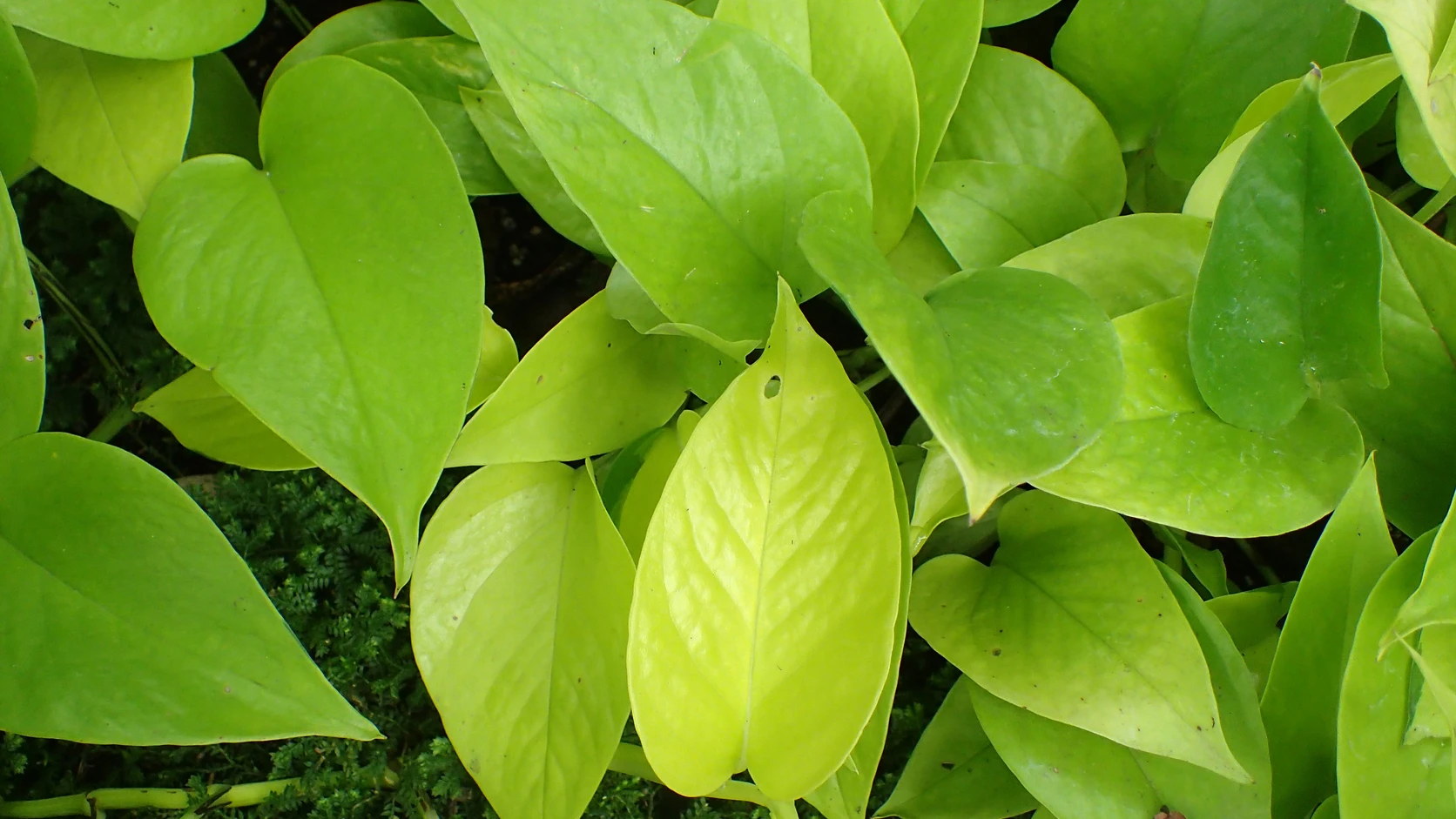
Its variegation contains more green than that of Snow Queen; Marble Queen also grows faster than Snow Queen1. For yellow-green foliage rather than marbling, choose Neon pothos1.
| Feature | Marble Queen |
|---|---|
| Colours | White or cream marbling on a green background1 |
| Leaf shape | Pointed tip1 |
| Stems | Streaked with white, like the foliage2 |
| Compared with Snow Queen | More green and faster growth1 |
| Position | Needs more light than other varieties1 |
What light does Marble Queen pothos need?
Give Marble Queen bright, indirect light: it needs more light than other varieties1. Indirect light is found near an east- or west-facing window, or behind a sheer curtain at a south-facing window in the northern hemisphere; direct sun, especially in summer, can scorch the leaves3.
Less marbling on new leaves is a reason to reassess the light. Insufficient light can reduce variegation and slow growth3.
How should you water Marble Queen pothos?
Let the top 2 cm (about 0.8 in) of compost dry, then wet the root ball and let the pot drain41. Test the compost with your finger before watering: constantly wet compost or a pot standing in water encourages root rot3.
17 cL every 11 days
After the top two centimetres (about ¾ in) of compost have dried

Potting mix dry to 1 cm: still moist
The finger test
Push a finger or wooden skewer 2 cm into the potting mix: if it is dry, water; if it is still moist, wait. The condition of the mix decides, not the calendar.
Humidity and temperature for Marble Queen
Keep Marble Queen between 18 and 30 °C, away from cold draughts and direct heat from radiators3. 50 to 70% relative humidity suits it, but it also tolerates household air at 30 to 60%1.
Which compost should you use, and when should you repot Marble Queen?
Repot in spring when roots become crowded or emerge beneath the pot, usually 2 to 3 years between repottings, using a container one size larger3. Around the root ball, use an airy mix: 3 parts peat-free ericaceous compost, 1 part horticultural grit and 1 part orchid bark3.
Propagating Marble Queen pothos
Wearing gloves, cut a section of stem carrying at least 1 node, just below a leaf attachment, then put its base in water in a bright spot31. The node usually produces roots in 3 to 4 weeks in warm conditions; group several rooted cuttings together for a fuller pot2.
Feeding and pruning Marble Queen
Apply a houseplant fertiliser once a month from April to October, if that is your active growing season3. To make Marble Queen bushier, shorten long stems just above a leaf, wearing gloves: the cut encourages side shoots3.
Problems to recognise on Marble Queen
White and cream are part of Marble Queen's variegation1. Distinguish them from browning edges or a gradual loss of marbling: browning has several possible causes, while fading marbling can accompany low light2.
| Observation | Useful check |
|---|---|
| Less variegated new leaves and weak growth | Reassess access to indirect light3 |
| Blackening edges or tips | Check for too much or too little water and fertiliser salt build-up2 |
| Wet compost with brown or missing roots | Examine roots and drainage: overwatering encourages root rot2 |
Marble Queen care calendar
In spring, examine the roots to decide whether to repot; during growth, plan for 1 feed a month from April to October if these are your growing months3. In winter, wait for the top 2 cm (about 0.8 in) to dry before watering: excess water during this period can rot the roots4.
| Task | January | February | March | April | May | June | July | August | September | October | November | December |
|---|---|---|---|---|---|---|---|---|---|---|---|---|
| Watering | reduced | reduced | moderate | moderate | high | high | high | high | high | moderate | reduced | reduced |
| Growth | resting | resting | active | active | strong | strong | strong | strong | active | active | resting | resting |
| Feeding | no | no | no | yes | yes | yes | yes | yes | yes | yes | no | no |
| Repotting | no | no | favorable window | favorable window | favorable window | no | no | no | no | no | no | no |
Frequently asked questions
How can you tell Marble Queen from Snow Queen?
Marble Queen keeps more green and grows faster. Snow Queen has mainly white foliage flecked with green, with more clearly defined white patches1.
Why are my Marble Queen's new leaves becoming greener?
A position that is too dark can reduce the marbling. Move the pot nearer bright, indirect light; at a south-facing window in the northern hemisphere, filter the sun with a sheer curtain3.
Are white streaks on Marble Queen stems normal?
Yes, the stems can be streaked with white just like the leaves. This feature accompanies Marble Queen's moss-green and white foliage2. Find other forms in the pothos varieties guide.
Other varieties
Horticultural name
Uniform yellow to chartreuse-green foliage.