
Horticultural name
Neon pothos care and lime-green leaves
Epipremnum aureum
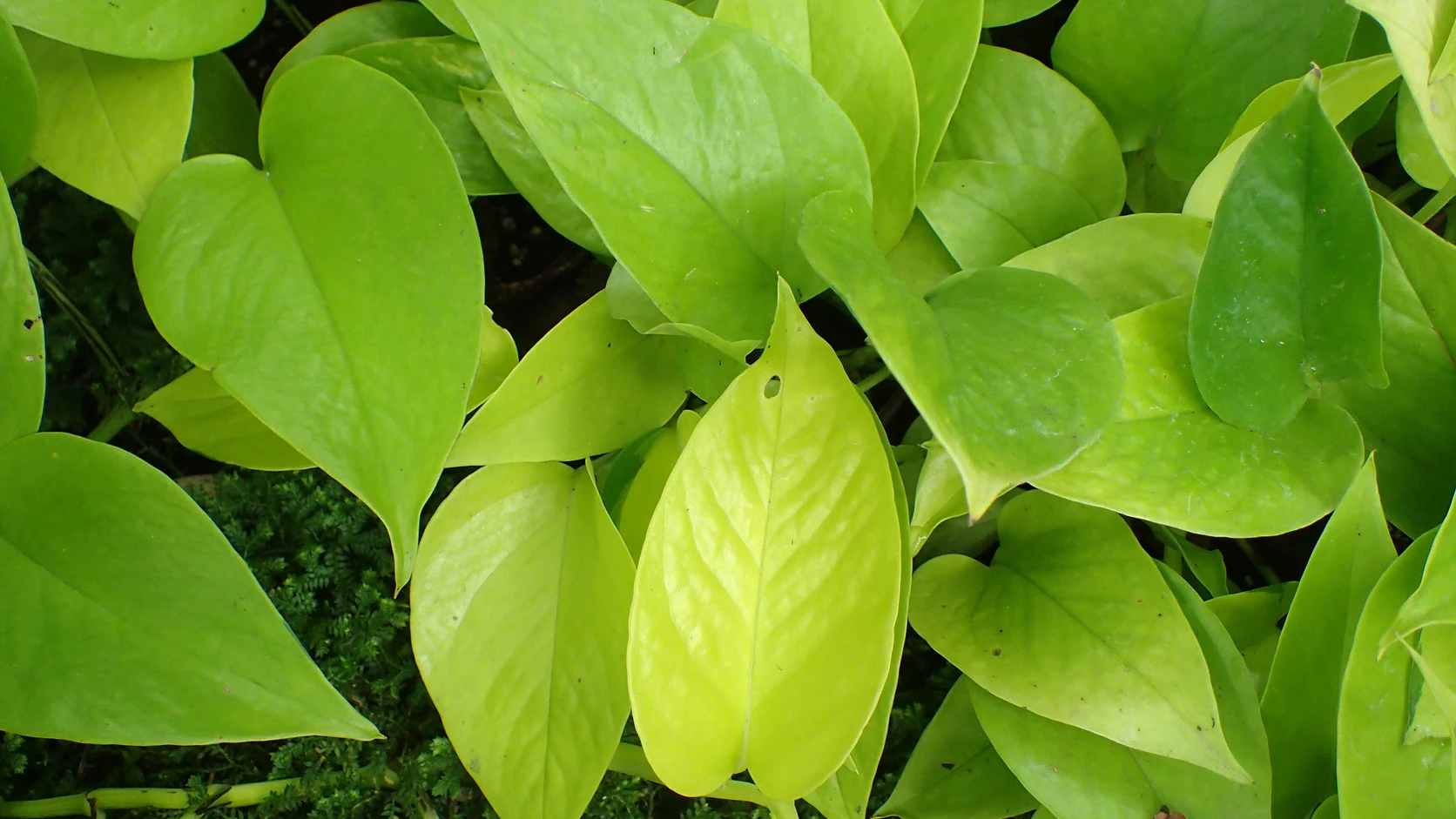
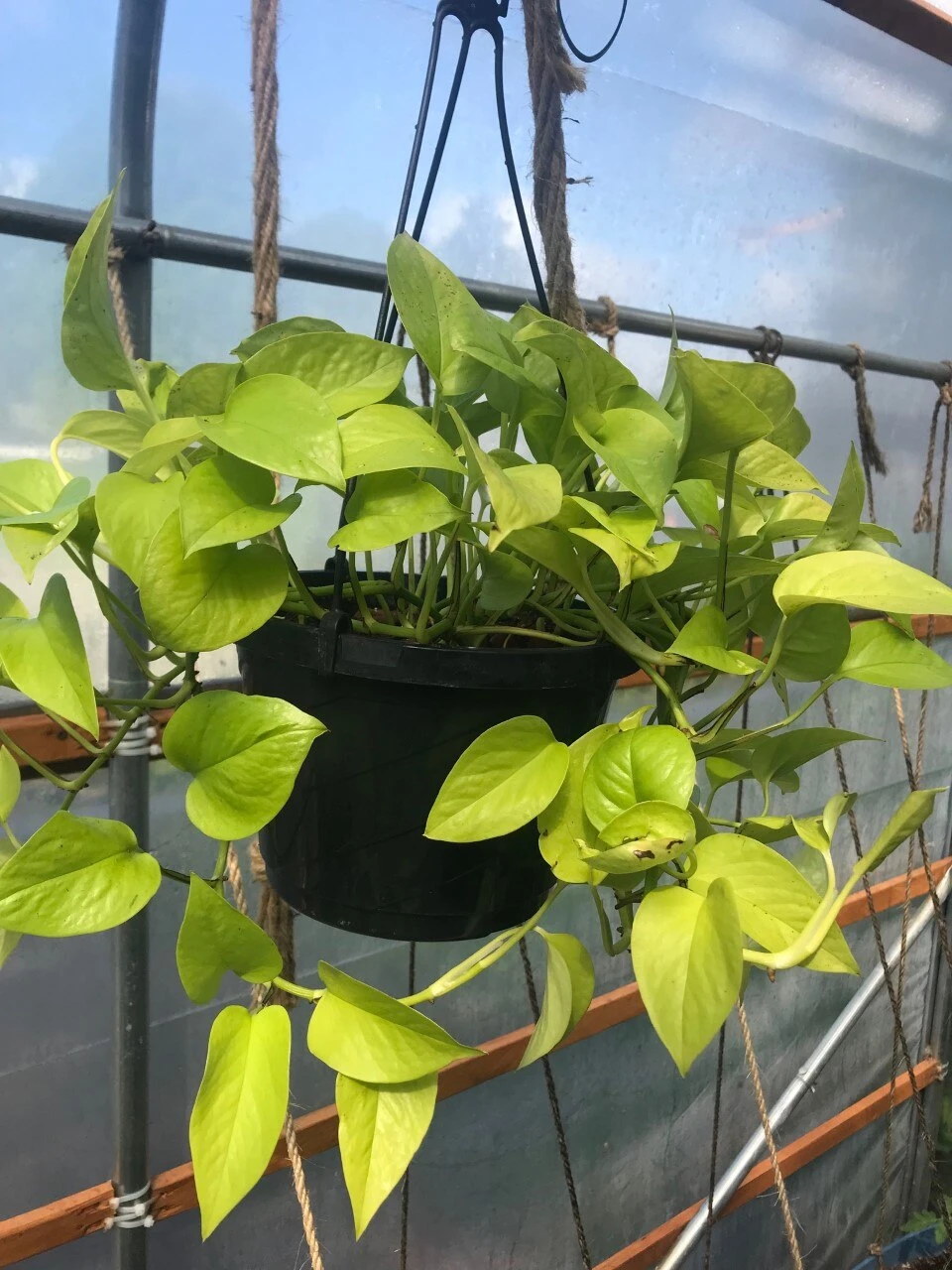
Neon pothos has lime-green leaves that are thinner and narrower than those of other cultivars. It grows quickly and tolerates lower light. To keep it leafy, check how the compost dries and shorten stems that have grown too long.
What changes
Chartreuse leaves
The yellow-green colour occurs across the foliage; it is distinct from sudden yellowing in the golden form.6
Tolerates lower light
Neon tolerates lower light levels.1
Neon pothos: identification
Neon's lime-green foliage is its natural colour. This pothos (Epipremnum aureum 'Neon') has narrower, thinner leaves than other cultivars; it is also distinguished by fast growth and tolerance of lower light1.
Chartreuse yellow-green colours its foliage, while Marble Queen pothos has white or cream marbling and needs more light1.
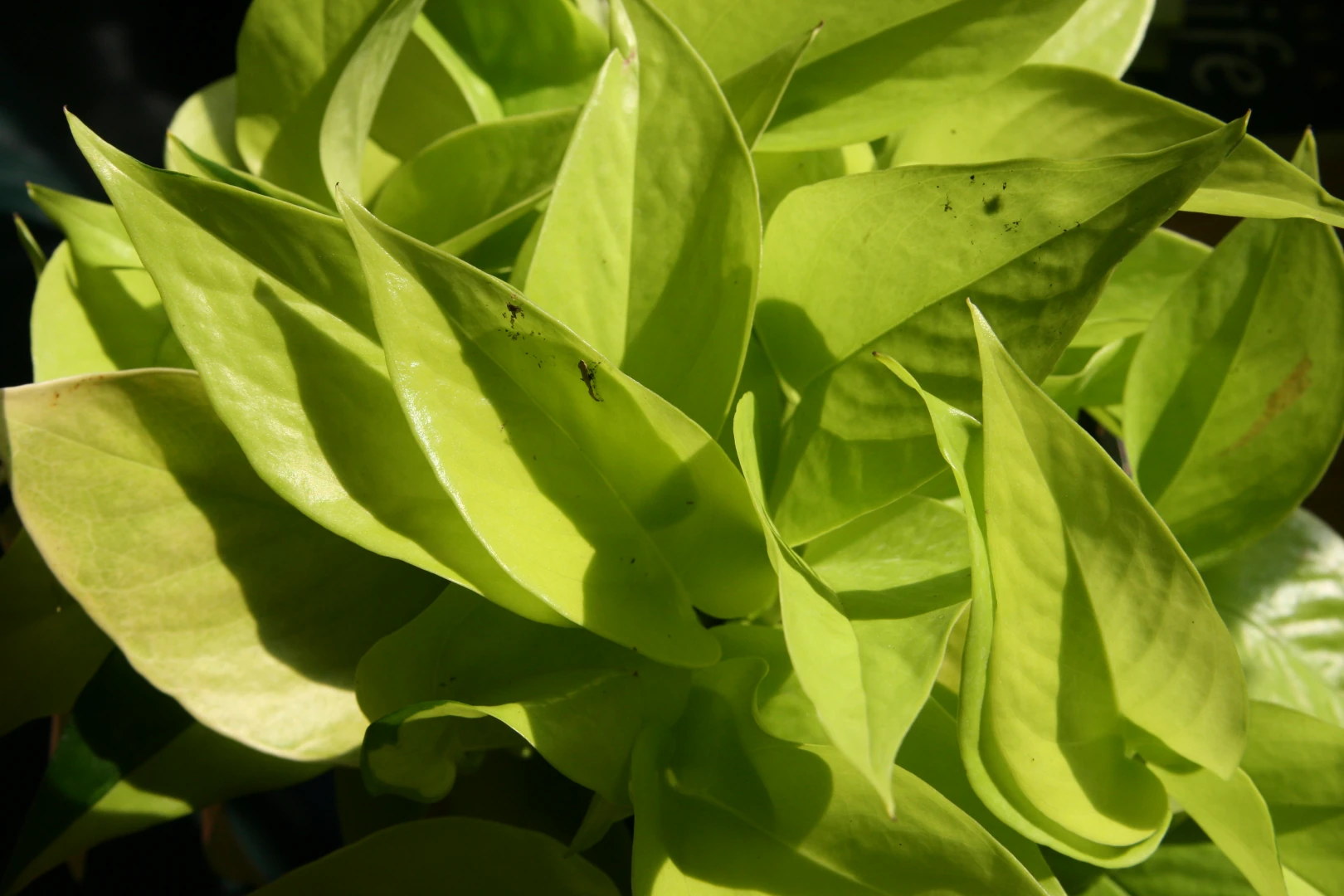
| Feature | Neon's character |
|---|---|
| Colour | Bright lime green1 |
| Leaf blade | Thinner and narrower than in other cultivars1 |
| Vigour | Fast growth1 |
| Light | Tolerance of dimmer conditions1 |
What light does Neon pothos need?
Neon tolerates lower light, making it an option for a dimmer position than a heavily white-variegated pothos1. Still, prefer bright indirect light: pothos grows more slowly in shade, while direct summer sun can scorch its foliage2.
An east- or west-facing window suits it; at a south-facing window in the northern hemisphere, filter the rays with a sheer curtain3. This keeps the naturally pale leaf blade away from scorching sun.
How should you water Neon pothos?
Test the top 2 centimetres (about 0.8 in) of compost with your finger: when dry, water Neon so that all the roots are moistened, then empty any water held in the outer pot231. Adjust watering to how the compost dries: a constantly wet root ball or one left standing in water exposes roots to rot3.
17 cL every 11 days
After the top two centimetres (about ¾ in) of compost have dried
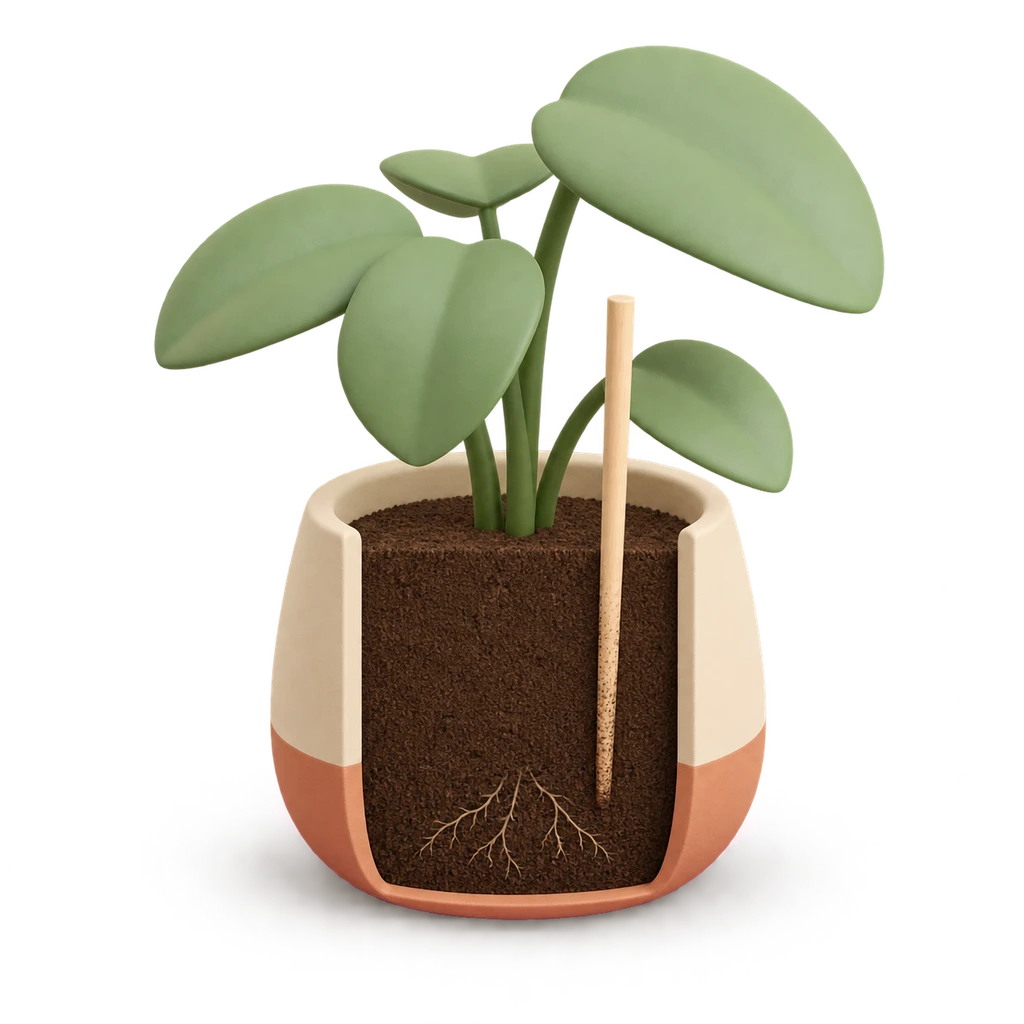
Potting mix dry to 1 cm: still moist
The finger test
Push a finger or wooden skewer 2 cm into the potting mix: if it is dry, water; if it is still moist, wait. The condition of the mix decides, not the calendar.
Humidity and temperature for Neon pothos
Place Neon in a room at 18–30 °C, away from radiators and cold draughts3. It prefers 50–70% relative humidity and tolerates the 30–60% common in a home; a humidifier can raise humidity if needed1.
Which compost should you use, and when should you repot Neon pothos?
Neon's fast growth is a reason to watch for crowded roots or roots emerging through the holes: repot then in spring, into a container slightly larger than the root ball13. Check for repotting every 2 to 3 years and use airy, well-drained peat-free houseplant compost; an oversized pot holds moisture for too long3.
Propagating Neon pothos
Take a healthy stem with at least 1 node, cutting below a leaf attachment, then root the base in a glass of water in a bright position; wear gloves when cutting13. In warmth, roots usually appear in 3 to 4 weeks, while buds may start in 1 to 2 weeks: wait until you see roots before potting up43.
Feeding and pruning Neon pothos
Neon grows quickly: shorten stems above a leaf when they become too long to encourage branching, wearing gloves as you work13. During active growth, give a houseplant fertiliser once a month from April to October if that matches your growing season3.
Problems to recognise on Neon
Lime yellow-green is Neon's natural colour1. Watch instead for changes in a leaf: blackening edges, brown spots or deteriorating roots call for checks on watering, temperature and feeding4.
| New sign | What to examine |
|---|---|
| Blackening tips or margins | Too much or too little water, accumulated fertiliser salts4 |
| Brown spots in the centre of the leaf blade | Cold exposure or a sudden temperature change5 |
| Brown or missing roots in a moist root ball | Root rot, most often linked to overwatering4 |
Neon pothos care calendar
From April to October, if these are your growing months, support growth with monthly feeding and shorten stems that have outgrown their space3. In winter, check the top 2 cm (about 0.8 in) before every watering: soil that stays wet encourages root rot during this season2.
| Task | January | February | March | April | May | June | July | August | September | October | November | December |
|---|---|---|---|---|---|---|---|---|---|---|---|---|
| Watering | reduced | reduced | moderate | moderate | high | high | high | high | high | moderate | reduced | reduced |
| Growth | resting | resting | active | active | strong | strong | strong | strong | active | active | resting | resting |
| Feeding | no | no | no | yes | yes | yes | yes | yes | yes | yes | no | no |
| Repotting | no | no | favorable window | favorable window | favorable window | no | no | no | no | no | no | no |
Frequently asked questions
Does Neon pothos's yellow-green colour mean it needs fertiliser?
Is Neon better than a white pothos for a dim room?
Neon tolerates lower light, while Marble Queen and Snow Queen need more light1. Keep access to natural daylight: deep shade slows and weakens growth2. The pothos guide helps you choose a position.
Why do Neon's leaves look thinner than those of my other pothos?
Neon has thinner and narrower leaves than other cultivars. This shape accompanies its lime-green foliage and helps identify it alongside its colour1.
Other varieties
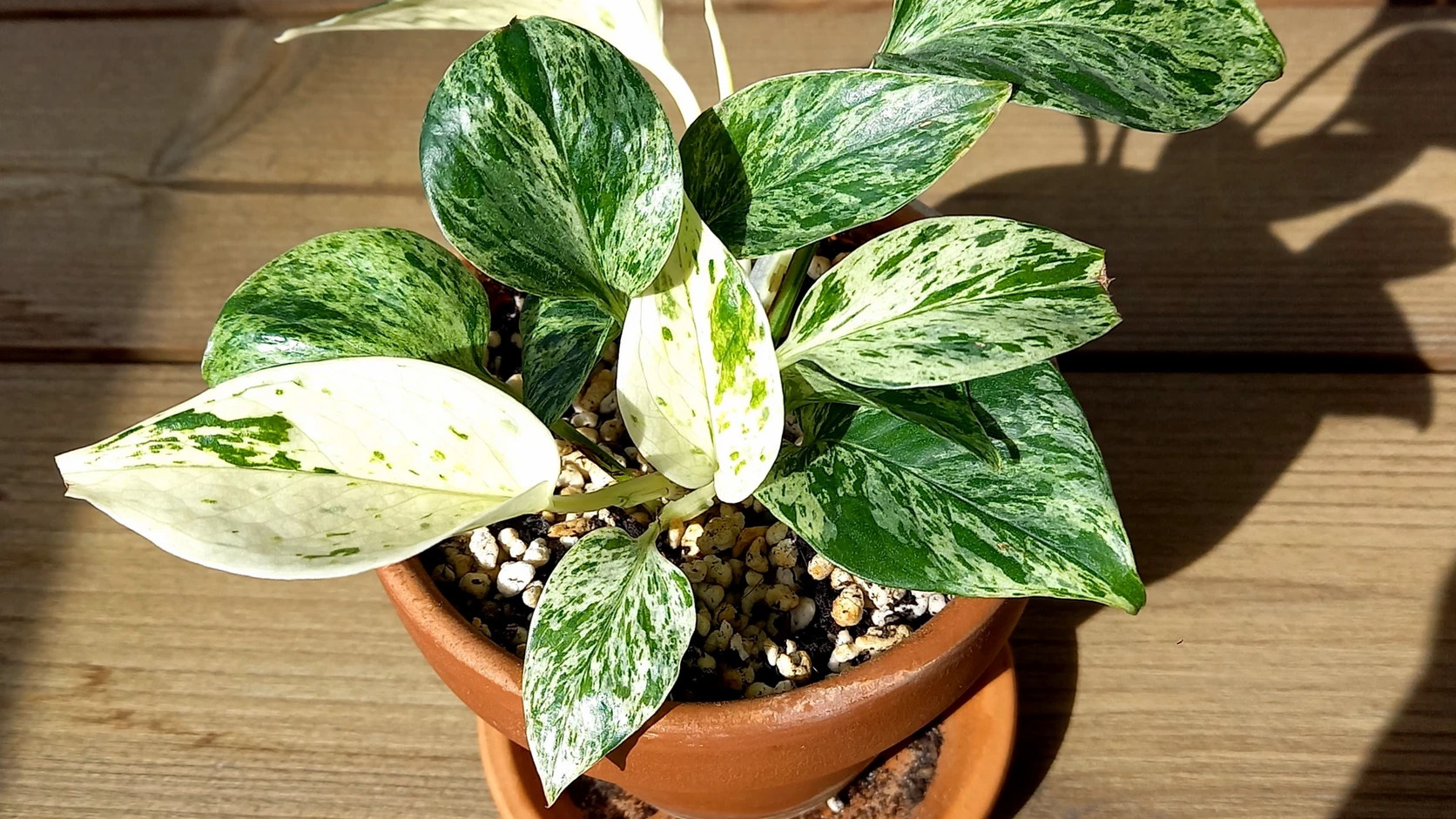
Variegated
Green foliage marbled with white or cream.