
Peace lily toxicity: cats, dogs and children
Is a peace lily dangerous in the home?
Peace lilies contain calcium oxalate crystals that irritate the mouth when chewed. Keep cats, dogs and children away from the pot. After ingestion, seek advice from a vet or poison centre; difficulty breathing requires urgent care.
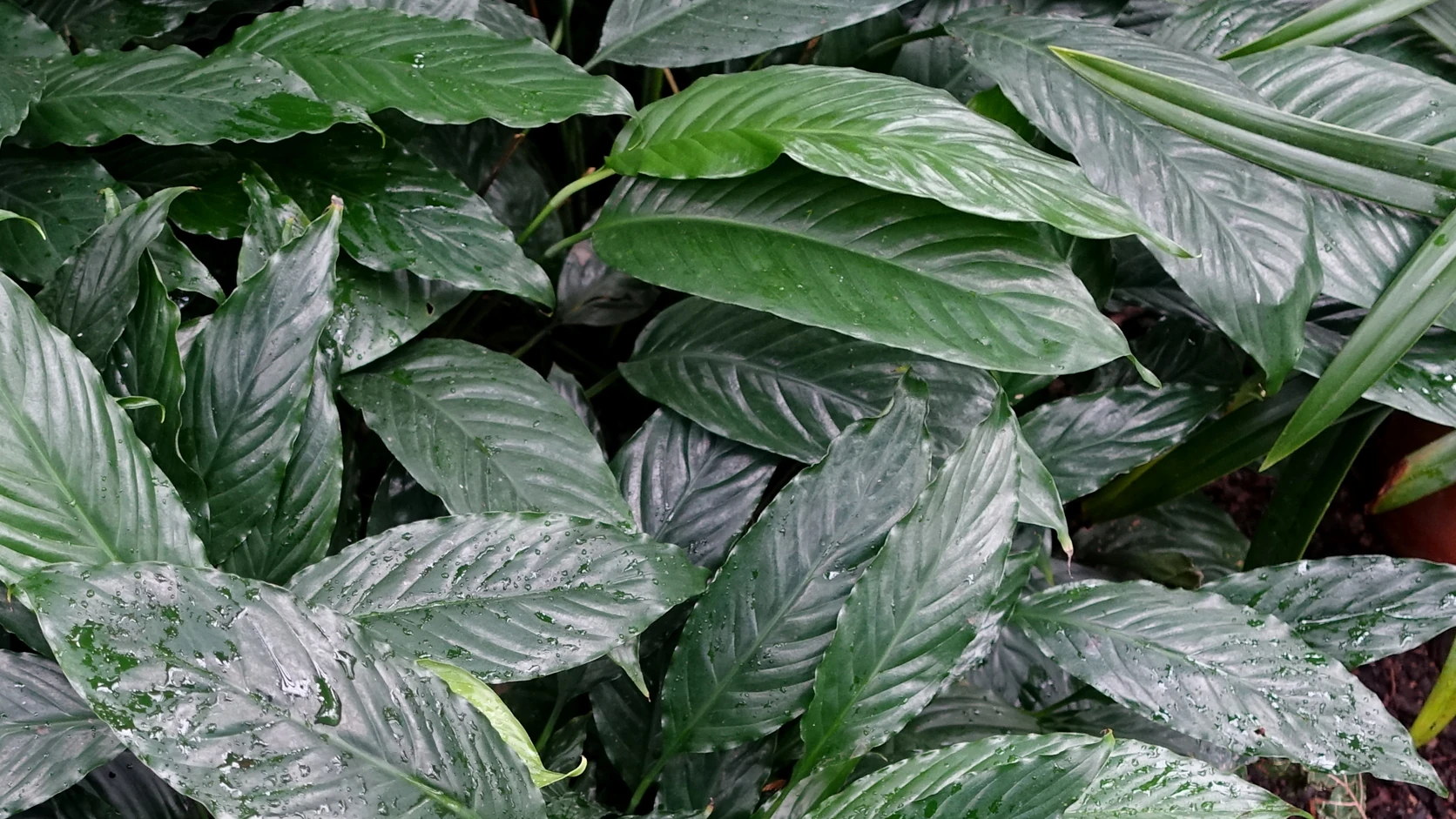
Irritating crystals are released when the plant is chewed
Keep the leaves, stems and flowers of a peace lily out of reach of children and animals. Peace lily tissues contain insoluble calcium oxalate crystals, which can cause rapid irritation of the mouth and throat. The ASPCA lists peace lilies as toxic to cats and dogs. 1 2
The peace lily (Spathiphyllum) belongs to the Araceae family. Its large white structure looks like a single flower, but is a spathe. After ingestion, the botanical name helps distinguish it from a true lily, which has different toxic effects. 3
The crystals are insoluble. Chewing releases the particles, which injure the tissues of the mouth. Irritation can affect the tongue, throat and oesophagus as soon as the plant is chewed. 4
Even a nibbled leaf warrants a call to assess the exposure. Report which part was chewed, when it happened and any signs you have observed. The vet or poison centre will tailor advice to the patient's condition.21
What signs should you watch for in cats and dogs?
After chewing, call the vet and report any difficulty swallowing. A cat or dog may have mouth pain, unusual drooling, burning of the lips and tongue, or vomiting. 2
The animal may paw at its face, vocalise or have foam around its mouth. Diarrhoea is also possible. Signs can begin immediately after biting the plant, because the crystals directly irritate the tissues. 4
| Observation | What it may indicate | Action |
|---|---|---|
| Pawing at the mouth, agitation, vocalising | Pain caused by tissue irritation. 4 | Remove the plant and call the vet; report the suspected chewing. 2 |
| Heavy drooling, irritated lips or tongue | Oral signs described by the ASPCA. 2 | Tell the professional whether the animal can swallow and how it is breathing. |
| Vomiting, sometimes diarrhoea | Possible signs that are not specific to peace lilies. 2 4 | Give the vet the time, how the signs have changed and a photo of the plant. 4 |
| Swelling with difficulty breathing | An uncommon but possible complication, according to the FDA. 4 | Contact an emergency veterinary service immediately. |
What should you do if an animal chews a peace lily?
Call your vet as soon as ingestion is suspected. First explain whether the animal has trouble breathing or difficulty swallowing. Keep the plant and its label available for identification. 2 4
- Move the pot away and keep fallen fragments out of reach of other animals. The RHS recommends keeping this plant away from pets and children. 3
- Call the vet and give the name “spathiphyllum”, along with photos of the foliage, inflorescence and label if you have it. The FDA recommends bringing the plant or a photo to help identify the risk. 4
- Describe what you know: when it was chewed, which part was affected, any pieces found and the signs observed. Distinguish what you saw from what you suspect.
- Follow the vet's instructions for the animal's care and monitoring.2
In France, veterinary poison centres advise on animal poisoning. Human poison centres treat people. 5 6
| Centre | Telephone | Published availability |
|---|---|---|
| CAPAE-Ouest, Nantes | 02 40 68 77 40 | From 8:30 to midnight, every day. 5 |
| CNITV, Lyon | 04 78 87 10 40 | From 8:30 to midnight, every day. 5 |
Keep your veterinary clinic's number handy too. An animal with difficulty breathing needs immediate referral to an emergency veterinary service. 2 4
What first steps should you take for a child or adult?
Gently remove any pieces left in the mouth, have the person rinse and spit if possible, and call a poison centre. The National Capital Poison Center describes these steps after chewing a peace lily. The French poison centres' association advises against inducing vomiting or waiting for symptoms before calling. 1 6
Irritation can affect the mouth and then the throat, with swollen lips, coughing, nausea or vomiting. The poison centre assesses whether monitoring at home is sufficient or an examination is needed.1
Do not give drinks or home remedies before seeking advice from the poison centre. French guidance also says not to induce vomiting. Milk is not an antidote. Keep a photo of the plant and the time of exposure ready for the call.6
In France, the national ORFILA number is 01 45 42 59 59; the poison centres' website also lists regional numbers, available 24 hours a day, every day. If the person is not breathing or is unconscious, the French association advises calling 15. Difficulty breathing requires an emergency call. 6
A peace lily is not a true lily
Have the plant's identity confirmed: for cats, confusion with a true lily changes the urgency and the organs at risk. The FDA distinguishes lilies in the genus Lilium and daylilies (Hemerocallis), which can cause fatal kidney failure, from peace lilies, which mainly cause irritation from insoluble crystals. 4
For true lilies, the FDA warns that even pollen and vase water are dangerous. Tell the vet if you are unsure which plant it is. A clear photo is more useful than an approximate common name. 4
| Plant | Risk | What this means in practice |
|---|---|---|
| Peace lily, Spathiphyllum | Insoluble crystals, mouth and digestive irritation; breathing complications are possible but uncommon. 4 | Call the vet after suspected chewing. 2 |
| True lilies, Lilium | Severe kidney risk in cats, including after pollen contact followed by licking. 4 | Contact the vet immediately, without waiting for signs. 4 |
| Daylilies, Hemerocallis | Also listed among plants that are highly dangerous to cats' kidneys. 4 | Give this botanical name and follow the urgent veterinary referral advice. 4 |
A peace lily is still an irritating plant that must be kept out of reach. The peace lily botanical profile distinguishes its names from those of true lilies; after an accident, ask the professional you contact to confirm its identity. 3 4
How can you recognise the plant without tasting it?
Look for elliptical leaves growing from the base and narrowing to a pointed tip. Peace lily foliage has these features.7 Its inflorescence has a white spathe around a central axis, and the spathe turns green as it ages.3
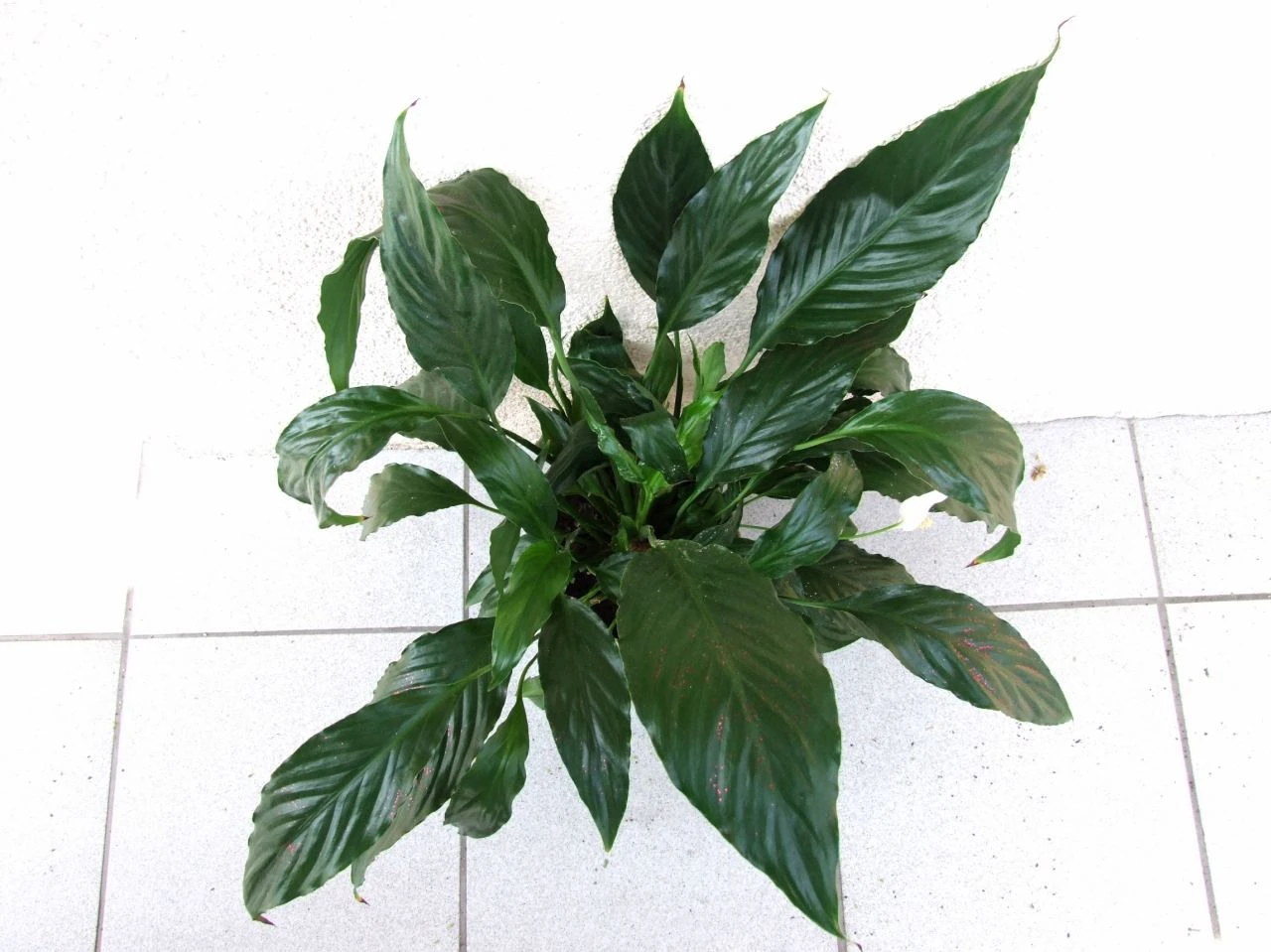
The central axis is a spadix. The spadix and spathe distinguish a peace lily inflorescence from a lily flower, but a partial photo cannot rule out all confusion. Photograph the whole pot and its label too, without bringing the plant near a child's or animal's face for comparison. 3 4
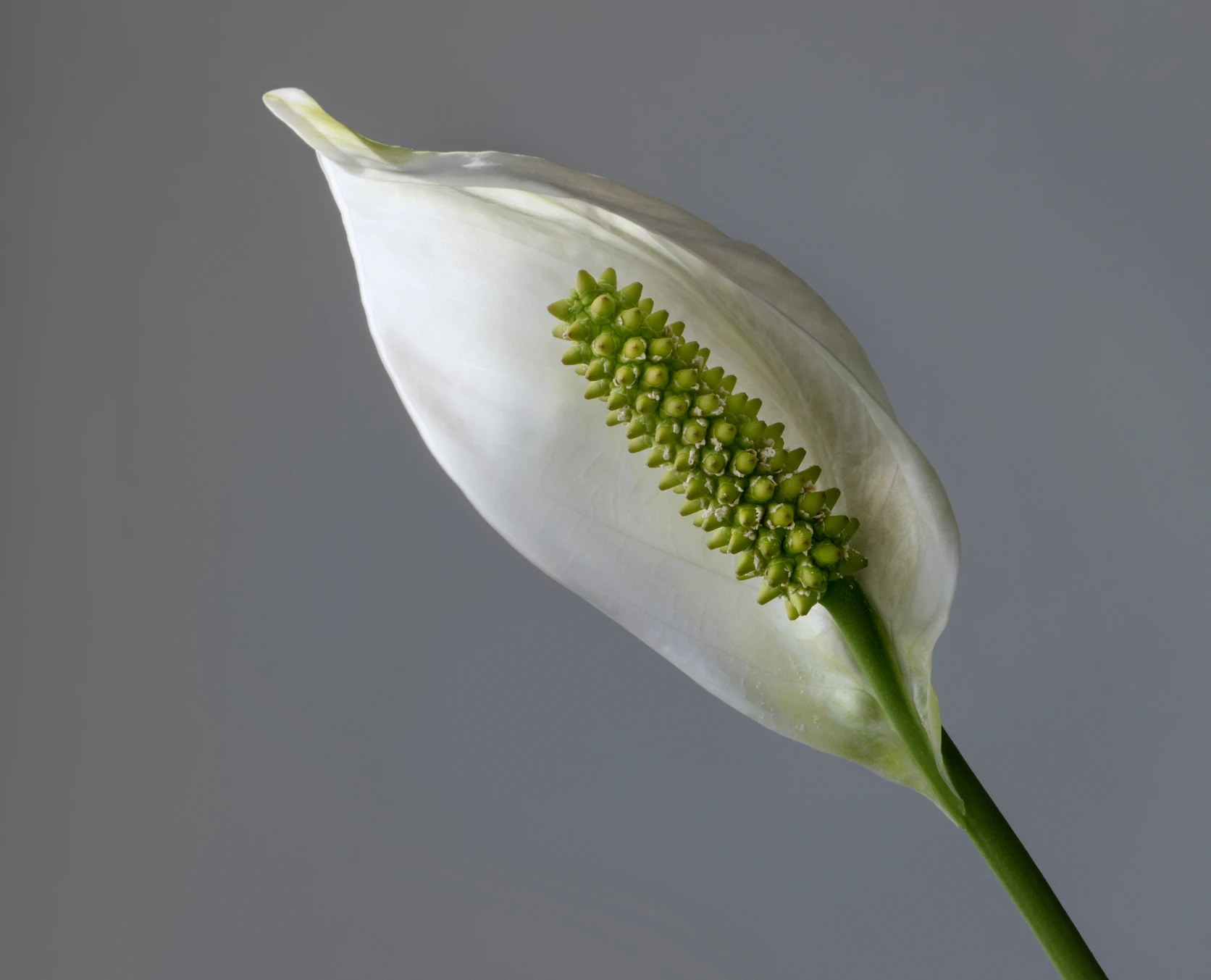
Prevention applies to compact forms, variegated plants and large clumps alike. Keep their labels and keep all peace lilies out of reach, including when they have no flowers.21
How can you prevent another accident?
Keep the plant out of reach, including during cleaning, leaf cutting and division. Wear gloves and avoid contact with the eyes: the sap can irritate skin. Collect the cut material before letting a young child or animal back into the room. 3
The risk is not limited to flowering time: the leaves and stems also contain irritating crystals. A lack of spathes does not make the pot safe to leave within reach. Check temporary locations too, such as a low table used for repotting or a pot placed on the floor for watering. 1 3
If you keep the plant, choose a position that meets its light needs while accounting for where people and animals can actually reach. The peace lily care guide covers watering, repotting and division. Prevention matters during these tasks as much as when the pot is in its usual place in the living room. 3
The lists of plants toxic to cats and plants toxic to dogs help you check other pots in the home too. Verify each botanical name: a plant's shape or commercial name does not establish whether it is safe.
Frequently asked questions
Can irritation caused by a peace lily go away on its own?
Signs often subside on their own, but difficulty breathing is a veterinary emergency. Swelling of the mouth or airways can occur, although this complication is uncommon. Tell the vet how signs are changing so they can decide what monitoring and treatment are needed.4
Are peace lilies also toxic to horses?
Yes: horses are also affected. For any other animal species, contact a vet with the plant's name and the circumstances of exposure.8