
How to propagate Phalaenopsis orchids: keikis and division
Orchid cuttings: what works and what will not grow
Moth orchids (Phalaenopsis) do not propagate like ordinary houseplants: new plants arise from spike nodes or growing points. Separate spike keikis when roots reach 2.5–5 cm (1–2 in), or cut the rooted top from an overgrown plant. Spike sections grow only in sterile laboratory flasks.
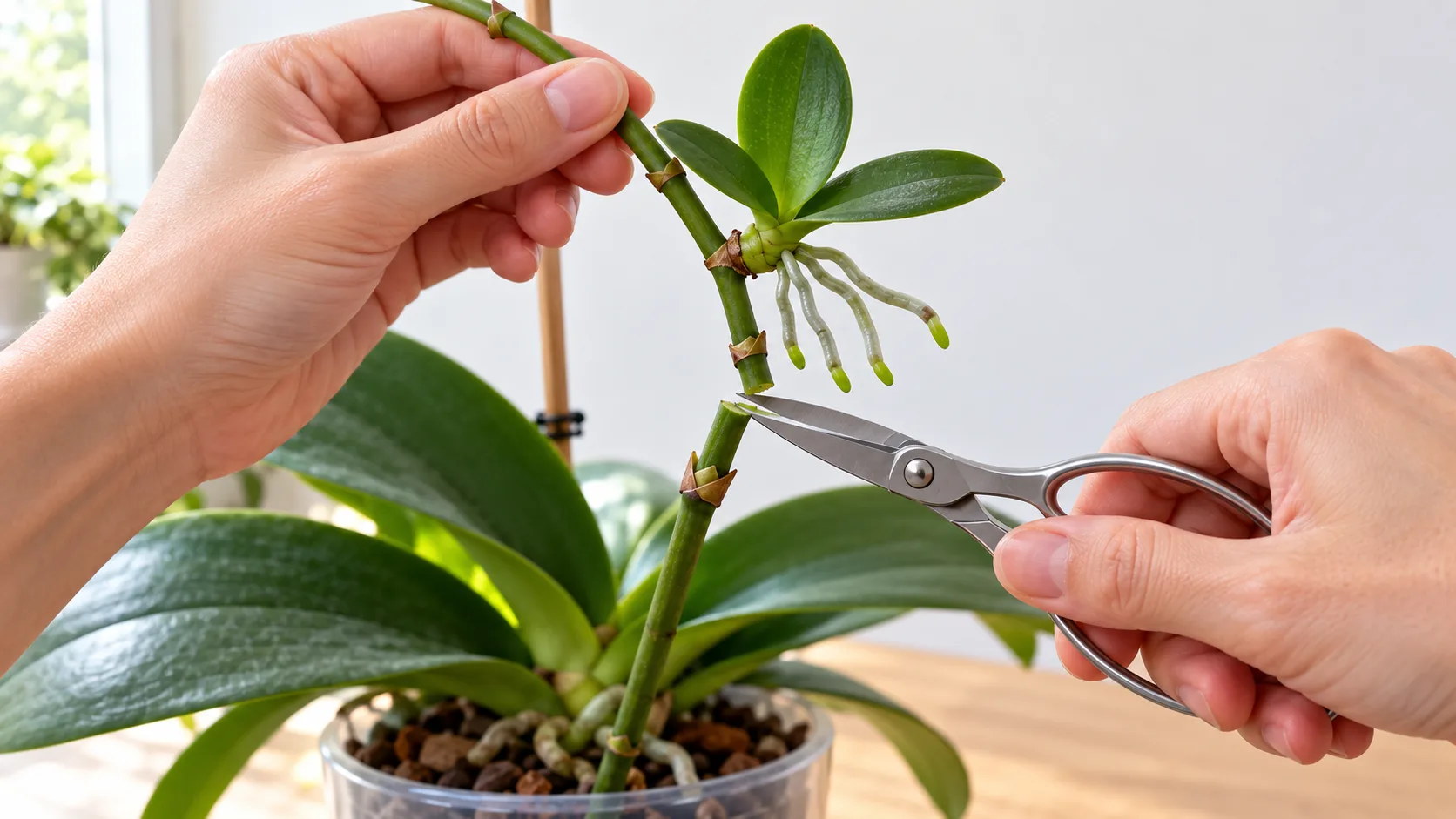
When to propagate an orchid
Each method has its own timing, rather than a season. Moth orchids (Phalaenopsis) propagate in three ways, only two accessible to amateurs:
- Keiki
- After floweringKeiki paste on a spent flower spike · a plantlet may form in 6–8 weeksSource: Royal Horticultural Society
- Division
- When repottingTop of a plant that has grown too tall · the top section keeps its rootsSource: Stephen R. Batchelor
- natural keikis detach when roots reach 2.5–5 cm (1–2 in)1;
- induced keikis start after flowering, with hormone paste on a spent spike node2;
- division of overgrown plants takes place during repotting1.
The third route, growing spike sections on nutrient agar, needs a sterilized flask: a laboratory technique1. All these methods produce plants identical to the parent1.
Keikis: separating a spike plantlet
Detach a keiki only once rooted. It arises from a dormant spike bud and develops roots soon after appearing1. The RHS waits for several good roots before separation2.

- Wait for roots 2.5–5 cm (1–2 in) long, Stephen Batchelor's threshold in the American Orchid Society bulletin1.
- Cut with sterilized pruning shears, or detach with a sharp wrist movement1. Disinfect blades between plants using flame or diluted bleach3.
- Pot in orchid substrate, water lightly at first and mist leaves daily2.
Left on the parent, a keiki keeps growing and may flower surprisingly quickly1. A spike producing a keiki rather than flowers may have been too warm: spikes under 10 cm (4 in) grown at 28 °C (82 °F) or above may develop plantlets or lose buds4.
Une hampe qui porte un keiki ne se coupe pas : la page pruning an orchid explique où couper les autres.
Inducing a keiki with hormone paste
Special hormone paste on a spent spike node may produce a plantlet. The RHS calls this delicate work2:
- With a scalpel, split the bract vertically over the node without cutting the bud beneath.
- With tweezers, separate the bract's two halves.
- Apply a little paste to the exposed bud.
- Allow six to eight weeks: a plantlet may form.
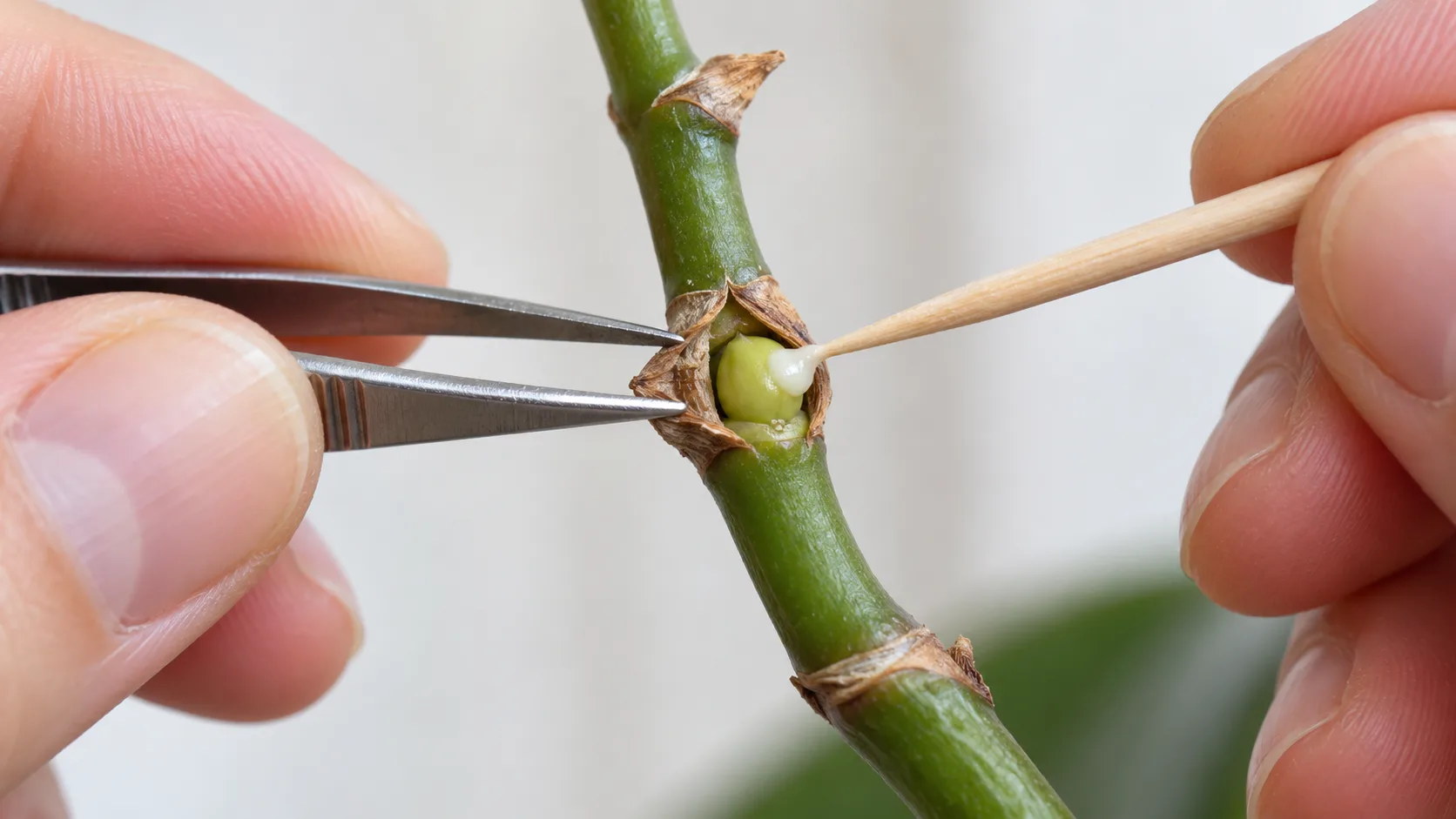
Buy paste from specialist orchid suppliers; ordinary rooting hormone does not work2. Choose an unused node, its bract still flat against the stem5.
Dividing an overgrown orchid
A moth orchid growing too high above its pot can be divided into top and base. It is monopodial, offering few division points: cut between the rooted base and top1.
Batchelor recommends doing this at repotting, when plants are too tall for roots to fit properly in the substrate. The upper section takes its own roots, grown above the pot rim; remove a few lower leaves if necessary to avoid burying them1.
A vigorous headless base often restarts one or more growing points, treated as keikis1. Use a flame-sterilized, disinfected or new blade, then dust the wound with fungicide: a clean, dusted cut resists infection better1.
Écorce neuve, pot à la bonne taille et tri des racines : repotting an orchid accompagne chaque division.
Spike sections, leaves and roots: what will not grow
Sources always describe new plants arising from nodes or growing points. None describes moth orchid leaf or root cuttings12.
Spike sections do work, but not in water: a section bearing dormant nodes goes into a sterilized flask on nutrient agar; a node develops over a few months1. None of the sources describes spike sections growing outside such flasks.
Bamboo orchids belong to another genus, Dendrobium; keikis grow along their canes1. See bamboo orchid care.
Helping a rootless orchid regrow roots
An orchid that has lost its roots can regrow them under a bag, kept dry. Ned Nash of the American Orchid Society keeps air around leaves humid and substrate fairly dry, maintaining firmness until roots can feed the plant6:
- Repot in the smallest pot accommodating remaining roots.
- Water substrate, then cover with a plastic bag, held above foliage by a wire loop inserted in the pot.
- Keep in shade until roots appear.
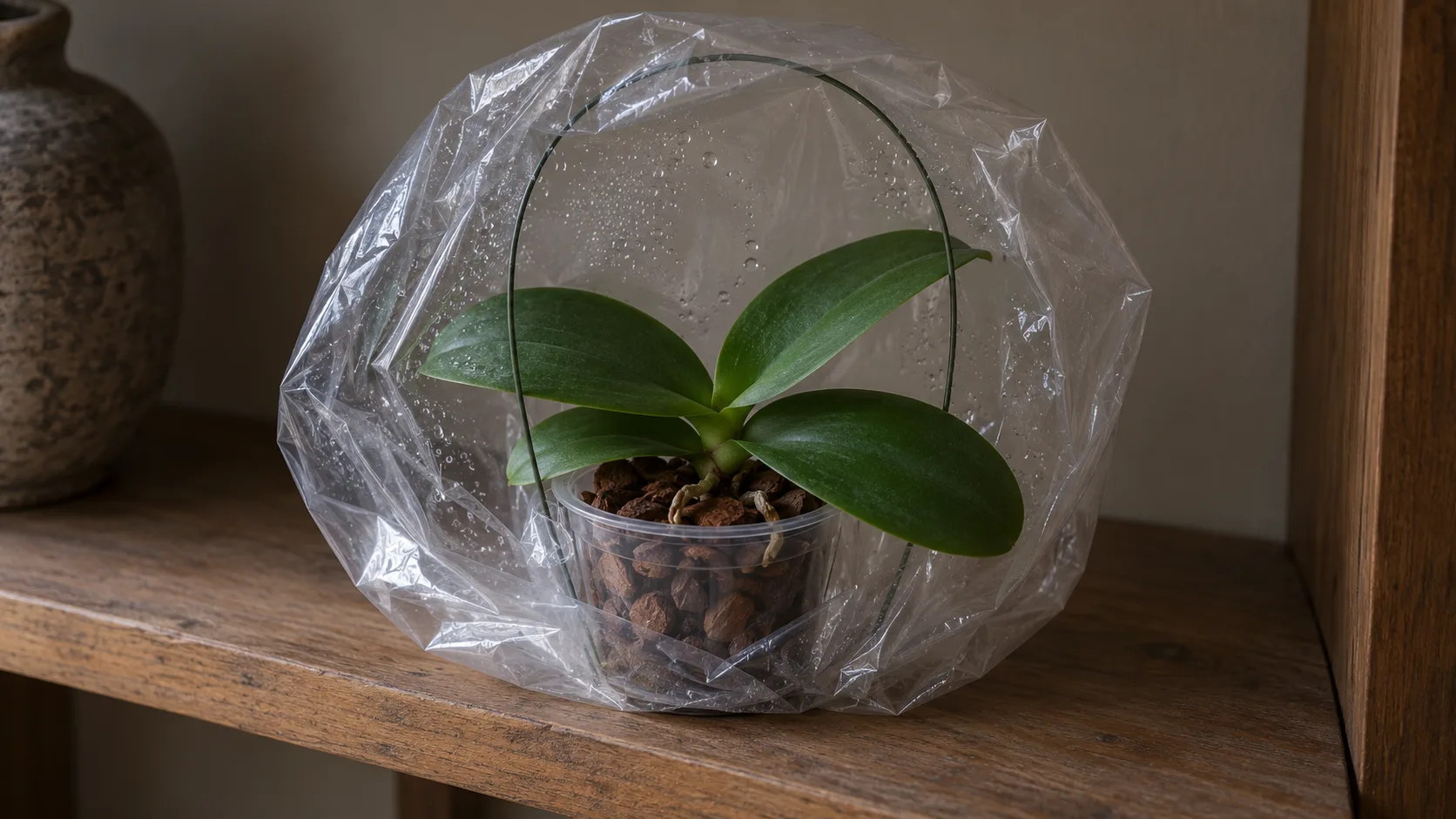
Allow a few days to a few weeks, longer with shortening days, from late September to January in the AOS source’s seasonal example, than in its spring or summer; interpret those months by local light and growth6.
Add your orchid: Floralens reminds you when to check keiki roots and repot, season by season in Pro mode. Get reminders
Frequently asked questions
How do I root an orchid cutting?
How do I help a rootless orchid grow roots?
Repot in the smallest possible pot, keep substrate fairly dry and cover with a plastic bag held above leaves, in shade, until roots appear. Depending on season, this takes a few days to a few weeks6.
How do I propagate a bamboo orchid?
Bamboo orchids are dendrobiums, rather than moth orchids: their keikis grow along canes and detach once roots form, as in moth orchids1. See bamboo orchid for care.
What should I do with orchid roots?
Leave aerial roots extending beyond the pot: they are normal and should not be cut. At repotting, remove only dead, damaged or discolored roots7.
Can I root orchid cuttings in water?
No source describes moth orchid cuttings in water. Spike sections grow only in sterilized flasks on nutrient agar, a laboratory technique1.