
How to propagate pothos in water or soil
Propagating pothos: keep the node to grow new roots
Propagate pothos with a piece of stem carrying a node, rather than a detached leaf. Cut below a leaf attachment, place the node in water or airy compost, then keep the cutting in indirect light. Roots usually appear in three to four weeks in warm conditions.
When should you propagate pothos?
Take cuttings in spring or summer from a plant in active growth. Pothos (Epipremnum aureum) can be propagated by stem-tip cuttings, leaf-bud cuttings and layering during this period1. When pruning stems that have grown too long, use their healthy tips as cuttings2.
- Stem cutting with a node
- In springroots in 3 to 4 weeks · roots well in waterSource: Floralens guide
- Stem cutting with a node
- In summerSource: Royal Horticultural Society
- Layering
- In springSource: Royal Horticultural Society
Choose a bright position, away from scorching sun, and a healthy parent plant23. Roots usually appear in three to four weeks in warm conditions4. Look for roots before deciding to pot up.
Keep cuttings in a warm room with a steady temperature: pothos grows at 18 to 30 °C2. Have a glass or small pot ready so you can promptly put the node in contact with water or compost25.
Where to cut: find the node on the stem
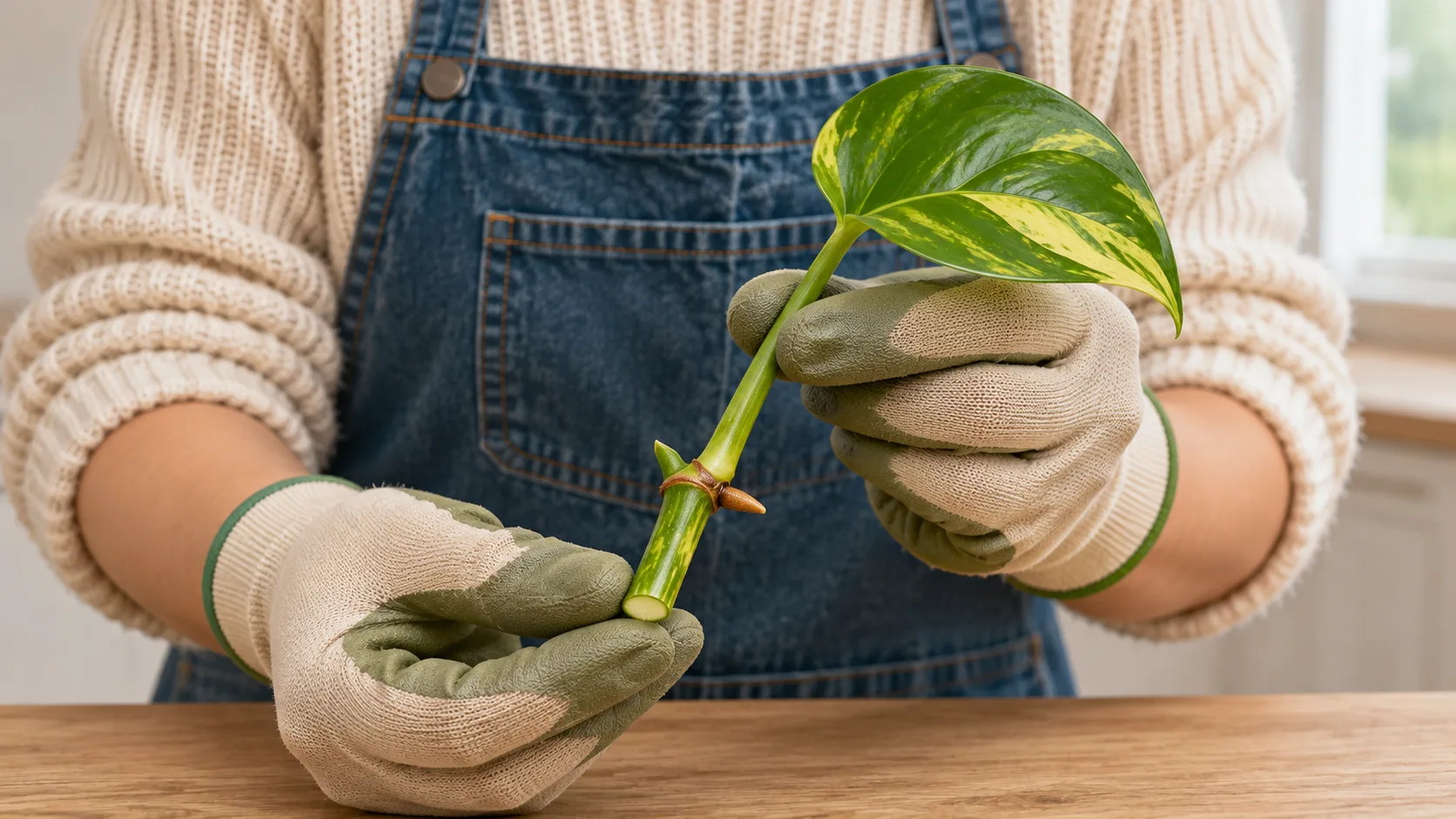
Keep a node on every cutting and cut just below a leaf attachment. Roots develop at stem joints; each section needs at least one node to root25. The piece of stem is essential.
Find the node where the stem meets the petiole. The main stem continues beyond this junction. Keep a section of main stem, complete with the node and its attached leaf. Sections 2.5 to 3.8 cm (about 1 to 1.5 in) long are used for single-node cuttings in commercial propagation7. Keeping the whole junction matters more than the length.
A small brown root may already protrude near the junction. Pothos has aerial roots that help it climb8. A visible aerial root makes the node easier to find; a stem with an intact node is also suitable for a cutting5.
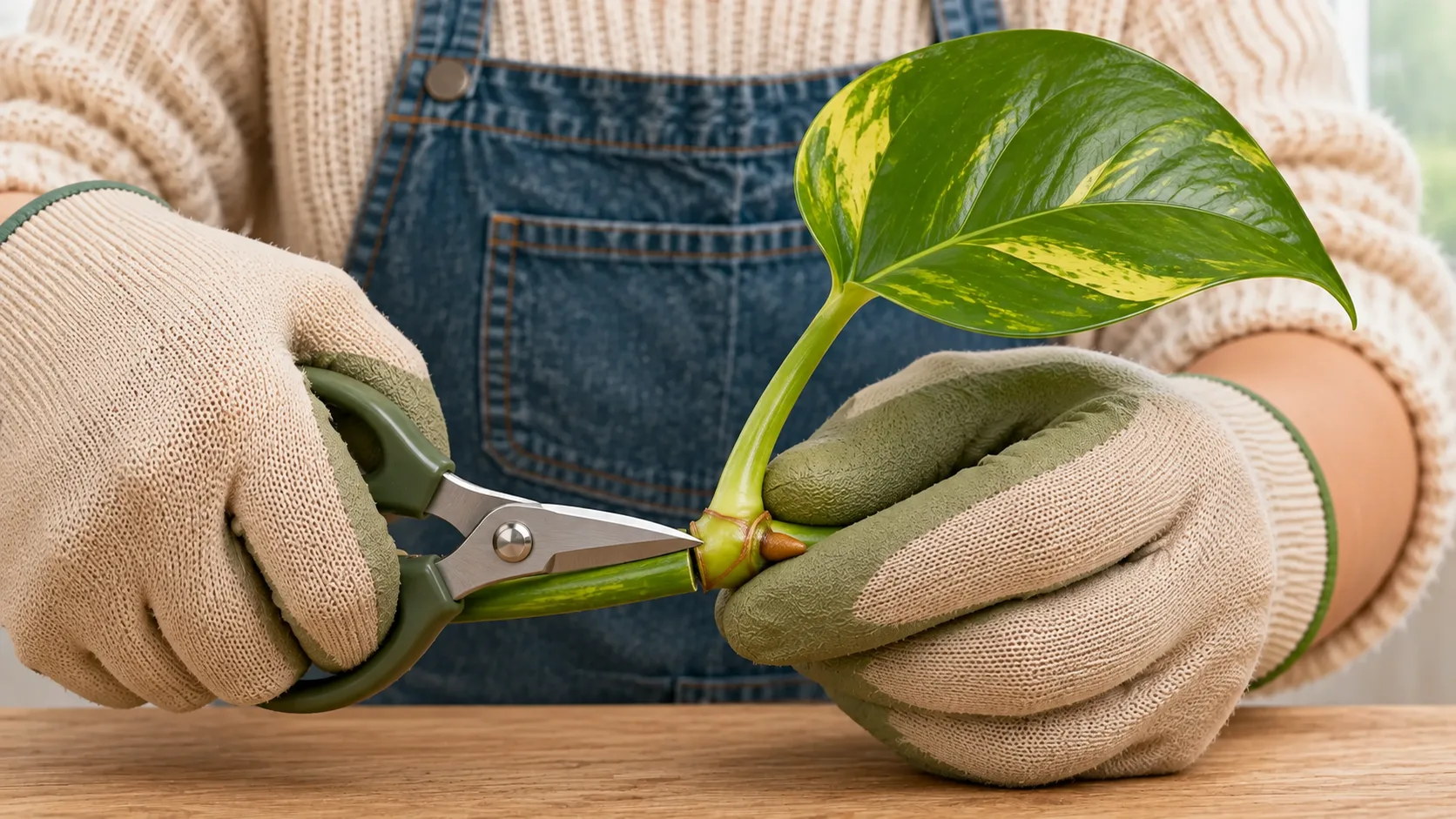
Distinguish pruning from preparing a cutting. To shorten the parent plant, cut above a leaf, encouraging new side shoots. Trim the removed piece below a joint before placing it in water2. Cutting on the wrong side of the junction can leave the cutting without its node.
Reject any blackened or diseased stem. Healthy material and clean compost limit disease transmission during propagation3. Take a section whose leaves and base are still firm.
How to propagate pothos in water, step by step
Submerge the node and keep the foliage above water, in a glass placed in indirect light. A clear glass lets you see the roots before potting up2. Position it where you can check the water level and the condition of the stem base.
- Take a stem section with a leaf and its node, cutting below the junction27.
- Place the base in a glass of water. Adjust its height so the node is submerged while the leaf stays above the rim: roots emerge at the node2.
- Put the glass somewhere bright, away from direct sun that can scorch the foliage2.
- Check the level and the stem base. The node must stay in contact with water for this rooting method; a base that turns brown and falls apart needs inspection, rather than deeper immersion24.
- Pot up once roots appear2. Wait for visible roots rather than setting a transfer date in advance.
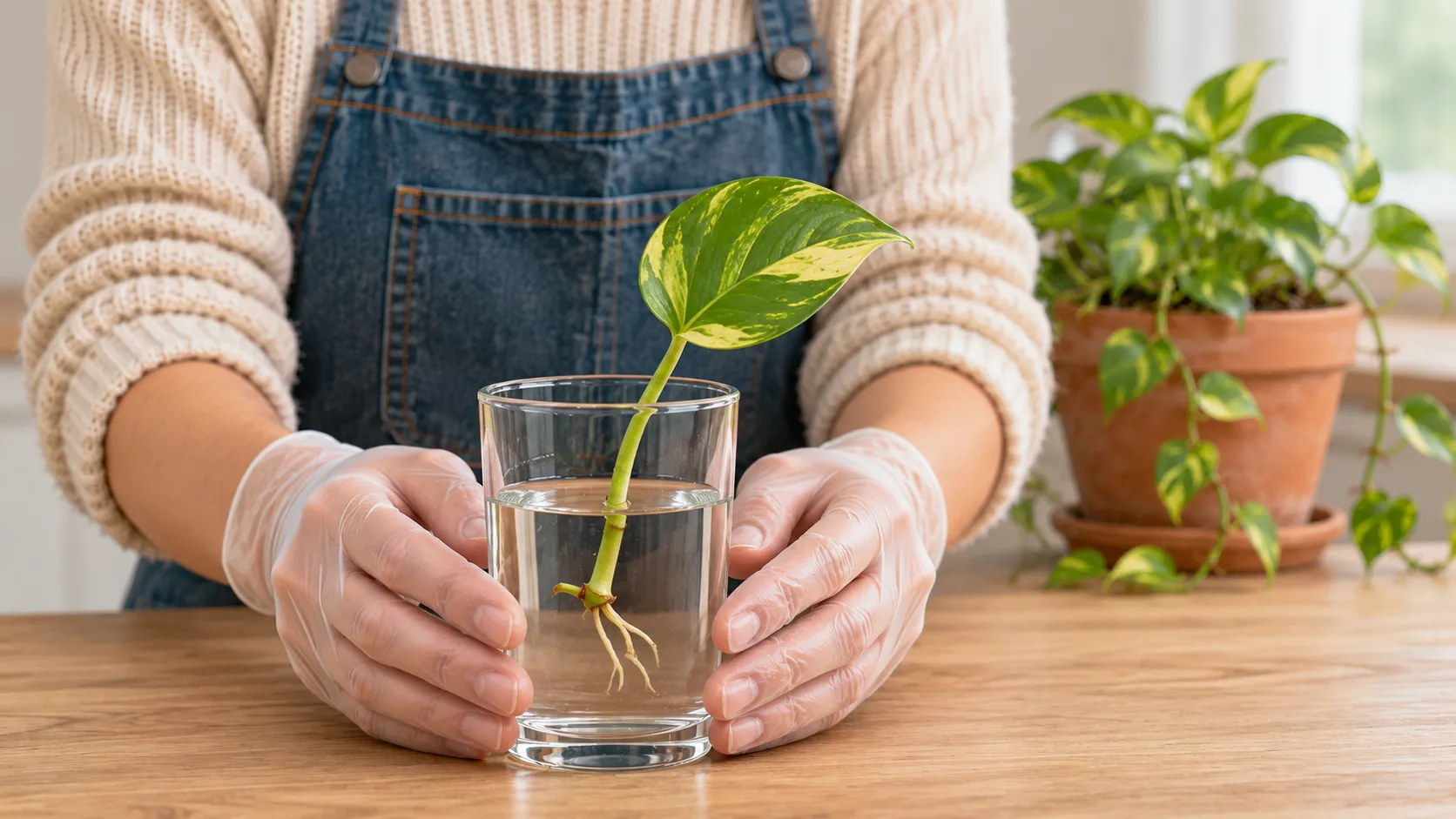
Allow three to four weeks for roots in warm conditions; buds can start growing in one to two weeks in warmth4. A bud starting to grow does not, on its own, prove that the root system has formed.
A new shoot can appear before the first roots. Bud break, when the bud opens, and rooting are separate stages to observe. Keep the node in water while you wait42.
Rooting directly in compost or vermiculite
Place the node directly into an airy growing medium to propagate without a glass of water. Stem cuttings also root in potting compost5. In vermiculite, roots usually take three to four weeks in warm conditions4.
Vermiculite is therefore a documented option. For pot growing, choose a well-aerated medium; overwatering or a poorly draining mix encourages rot45. Keep a light mix around the base.
Put the node in contact with the compost, keeping the leaf clear. Place the pot in indirect light and monitor moisture. A moist medium does not mean a pot standing in a full saucer. Constantly wet compost or standing water beneath the pot exposes the roots to rot2.
Leave the cutting in place while it establishes. Buds can grow before roots: observe the shoot without repeatedly digging up the node4. Later repotting will depend on root development, then on the space available in the container2.
When should you pot up the cutting?
Pot up water-rooted cuttings once roots appear, grouping several together for a fuller plant. Choose several rooted sections for a bushy pot, once the roots are visible24.
Prepare a pot with drainage holes and airy, well-drained peat-free houseplant compost. Prolonged excess moisture encourages rot2. Set the roots into the mix, then gently draw compost around them; keep the leaf above the compost and support the stem as you work.
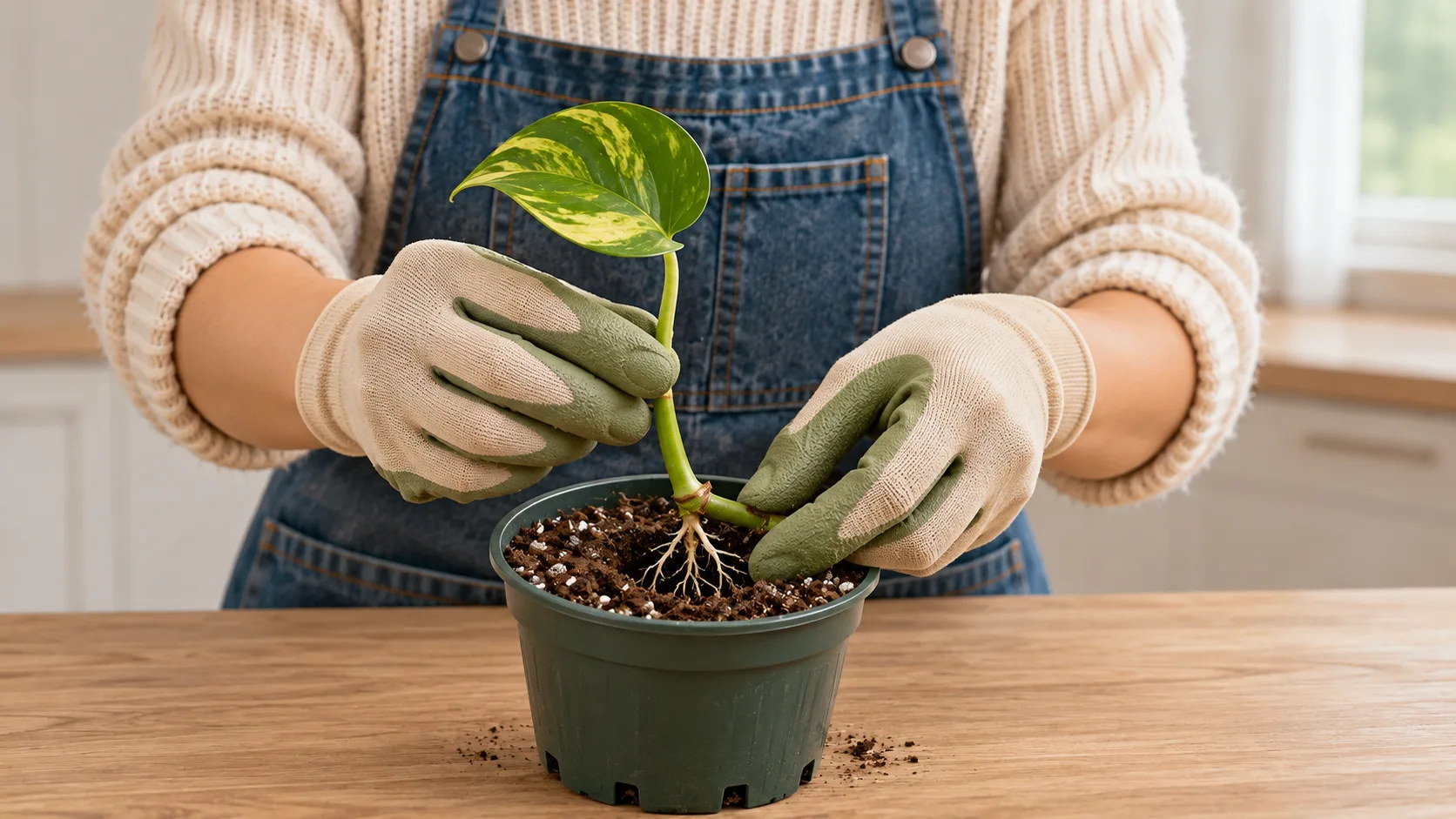
Water the young pot according to how its compost dries. Once the pothos is established, wait until the top two centimetres (about ¾ in) are dry before watering9. For a freshly potted cutting, check moisture in the small root ball directly and watch how water drains2.
The pothos care guide explains the mix, light and care for an established pot. For the plant's identity and its sometimes misleading names, see the origin and botany of pothos.
Layering a stem while it is still attached
Pin a trailing stem onto a pot of well-drained compost, with a joint touching the surface. Layering roots the node pinned into the pot, in spring or summer21.
This method uses the pothos's natural ability to grip and root along its stems. It suits a flexible shoot that reaches a nearby pot without being pulled tight. The node must touch the compost; a leaf simply laid on it cannot replace that junction2.
Keep the stem attached to the parent plant while roots form. Separate the new plant after the node has rooted. Keep the pinned point in contact with the compost, without pulling on the vine2.
Why your cutting is not rooting
Check the node, the condition of the base and the rooting medium first. A cutting needs a node; brown or missing roots can accompany rot54. Use the signs in the table to choose the first action.
| What you see | What to check | Useful action |
|---|---|---|
| A leaf with its stalk but no section of main stem | The node is missing5 | Take a new section carrying a node and a leaf |
| Soft, dark base and brown roots | Health of the cutting and excess moisture43 | Discard damaged material and start again with a healthy stem |
| Scorched leaf, dry on exposed areas | Direct sun on the glass or pot2 | Move into filtered light |
| A bud growing but few visible roots | Bud break can precede rooting4 | Wait for roots before potting a water-rooted cutting |
| White cottony masses in leaf axils | Possible mealybugs4 | Isolate the cutting and examine the parent before propagating |
Start again with healthy cuttings and discard diseased tissue: some diseases spread through propagation material3. For a waterlogged pot, start with the signs of root rot; for cottony clusters, see mealybug diagnosis.
Compare other propagation methods in our guide to propagating plants. For pothos, propagating a healthy stem remains safer than keeping and sharing pieces of a visibly diseased plant3.
Frequently asked questions
Prepare a section of stem with its node; choose the medium before cutting. Both water and compost allow pothos to root5.
How do you take a pothos cutting in water?
Submerge the junction that carries the leaf, keeping the blade dry. Trim the base below that node and place it in a glass in a bright spot; watch the roots through the glass before transferring it to compost2.