
When to repot a rose: signs and step-by-step method
Repotting roses: timing and steps
Repot a container rose when its roots circle the pot wall or emerge through the drainage holes, preferably during dormancy, from fall to early spring where those are its resting seasons. Choose a pot only slightly larger: add 2.5 to 5 cm (1 to 2 in) when the current diameter is under 25 cm (10 in). Between repottings, replace the top layer of mix every two years.
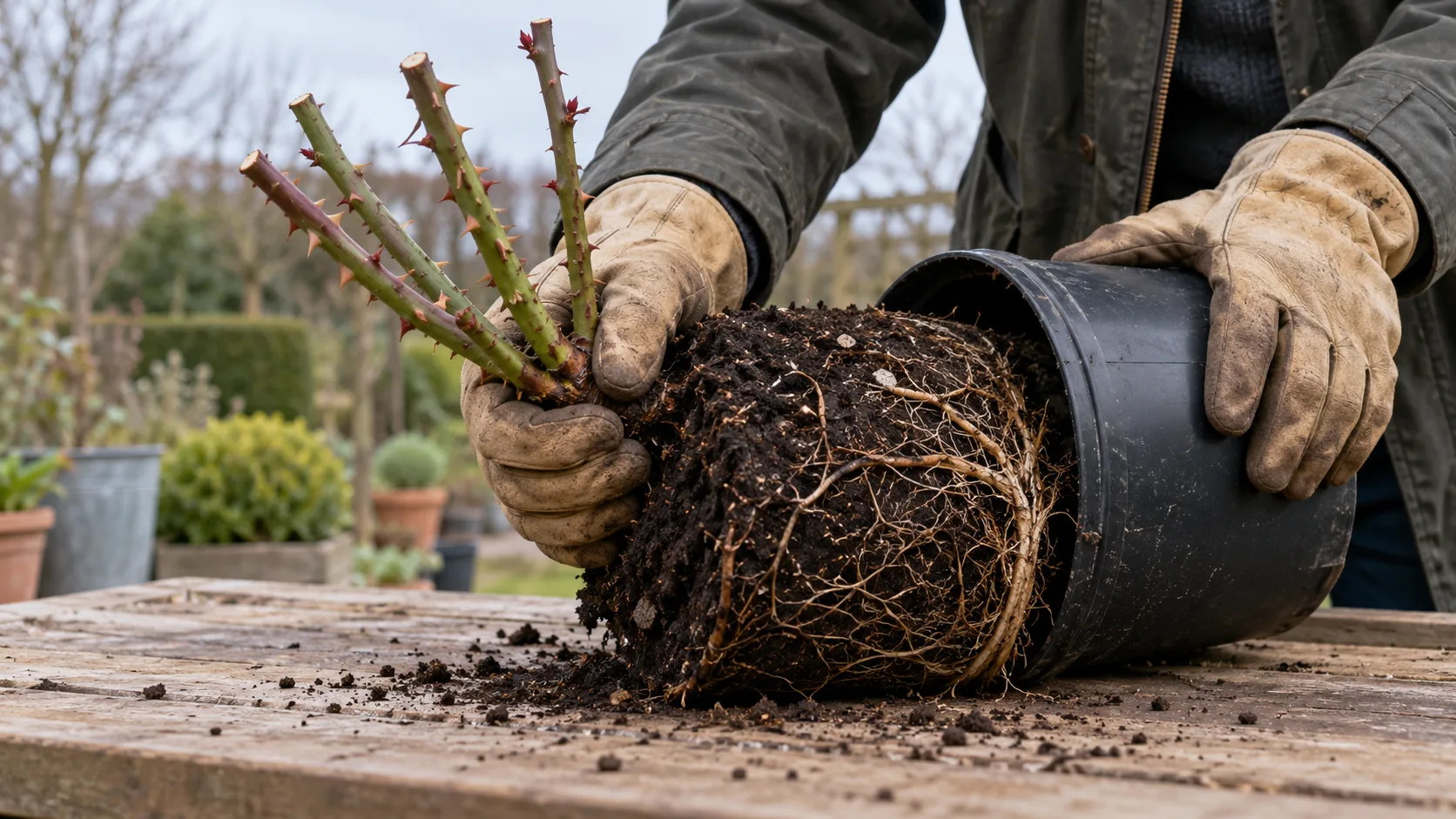
When to repot a rose
Read the roots rather than the calendar. The Royal Horticultural Society (RHS) recommends lifting out the root ball to check: roots spiraling around the bottom or growing through the drainage holes obstruct drainage and eventually rot1.
| Task | January | February | March | April | May | June | July | August | September | October | November | December |
|---|---|---|---|---|---|---|---|---|---|---|---|---|
| Watering | reduced | reduced | reduced | moderate | moderate | high | high | high | moderate | moderate | reduced | reduced |
| Growth | resting | resting | active | active | strong | strong | strong | strong | active | active | resting | resting |
| Feeding | no | no | yes | yes | yes | yes | yes | no | no | no | no | no |
| Repotting | no | favorable window | favorable window | favorable window | no | no | no | no | no | favorable window | favorable window | no |
- Repot
- Every 3 to 5 yearsGeneral guideline for potted plants · in a potSource: Royal Horticultural Society
- Repot
- Every 2 yearsTop-dress with 5 cm (about 2 in) of fresh potting mix · in a potSource: Royal Horticultural Society
- When to repot
- October to AprilContainer-grown rose · in a potSource: Royal Horticultural Society
- When to repot
- NovemberBare-root rose · in a potSource: Royal Horticultural Society
- The new pot
- 2,5 to 5 cm widerfor a pot less than 25 cm (about 10 in) in diameterSource: Royal Horticultural Society
- Pot depth
- 23 to 35 cmPatio or miniature roseSource: Royal Horticultural Society
- Pot depth
- 30 to 45 cmGround-cover rose or small climberSource: Royal Horticultural Society
Repot while the rose is dormant. In its UK calendar, the RHS allows potting container-grown roses from October to April, preferring November for bare-root roses2. Its general advice for most shrubs favors spring, discouraging fall and winter because fresh mix can stay too wet1. The common principle is to repot during dormancy, with a root ball that is neither frozen nor waterlogged, preferably in late winter in a wet climate. Use the plant's local dormancy and soil conditions rather than those UK months alone.
How often? The RHS suggests every three to five years for most container plants1. Between repottings, a rose needs only top-dressing: replace the top 5 cm (2 in) of mix every two years2.
Choosing a pot and potting mix
Choose a pot only slightly larger. The new container should be no more than one-third larger; below 25 cm (10 in) in diameter, add 2.5 to 5 cm (1 to 2 in) in both width and depth1. Depth matters most for roses: 23 to 35 cm (9 to 14 in) for patio or miniature roses, at least 30 to 45 cm (12 to 18 in) for groundcover roses or climbers2.

Use a peat-free, loam-based potting mix, such as John Innes No. 3, which the RHS recommends for plants that will remain in place for years2. Put the pot in its final location before filling it; once planted, it soon becomes too heavy to move2.
Choix du rosier, profondeur du pot, arrosage d'été et hiver : growing roses in pots se prépare avant même le premier rempotage.
Repotting a rose step by step
Put on thick gloves: prickles can catch you when handling the root ball. Then follow the RHS method1:
- Remove the rose, holding the stem bases with one hand and the pot with the other. If it sticks, lay the pot on its side or cut around the root ball against the wall with a spade; a slightly dry root ball releases more easily1.
- Untangle circling roots and cut off damaged ones1.
- Add firmed fresh mix to the bottom, positioning the root ball so its top sits just below the pot rim1.
- Fill around the sides and firm to remove air pockets, without piling mix against the stems1.
- Water thoroughly, until water flows out through the drainage holes1.
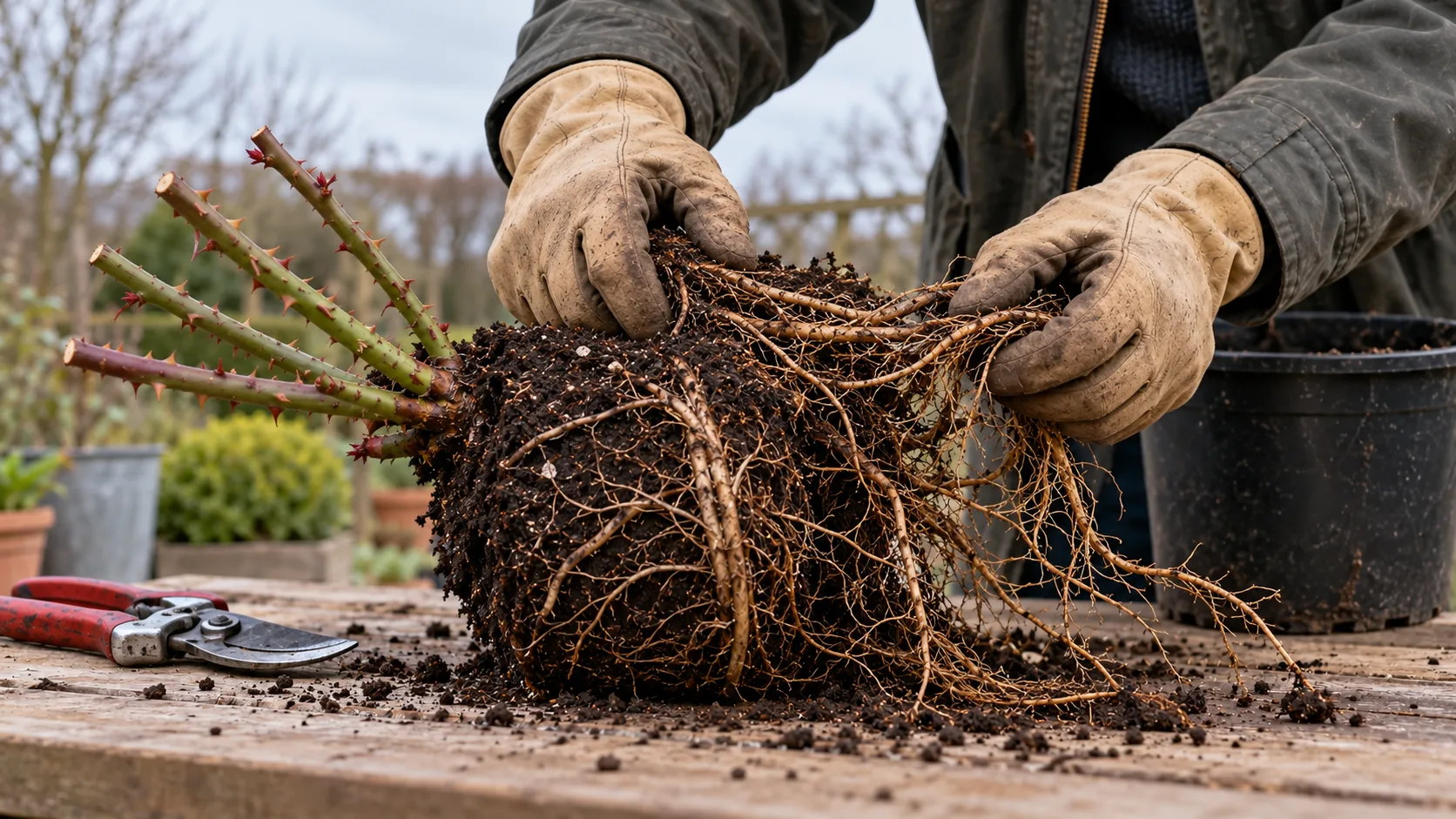
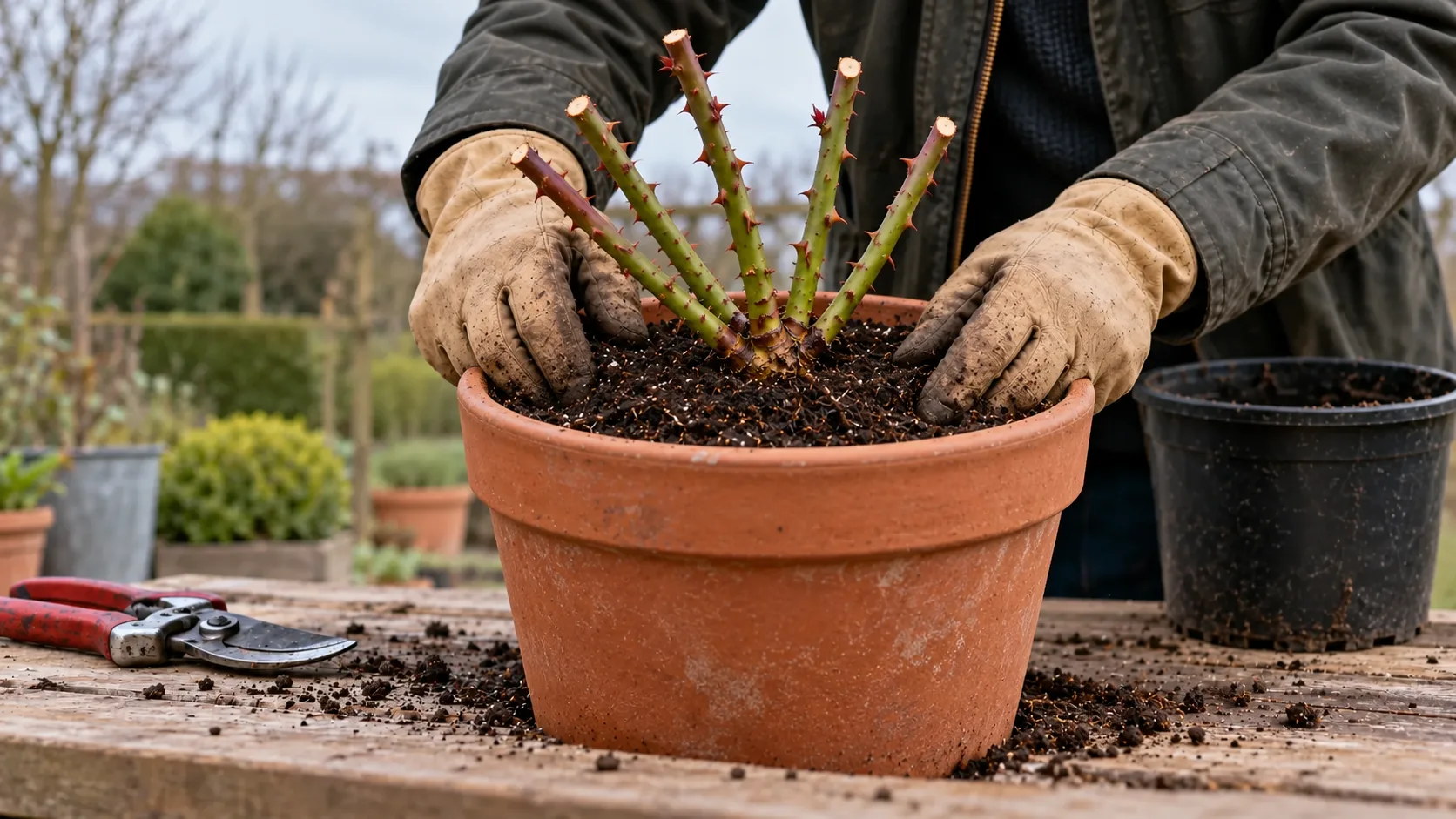
After repotting, keep the mix moist without waterlogging it, and renew a 5 cm (2 in) compost mulch in late fall where that precedes the dormant winter2. A rose repotted while dormant resumes growth in its local spring along with the rest of the garden.
Keeping the same pot: root pruning
You can keep a large pot when moving up is no longer practical, provided you prune the roots. To return a crowded plant to its container, the RHS removes up to one-quarter of the outer roots1. For a less crowded plant, lightly pruning 15% of the root system every few years is enough1.
When root pruning is not possible, the RHS refreshes the mix another way: lift the plant, add fresh mix underneath, and remove loose old mix from the sides and top of the root ball1. In the intervening years, replace the top 5 cm (2 in) of mix2.
Moving from a pot into the ground
A container-grown rose can be planted in the garden year-round, except during frost or drought3. The Société française des roses (SFR), however, prefers spring planting for container roses and fall for bare-root plants in its French growing context4.
The SFR's method: loosen the soil to 60 cm (24 in) deep at least two weeks beforehand, dig a hole 30 to 40 cm (12 to 16 in) in every direction, backfill, firm with your heel, and water with 2 to 3 liters (0.5 to 0.8 US gal) to settle soil against the roots4.
One pitfall: a rose often struggles where another rose grew before. This is replant disease; the RHS then fills a hole 60 cm wide and 30 cm deep (24 in wide and 12 in deep) with soil from elsewhere5.
Une fois en place, au pot comme au jardin : fertilizing roses reprend au printemps suivant.
Add your rose: Floralens reminds you when to repot or top-dress it (Pro mode). Get reminders
Frequently asked questions
When can I repot a rose?
What potting mix should I use to repot a rose?
A peat-free, loam-based mix, such as John Innes No. 3, intended for plants that will stay in place for several years2.