
Hydrangea in pots: care through the year
Bigleaf hydrangeas in pots
A hydrangea can live in a pot long term if you choose a compact variety and keep its rootball moist without standing water. Place the container in light shade, watch watering more closely in summer and shelter buds from late frosts. A shrub that survives the cold may still have lost its flower buds.
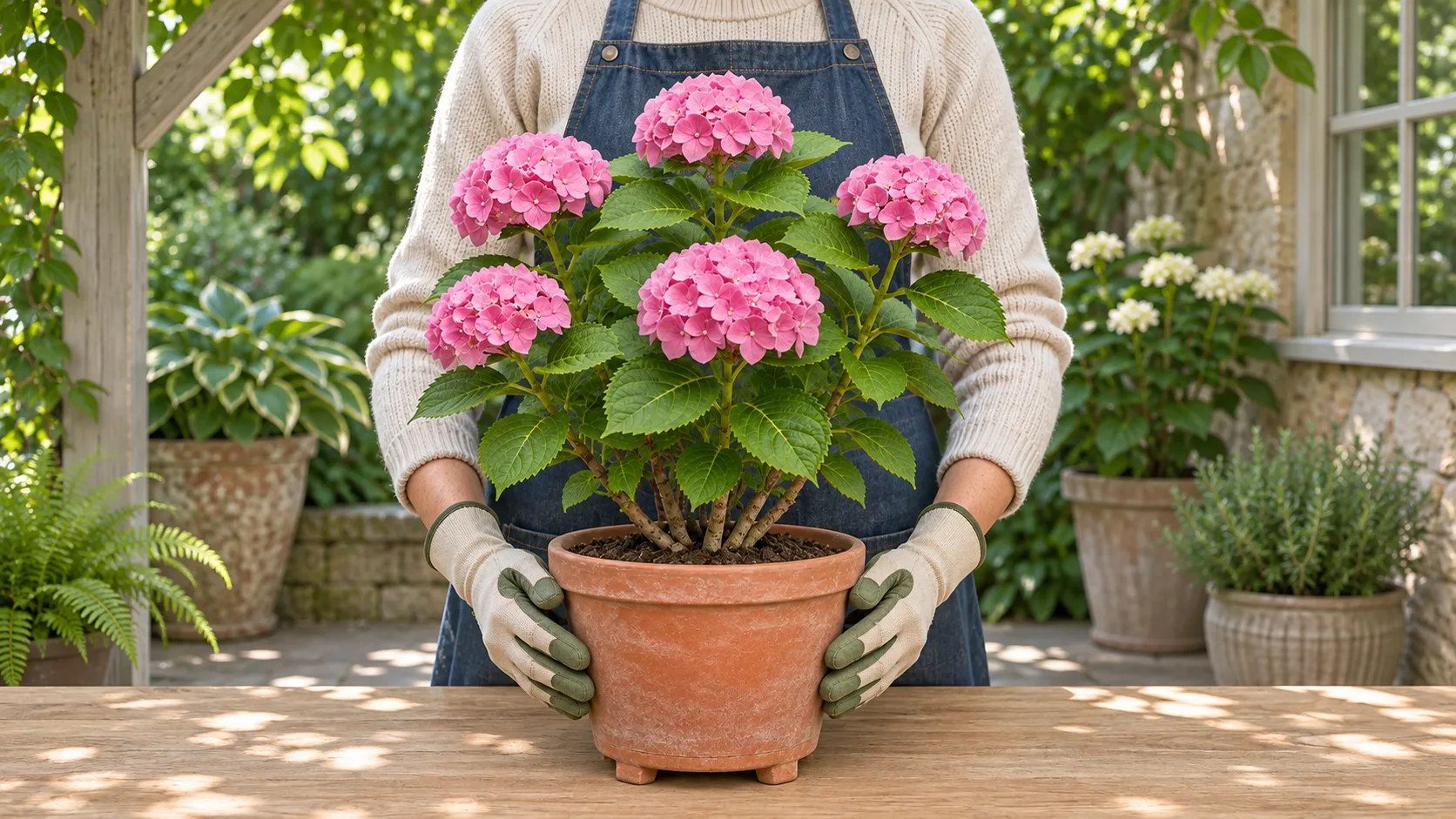
Can a hydrangea stay in a pot for its whole life?
Yes, with a compact cultivar, a suitable container and careful watering. ‘Altona’ and ‘Red Hot Violet’ suit containers. For a small space, ‘Tovelit’ reaches 0.5 to 1 m (about 20 in to 3 ft 3 in) tall and wide, while the species can reach 1.5 to 2.5 m (about 5–8 ft). 123
A small plant sold in flower can still become a large shrub. Choose by mature size: cutting a large macrophylla back each year removes wood that would have flowered. For balconies, choose varieties reaching 0.80 to 1.20 m (about 2 ft 7 in to 4 ft) at maturity. 45
Hydrangeas are sensitive to drought, especially in pots. Position yours in partial shade, with gentle morning or late-day sun; scorching afternoon sun makes it harder to retain moisture. A container also makes a blue variety easier to grow where garden soil is very chalky. 641
The hydrangea care guide covers growing in borders and pots. The botanical profile of bigleaf hydrangea helps you check the species before choosing how to prune.
Which pot should you choose for a hydrangea?
Start with a container with drainage holes, sized to the current rootball. For a hydrangea bought in a 2-litre (about 0.5 US gal) pot, plan the first move into at least 10 litres (about 2.6 US gal); after a 3-litre (about 0.8 US gal) pot, move to 15 litres (about 4 US gal) or more. These figures apply to an already rooted nursery plant. 4
| Material | Recommendation | Why |
|---|---|---|
| Terracotta | Suitable | Porous: dries faster; choose a frostproof pot Source: Growing plants in containers: Expert Guide | RHS Advice |
| Plastic | Suitable | Lighter and less drying than terracotta Source: Growing plants in containers: Expert Guide | RHS Advice |
For long-term growing, plan eventually for at least 40 cm (about 16 in) in diameter and depth. Increase the volume as the rootball develops: a young cutting starts in a small pot. A huge container around a few roots keeps compost wet for too long. 78
The material affects drying. Porous terracotta dries faster than plastic; choose frostproof terracotta if it stays outside. Plastic is lighter and holds moisture better. Metal heats quickly in summer and cools in winter; timber allows large containers but deteriorates over time. Any liner also needs holes in the bottom. 8
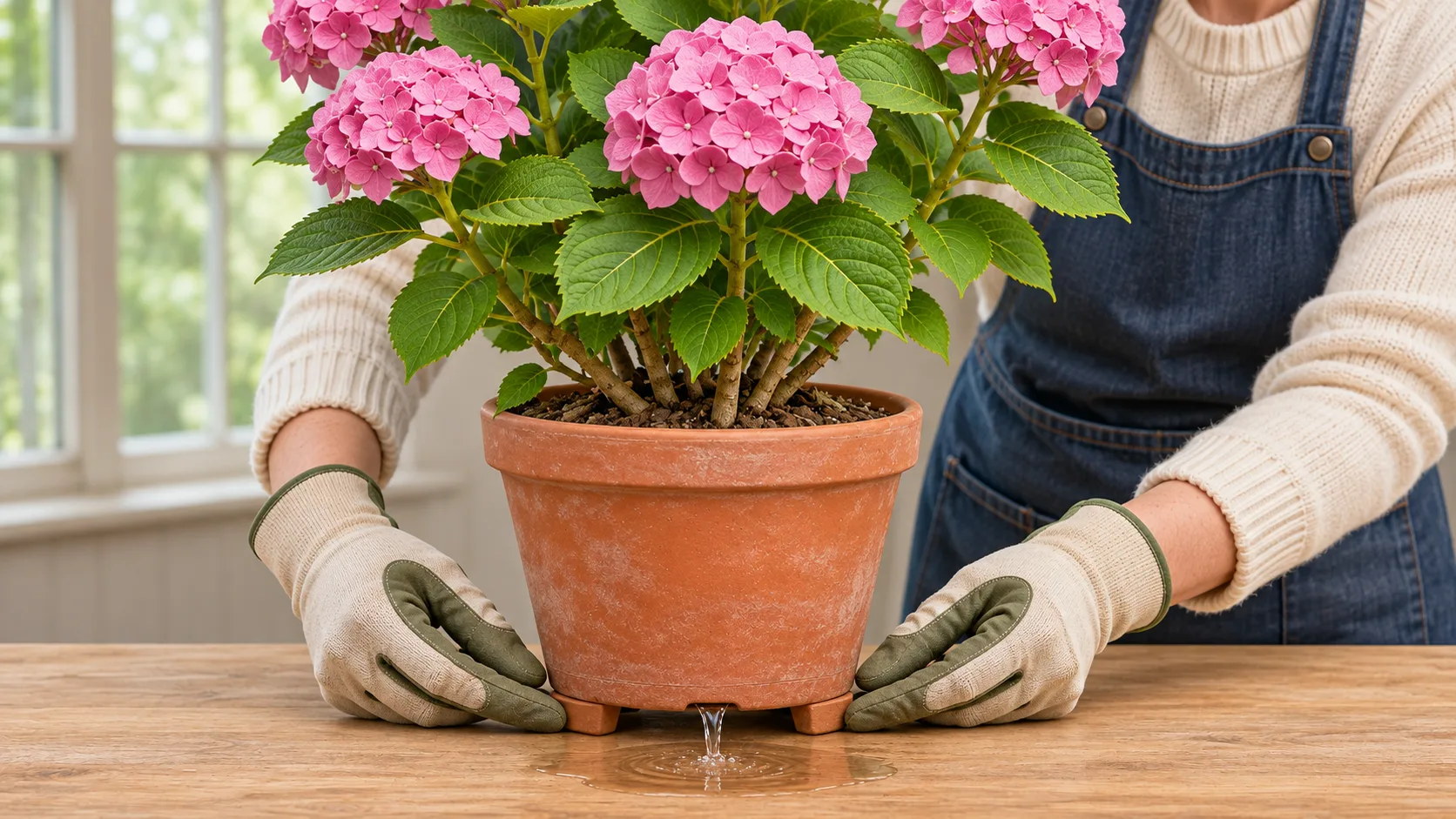
Avoid pots with a neck narrower than the body: a mature rootball is difficult to remove. Tall, narrow containers tip over more easily; keep them sheltered from wind. Raise the pot on feet to clear its holes and remove saucers that collect winter rain. 81
What compost does a potted hydrangea need?
Use a planting compost for shrubs that holds moisture while letting surplus water drain away. 4
Pure heath soil is too poor in nutrients and drains too freely for this container: it holds water poorly and provides few nutrients. Boos Hortensia also advises against ericaceous potting compost in pots; use a planting compost for shrubs here. 49
For a variety capable of turning blue, check the mix’s pH separately: about 4.5 to 5, with available aluminium, favours blue flowers. Prefer rainwater to maintain this colour. White flowers stay white despite acidification. 1
Before planting, moisten the rootball, then set its top level with the surrounding compost. Keep the base of the stems at its original height. Water after filling to bring the roots into contact with their new growing medium. 61
Free-draining compost still needs an unobstructed water outlet. A decorative outer pot that holds surplus water can keep the rootball saturated and encourage root rot. 8 The repotting guides let you compare growing media for other shrubs.
How should you water a hydrangea in a pot?
Check the compost daily in hot or windy weather, or twice a day in extreme heat. Water when the rootball needs it, before it dries out completely. A pot that dries too quickly benefits from a shadier position. 101
Pour water at the base, keeping the flowerheads dry. Spread it over the compost, then let the excess drain. If a newly planted rootball absorbs water poorly, divide it into two waterings half an hour apart, giving it time to become moist. 611
Check the soil beneath drooping foliage. If it is dry, rehydrate it; if it remains sodden, inspect drainage before adding water. The overwatering diagnosis helps you assess a declining plant in wet compost. 8
For blue flowers, prefer rainwater; if none is available, use tap water to prevent drought stress. In winter, keep checking sheltered pots during dry spells: water needs fall, but the compost should remain moist. 1
What fertiliser should you give a container hydrangea?
Feed in spring, allowing for fertiliser already in the compost. The DCM hydrangea fertiliser sold in France and cited here contains alum to encourage blue flowers: choose a formulation without a blueing ingredient if you want to keep pink flowers. The spring rate of 3 to 5 g per litre of compost applies to this fertiliser, rather than alum alone. Another product has its own rate. 1210
- Feeding
- In springAccording to the compost and chosen product · in a potSource: DCM France
- Avoid
- Excess nitrogenSource: How to grow shrubby hydrangeas / RHS Growing Guide
Apply to already moist compost, respecting the working life of incorporated fertiliser before feeding again. Feed during active growth. Excess nitrogen encourages soft, leafy shoots at the expense of buds and frost resistance. 101
A blueing product changes the conditions that affect flower colour; a weak plant first needs its water supply, drainage and roots checked. Follow that product’s own directions when trying to maintain blue flowers. 1
How do you protect the pot in winter?
Put the container against a sheltered wall or in a cold greenhouse. In spring, watch buds and young shoots especially when late frosts are forecast. Keep drainage clear and continue checking compost sheltered from rain. 1
- Winter conditions
- Outdoors, protectedSource: How to grow shrubby hydrangeas / RHS Growing Guide
- Protect
- Before the first frostsshelter the container and protect young buds · in a potSource: How to grow shrubby hydrangeas / RHS Growing Guide
The shrub’s H5 hardiness rating corresponds to −15 to −10 °C under British conditions. A pot exposes its roots to more cold; buds can also be damaged while the base stays alive. Keeping the flowers therefore depends on protecting the shoots. 31
A simple wrapping around the container insulates the rootball too little to prevent freezing during an ordinary winter. Start by choosing a sheltered position. On mophead forms, leave dry flowerheads over winter: they protect the buds below. 15
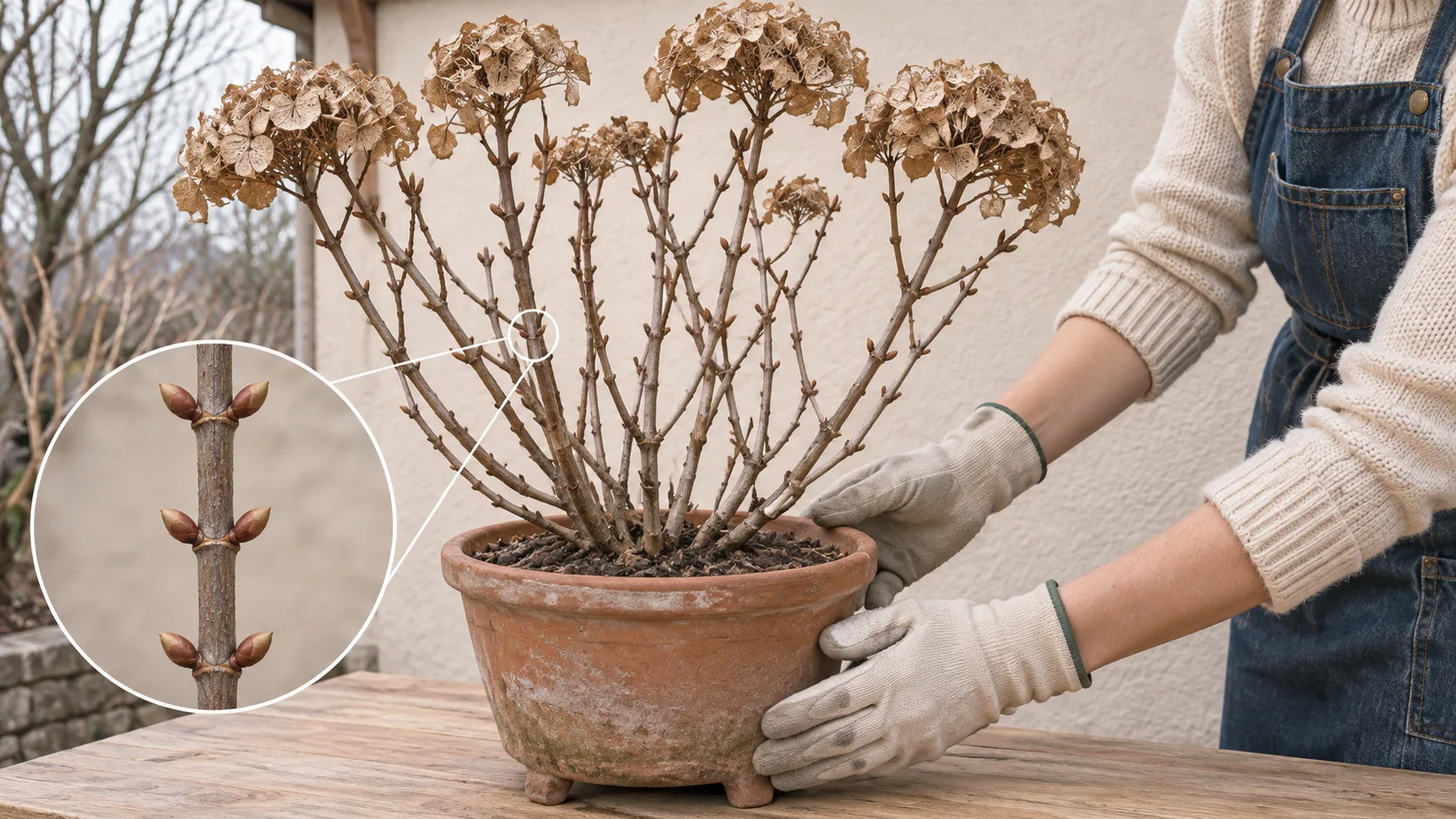
When spring returns, pruning a hydrangea starts with finding the buds before shortening a stem.
The weather protection advice complements these checks when a late frost is forecast.
When should you repot or refresh the compost?
Plan to repot roughly every three years, in spring, then adjust to root development. If the container is already large enough, renewing the compost allows the plant to stay in it. A wide opening makes the rootball easier to remove. 78
Early spring suits permanent container planting; early autumn offers another opportunity. Choose frost-free weather, with a moist rootball and conditions that help establishment. Increase pot volume as the roots develop. 8
A white deposit, spots or insects call for a foliage inspection alongside repotting. Changing the compost alone leaves those problems untreated. 13
To connect symptoms with their causes, hydrangea diseases helps distinguish a container problem from a foliage disorder.
To start a new plant, taking hydrangea cuttings begins with choosing a healthy, non-flowering shoot.
The container plant guides let you compare the needs of patio shrubs.
Frequently asked questions
Can you keep a saucer under the container in summer?
A saucer can collect drainage water, but empty the excess so the roots can breathe. During winter rain, remove it and raise the container: the base must stay clear. 8
Is an outer pot without drainage holes enough for a hydrangea?
The container holding the roots needs drainage holes. If you put it in a decorative outer pot, make sure water can be emptied after watering; a permanent reservoir around the rootball encourages waterlogging. 8