
Hydrangea diseases: recognise the signs
An unhealthy hydrangea: trace symptoms to their cause
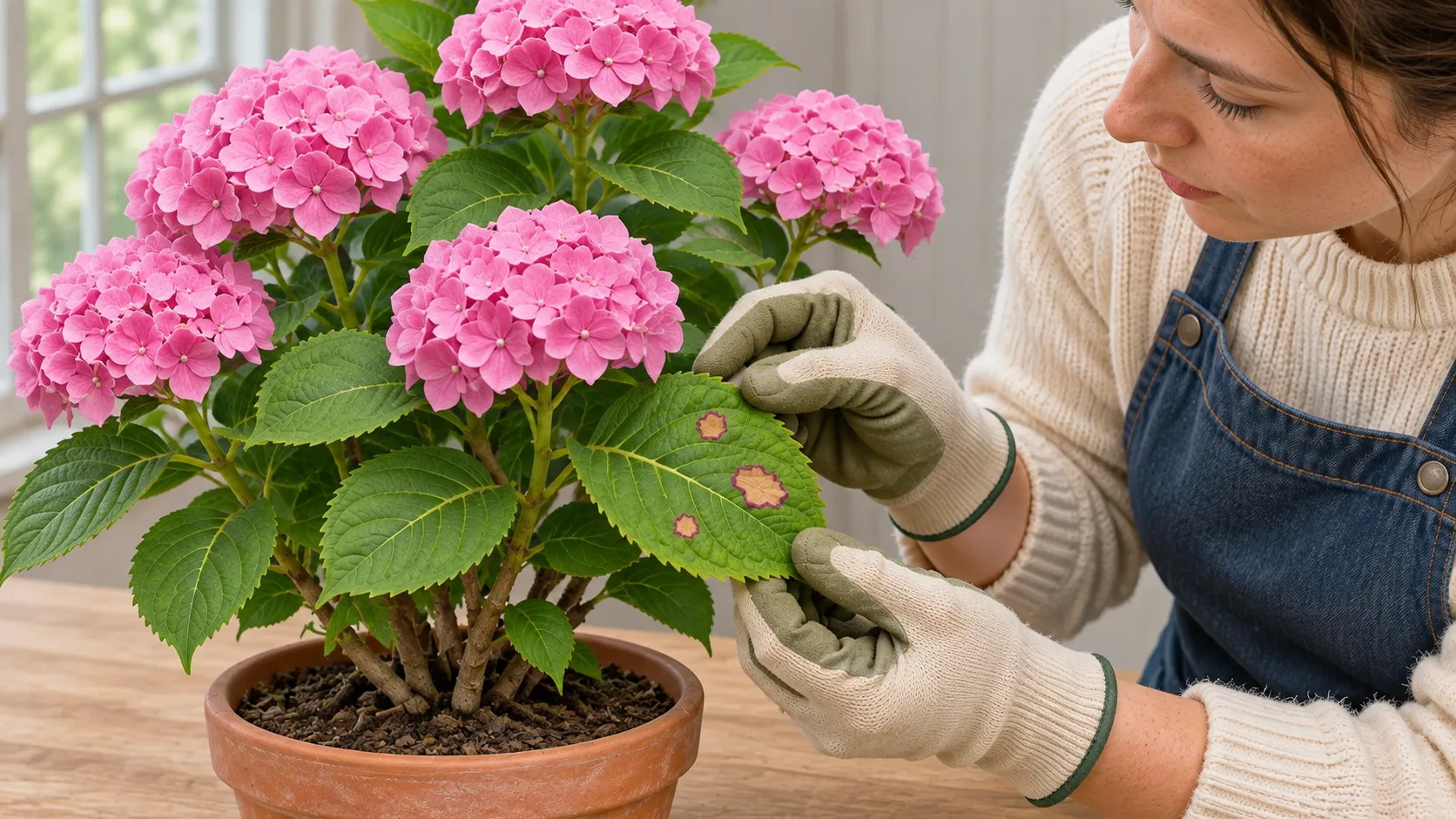
Examine the shape of a symptom before treating a hydrangea: white powder, purple-edged spots, veins that stay green and a sodden rootball call for different actions. One damaged leaf is not enough to diagnose an infection.
How do you recognise a hydrangea problem?
Look at both sides of the leaf, then check soil moisture. Spots, white powder, insects and wilting call for different checks. On bigleaf hydrangea (Hydrangea macrophylla), start by comparing young leaves, older leaves and the condition of roots in the pot. 12
Drooping foliage can accompany a dry rootball or roots deprived of oxygen in saturated soil. Feel the soil before watering: its moisture helps you choose the first action. 3
| What you observe | Possible cause to check | First check |
|---|---|---|
| Separate spots with tan centres and purple edges | Leaf spots consistent with Cercospora leaf spot | Look for increasing numbers of spots and leaves that stay wet for long periods |
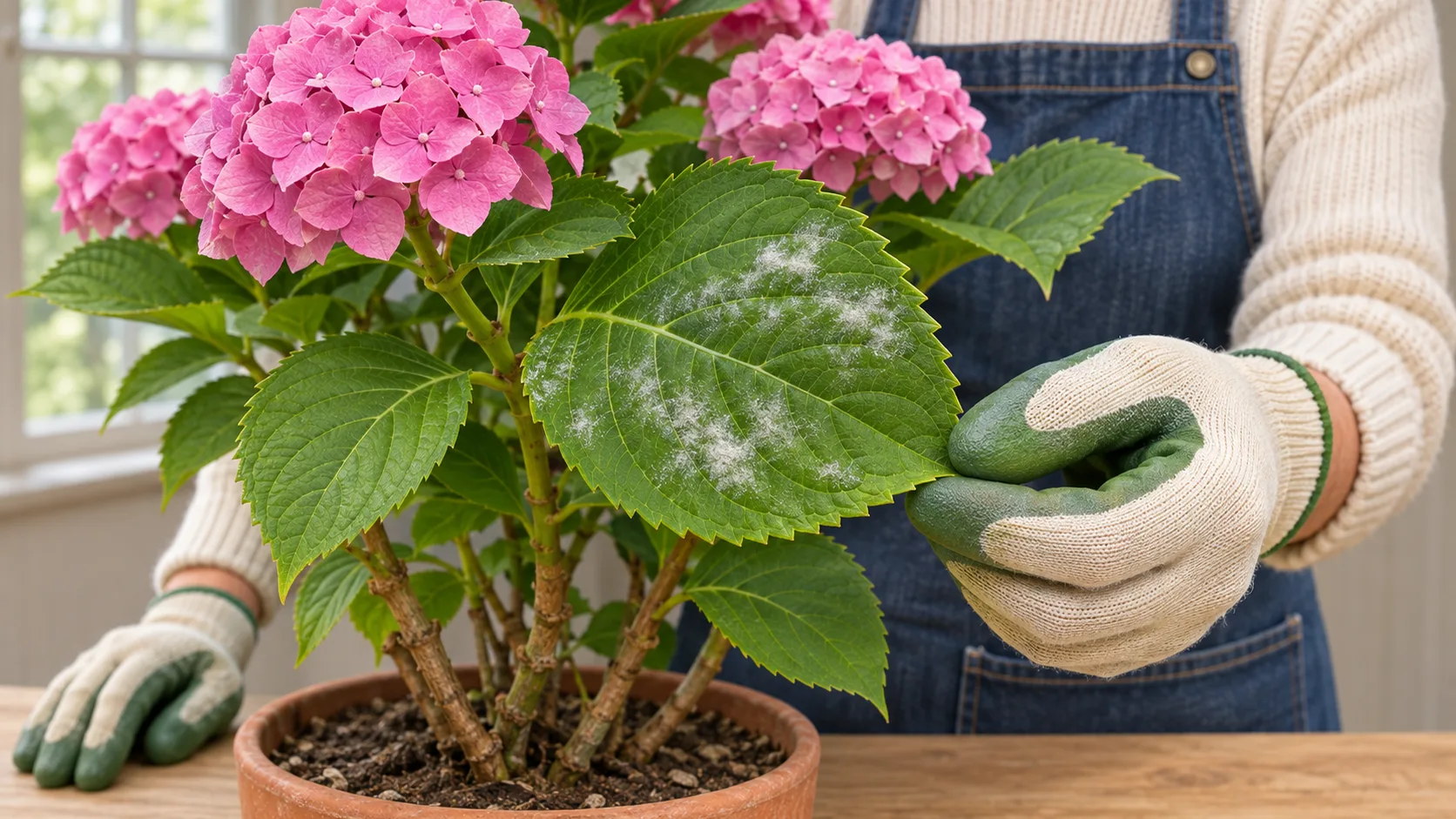
| White powder spread over the surface | Powdery mildew | Distinguish powder from a waxy mass hiding an insect |
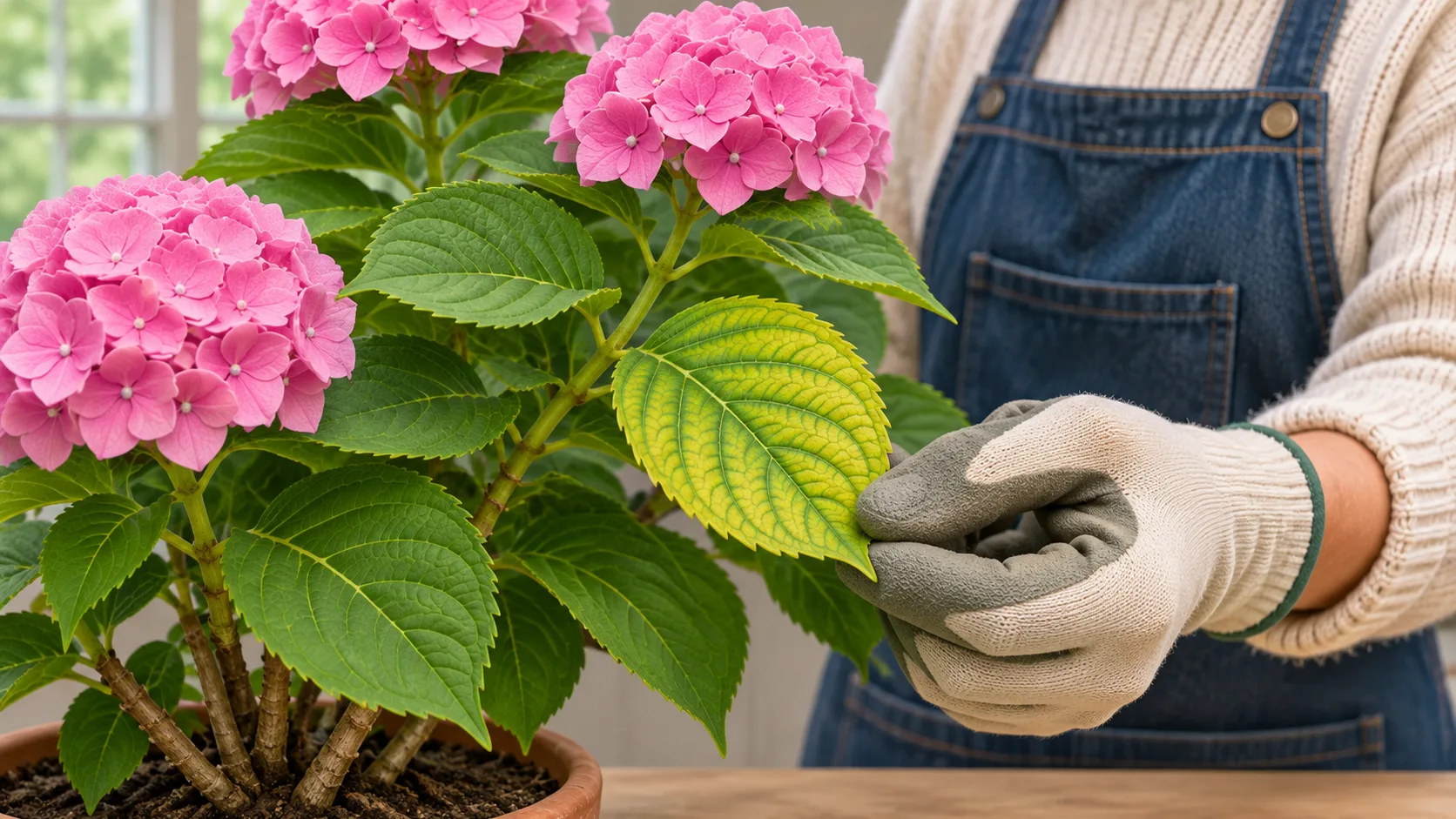
| Young leaves yellow between green veins | Chlorosis, particularly unavailable iron | Compare young and old leaves and check the soil |
| Drooping leaves, dry compost | Possible water shortage | Check the whole rootball, as well as the leaves |
| Yellowing and wilting, saturated rootball | Waterlogging and struggling roots | Check water drainage |
| Small brown shapes and white sacs underneath | Hydrangea scale | Lift the leaf and inspect its vein and the stems |
| Young leaves blackened after frost | Possible cold damage | Compare the damage with recent weather |
| Soft tissues with grey-brown fluff | Grey mould | Remove affected tissues and improve ventilation 4 |
| Notched leaf edges, white larvae in the rootball | Vine weevil | Inspect at night and examine the roots in the pot 5 |
| Small brown-edged holes and distorted young leaves | Mirid bugs, also called capsids | Observe young shoots and the insect before intervening 6 |
| Decline with white fungal growth under bark at the base | Honey fungus requiring confirmation | Have the base and woody roots examined 7 |
Examine the stems and root collar too, where they meet the roots, if decline affects the whole plant. Root disorders require different checks from diseases confined to the leaves. 37
Brown or purple spots on leaves
Spots with tan centres and purple edges suggest Cercospora leaf spot. This Cercospora leaf spot marks the leaves; late-season spots are often mainly cosmetic and rarely justify a fungicide. 89
Collect fallen leaves and water at the base. Keeping foliage dry reduces conditions favourable to leaf spots. If lesions spread alongside dying shoots, keep a leaf and photographs of the whole plant to help obtain a more precise diagnosis. 8
Start by avoiding regular leaf wetting and removing accessible affected leaves when the first symptoms appear. These steps also help limit bacterial leaf spots on bigleaf hydrangeas; overhead watering and splashing contribute to their spread. 9
The bacterial leaf spot diagnosis helps you compare another possible cause of lesions. If leaves are mainly dry around the edges after full sun or frost, consider growing conditions: brown margins can also result from that stress. 9
White powder on a leaf
A white powdery layer spread over a leaf is consistent with powdery mildew. Powdery mildew is among the diseases reported on bigleaf hydrangea. Discolouration and distortion of young foliage may accompany it. 110
Examine leaf undersides to distinguish scale insects. Their white waxy egg sacs stay fixed in one place; a small brown body nearby helps identify the insect. Powdery mildew forms a more diffuse powder. 11
For powdery mildew, improve airflow without moving the hydrangea into scorching sun. Avoid overcrowded planting and maintain a steady water supply during dry spells; water stress increases susceptibility. The hydrangea’s preference for a partly shaded position still applies. 1012
Powdery mildew can infect leaves in drier conditions than many other fungi need. Maintain steady moisture at root level by watering the compost; leaves that stay wet encourage other diseases. 10
If powdery mildew spreads, a sulphur treatment authorised for powdery mildew on trees and shrubs can supplement ventilation and water management. In France, the home-garden authorisation for SULFURMAX, containing 4 g/L of sulphur, sets a maximum rate of 100 mL of product per m², no more than six applications and at least seven days between applications. Follow the label, particularly the precautions against plant damage on ornamentals; apply when pollinators and beneficial organisms are absent, then wait for complete drying before re-entering the treated area. 1314
The powdery mildew and powdery mildew treatment diagnoses let you compare signs and actions.
Grey-brown fluff on flowers or soft stems
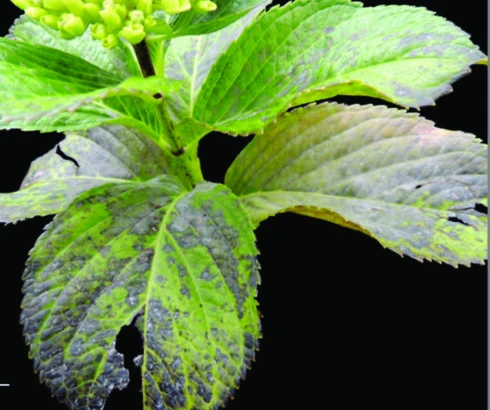
Remove soft parts covered in grey-brown fluff. Grey mould, associated with Botrytis cinerea, develops on leaves, flowers and buds in humid conditions. It particularly affects damaged or weakened tissues. 412
Carefully enclose affected parts in a bag as you remove them, to limit spore dispersal. Collect visibly diseased debris, ventilate plants under cover and water the compost while keeping flowerheads dry. Disinfect tools after removing diseased parts. 413
Yellow leaves with veins that stay green
Check leaf age first: unavailable iron mainly affects the youngest leaves. Chlorosis between the veins can accompany different nutrient imbalances. Iron deficiency affects young foliage first; signs of magnesium or manganese deficiency tend to begin on older leaves. 2
Roots may struggle to absorb iron present in strongly alkaline soil. Check pH and drainage; in a very chalky garden, a container filled with suitable compost makes growing easier. Check compaction, drought and waterlogging too before adding more fertiliser. 162
Clear drainage when the rootball stays heavy and wet. Waterlogging reduces the oxygen available to roots and can cause yellowing. Improve drainage before correcting nutrients in that situation. 3
The iron deficiency diagnosis helps you continue the comparison. Where garden soil is unsuitable, a container lets you choose an appropriate growing medium. 16
To start growing in a container, the hydrangea in pots guide explains compost selection and drainage.
Drooping leaves: dry, hot or too wet?
Check the rootball before watering again. A bigleaf hydrangea can wilt in strong heat even when the soil still contains water. If the leaves recover at night and the soil is moist, additional watering is unnecessary. 9
If the compost is actually dry, resume watering according to the rootball’s condition. Check container plants regularly to prevent complete drying; moving pots to a shadier position during summer also slows water loss. 16
Conversely, saturated soil can leave a plant wilted: roots lack oxygen and struggle to supply the leaves. Dark roots, a rotten smell and decline strengthen this possibility; a progressing problem needs its cause identified more precisely. Root oxygen deprivation first describes that soil condition. 3
Let water drain from the pot and check for drainage holes. Drainage is particularly important during wet periods. Keep checking a saturated rootball rather than adding water simply because leaves droop. 173
To continue the diagnosis, compare overwatering and root rot. The complete hydrangea guide puts these observations in the context of the plant’s position and season.
White cotton, brown bumps or sticky leaves
Lift the leaves: small shields and white sacs fixed underneath suggest insects. Hydrangea scale (Pulvinaria hydrangeae) produces oval white egg sacs 3 to 4 mm (about 0.12–0.16 in) long. Adults are brown; heavy infestations can weaken the plant and cause leaf fall. 18
Hydrangea scale has one generation each year. Young nymphs feed on leaf undersides, then move onto stems to overwinter. White coverings sometimes remain after hatching: look for living insects to track activity. 18
On a vigorous, lightly affected shrub, monitoring may be enough. Visible adults and sacs can be removed, although this will not always eliminate a large population. Preserve predators, particularly some ladybirds, rather than treating the whole plant before identifying the pest. 18
Aphids tend to form colonies on tender shoots and the undersides of young leaves. They can curl leaves and excrete honeydew. Black growth on that liquid may be sooty mould, rather than a spot originating within leaf tissue. 19
Tolerating a small colony and preserving its natural enemies is often possible. If it affects young shoots, aphids can be removed by hand; honeydew and sooty mould can be wiped away with a damp cloth. The aphid, scale insect and sticky leaf diagnoses explain which signs to compare. 19
Notched leaf edges: vine weevil
Inspect the shrub at night with a torch. Adult vine weevils are dark beetles about 9 mm (about 0.35 in) long that cut notches in leaf edges. Adult damage is often tolerable; collect accessible insects. 5
The main danger comes from larvae eating the roots, particularly in pots. They are white, C-shaped and legless, with light brown heads, and reach 10 mm (about 0.39 in). If the hydrangea wilts despite a moist rootball, remove it from the pot to inspect the roots; remove larvae found while repotting. 5
Small holes and distorted young leaves: capsid bugs
Examine young shoots and small brown-edged holes. Mirid bugs, also called capsids, can feed on young hydrangea shoots. Developing leaves then show small brown-edged holes and distortion; buds may fail. Green or brown adults measure up to 6 mm (about 0.24 in). 6
Tolerating a few marked leaves is often enough when new shoots remain vigorous. Observe the insects present and preserve their predators: distortions sometimes become visible after the culprit has left, and some similar-looking bugs benefit the garden. 6
Decline with fungal growth beneath the bark: honey fungus
Have the diagnosis confirmed before removing the shrub. White or cream fungal growth between bark and wood, at the root collar or on roots, with a mushroom smell, is characteristic of honey fungus. Yellowing or a few mushrooms nearby require further checks. 7
If infection is confirmed, remove the stump and accessible infected woody roots, protecting neighbouring plants’ roots. Bag colonised fragments and keep them out of the compost. Management relies on removing these infection sources and maintaining healthy soil and surrounding plants. 7
Blackened foliage after cold or a shrub without flowers
After frost, examine buds before cutting the shrub down. Young tissues are sensitive to cold; regrowth from dormant buds can be late. Wait until living parts are visible before cutting to a healthy pair of buds. 2021
Pruning too low can explain missing flowers. On traditional macrophylla hydrangeas, the previous season’s shoots carry the flowers: cutting everything back removes future buds. Review the history of pruning and frost before looking for infection. 21
Under cover, watch cuttings too and remove dead or diseased tissues while they root. 2122
To preserve flower buds, the hydrangea pruning guide distinguishes removing old flowers from renewing old wood.
To propagate a healthy plant, hydrangea cuttings explains preparation and care of collected shoots.
How do you monitor recovery without adding more treatments?
Follow new leaves and soil condition. Vigorous shoots and better moisture control show how the plant is recovering; existing marks remain on old leaves. Keep dated photographs to compare progress.
Start with the species’ needs: moist but well-drained soil, suitable light and protection for young buds. Treatment cannot replace those growing conditions. The hydrangea botanical profile helps you confirm that the plant is a bigleaf hydrangea before applying this care. 16
For other garden plants, the disease and pest diagnoses provide a starting point. Then adjust watering to each species and its soil condition.
Frequently asked questions
Should you treat leaves that only become spotted in late summer?
How do you distinguish a white scale insect from powdery mildew?
Do holes in leaves prove that roots are being attacked?
Why do the leaves recover at night without watering?
A hydrangea can wilt during strong heat while the soil still contains water. If it recovers at night and the ground stays moist, monitor the rootball instead of automatically adding water. 9