
Care guide
Ficus ginseng care
Ficus microcarpa
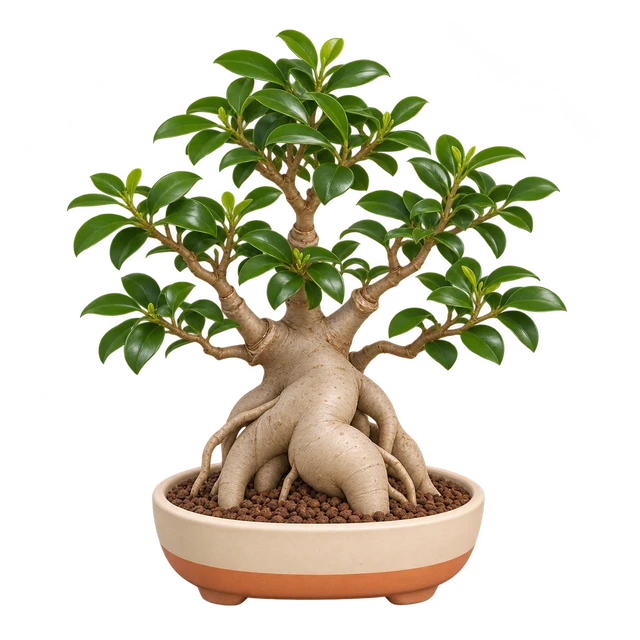
Ficus ginseng keeps a dense crown near a bright window, with mix that dries slightly between waterings. Its thick exposed roots do not remove the need to monitor the root ball. Also locate the graft: shoots appearing beneath it are not pruned like the branches at the top.
When should you water a ficus ginseng?
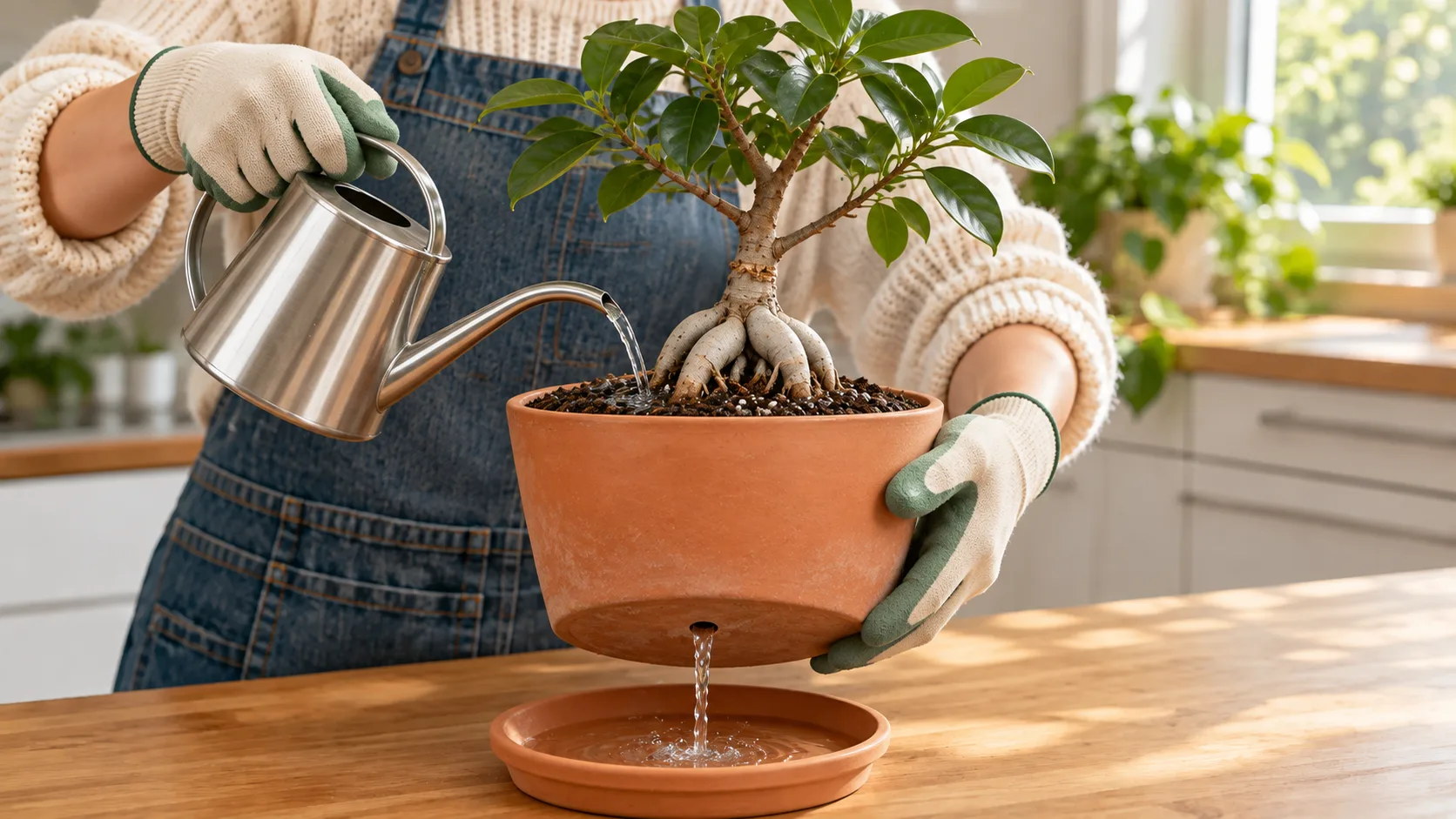
Water when the surface dries slightly, then let the whole root ball drain. Touch the mix before every watering and empty the saucer. Frequency depends on the pot, warmth and actual drying. 1 2
17 cL every 11 days
Water after the surface dries slightly
Keep the mix just moist
What light should you provide?
Keep a bright position near a window and gradually acclimatise the plant to sun. Avoid curtains that block light and air blowing from appliances. Moving the plant may cause temporary leaf loss. 1 3

At 1 m from the window: bright light
Distance from the window
Move the plant around the room: for Chinese banyan, the recommended zone is 0 to 0,5 m from the glass. Light levels fall very quickly with distance.
Should you moisten the foliage?
Keep leaves clean without trying to keep the bonsai constantly wet. Thick foliage tolerates relatively dry household air; higher humidity instead encourages aerial roots. The absence of new roots descending from branches therefore does not alone indicate underwatering. 2
Spraying does not water the root ball. Suggested bonsai misting practices vary, and overly frequent foliage wetting can encourage disease. Start by moving the ficus away from heating or air-conditioning airflow and checking leaf undersides if they discolour. 2 1
When and how should you repot?
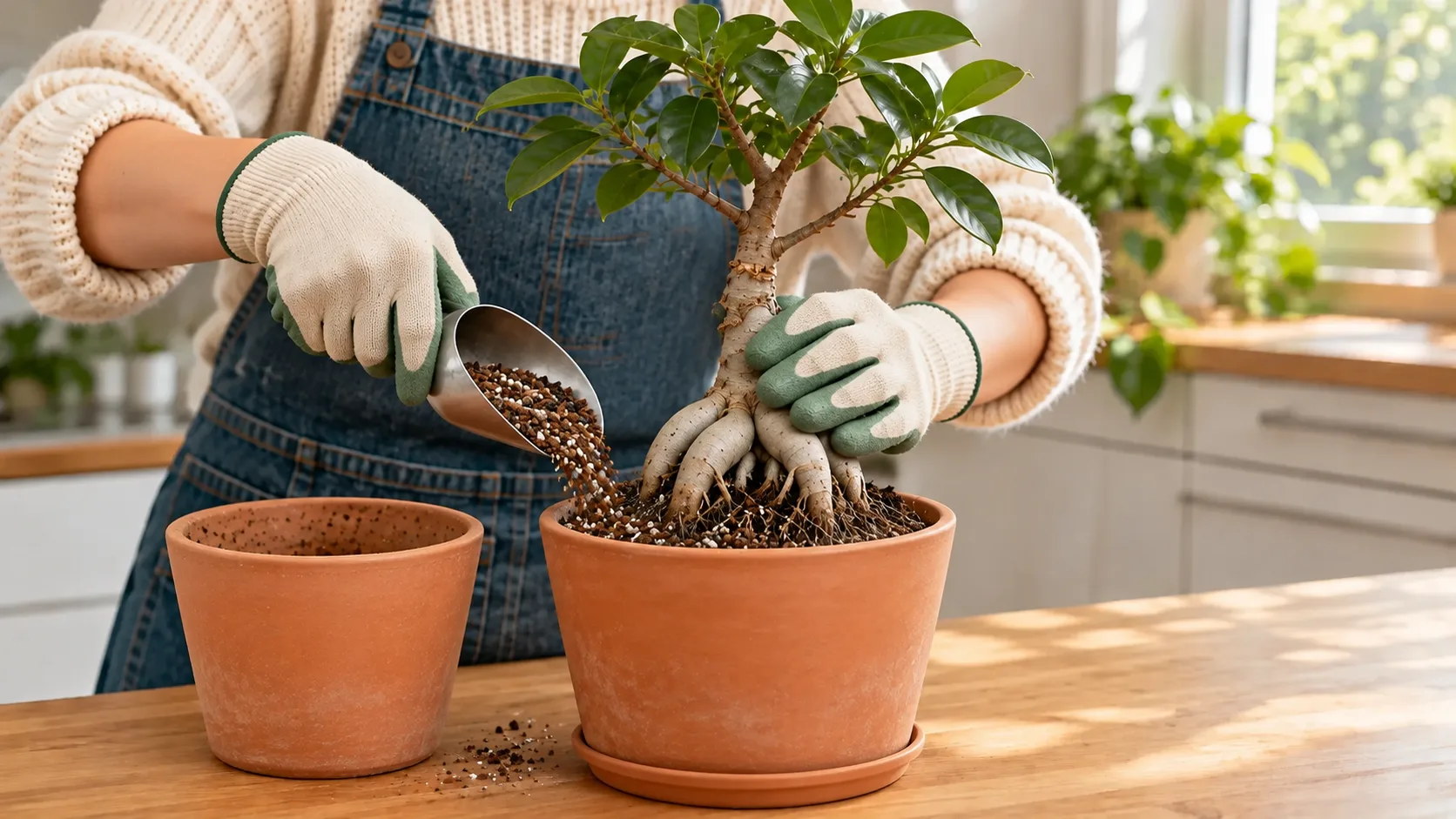
Inspect the root ball in spring before choosing a larger container or keeping the existing bowl. Renew deteriorated mix, untangle congested roots and do not mound soil against the trunk. Ficus tolerates root pruning. 2 4
- Repot
- Every 2 yearsFicus trained as bonsai · indoorsSource: Bonsai Empire
- When to repot
- In springSource: Bonsai Empire
- The new pot
- 2,5 to 5 cm widerprevious pot: diameter and depth less than 25 cm (10 in)Source: Royal Horticultural Society
Which fertiliser and what dose?
Feed only active growth, using the dose for the chosen product. Fertiligène Bonsaïs specifies a quarter capful per litre, every three weeks from March to September. That cap and schedule do not transfer to another bottle. 5
- Fertilizer
- High in nitrogenLiquidSource: Royal Horticultural Society
- Feeding
- March to SeptemberFertiligène bonsai fertiliser instructionsSource: Fertiligène
- No fertilizer
- In winterif growth has stoppedSource: Ficus microcarpa 'Moclame' | curtain fig 'Moclame' (https://www.rhs.org.uk/plants/164300/ficus-microcarpa-moclame/details)
- Frequency
- Every 21 daysFertiligène bonsai fertiliser, labelled dilution · indoorsSource: Fertiligène
How do you prune without damaging the graft?
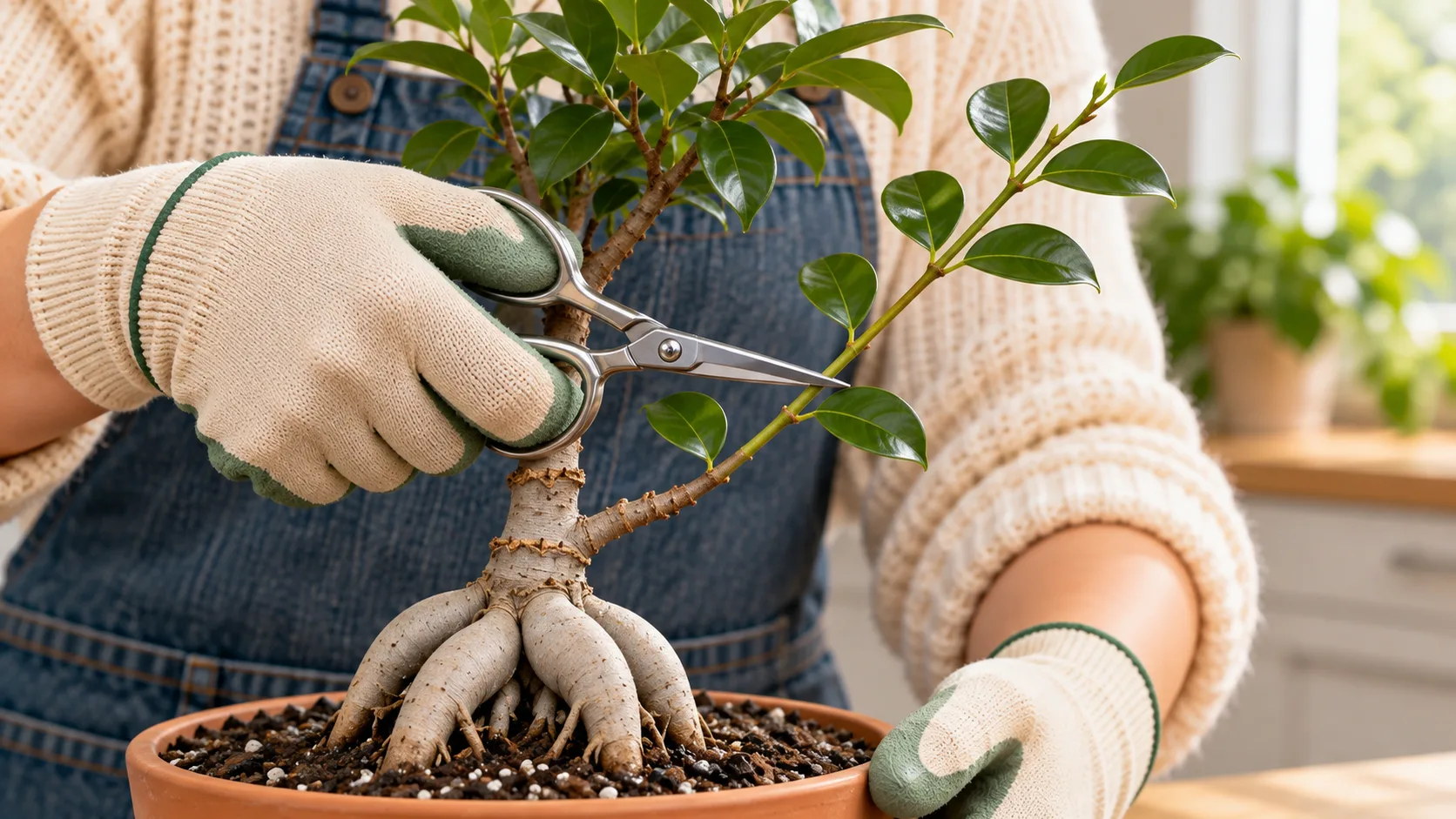
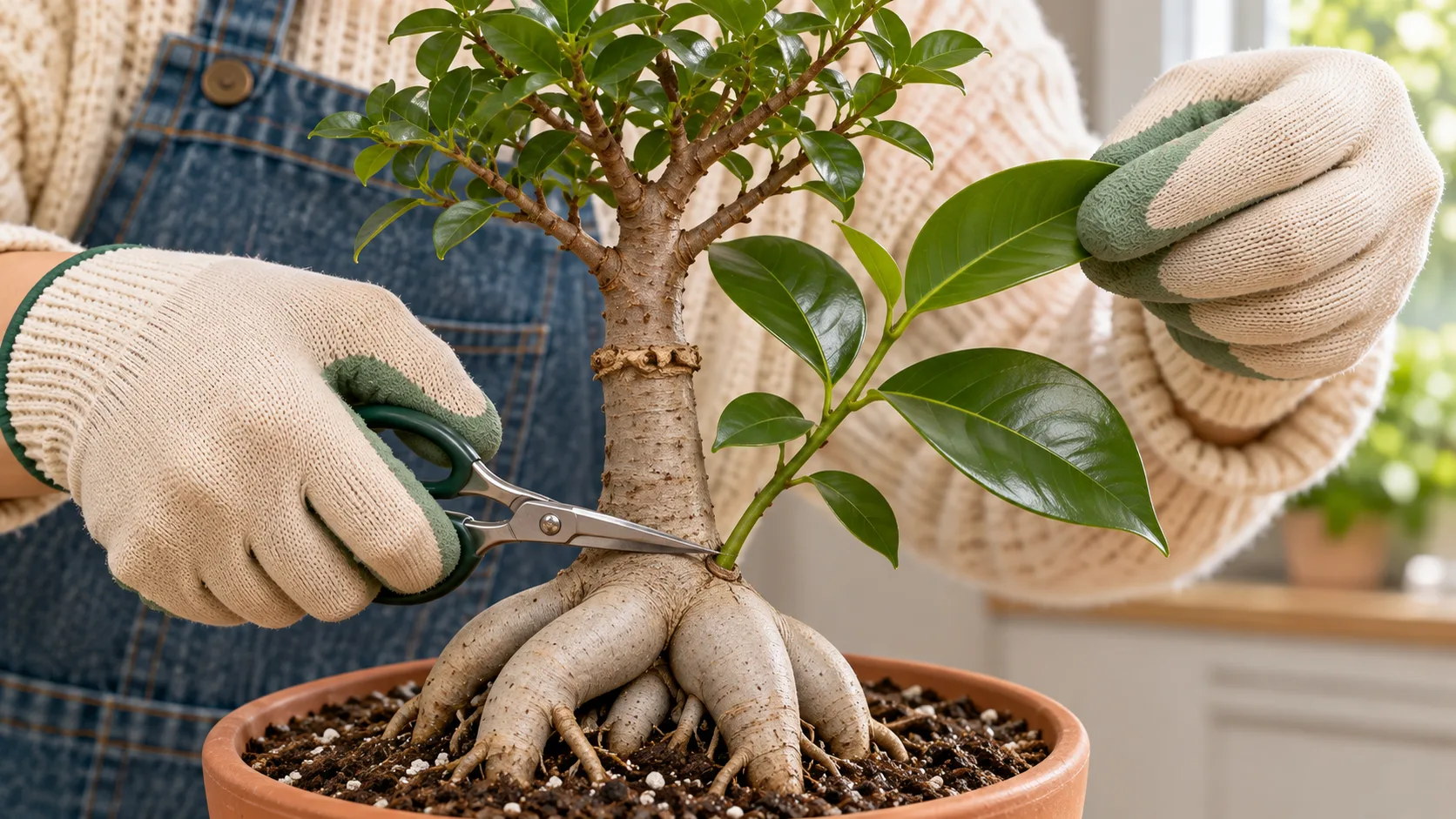
Locate the graft before pruning the crown or suckers. On a bonsai, shoots can be cut back to two leaves after developing six to eight. Remove competing shoots below the graft and protect yourself from the latex. 2 1 6
What temperatures suit winter and outdoor growing?
Keep the ficus indoors during cold weather and avoid draughts. A room at around 18–27 °C (64–81 °F) suits it. Summer outdoor growing requires temperatures above 15 °C (59 °F); that threshold is not a winter-rest instruction. 7 2
Temperatures for Chinese banyan
In °C, thresholds given by the sources.
- Bring indoors before cool nights15 °C
- Ideal: 18 to 27 °C
- Indoor ficus comfort: 18 to 27 °C
- Winter conditions
- Indoors all yearSource: Luso-Bonsai
- Bring indoors
- Before the first frostsbefore nights below 15 °C (59 °F)Source: Bonsai Empire
- Light
- A bright roomSource: Royal Horticultural Society
- Winter watering
- Keep the mix just moistSource: Royal Horticultural Society
How much space should you allow for growth?
Allow space for the form and size you maintain. Microcarpa becomes a large tree in the tropics; a bonsai’s size depends on its container and pruning. A grafted crown is not trained like a freely growing ficus. 8 2 1
- Mature height
- 1 to 25 m
- Growth
- Strong in the warm, bright season
Which care should you provide through the seasons?
Follow renewed shoot growth and pot drying before adding an intervention. In spring, check whether repotting is needed, resume fertiliser according to instructions and let new shoots lengthen before shortening them. A newly bought plant benefits first from a stable position. 2 5 7
| Task | January | February | March | April | May | June | July | August | September | October | November | December |
|---|---|---|---|---|---|---|---|---|---|---|---|---|
| Watering | reduced | reduced | moderate | moderate | high | high | high | high | moderate | moderate | reduced | reduced |
| Growth | resting | resting | active | active | strong | strong | strong | strong | active | active | resting | resting |
| Feeding | no | no | yes | yes | yes | yes | yes | yes | yes | no | no | no |
| Repotting | no | no | favorable window | favorable window | favorable window | no | no | no | no | no | no | no |
In summer, check a fast-drying bowl more often and monitor temperatures if it stays outdoors. In autumn, bring the plant in before cold arrives and reassess needs in its new position. In winter, keep the root ball slightly moist and stop feeding when growth stops. The calendar accompanies these observations; it does not set identical watering counts for every home. 2 9
How do you propagate microcarpa?
Take a healthy stem, distinguishing crown from rootstock. Microcarpa roots in water or a growing medium. A branch does not immediately recreate the thickened roots of a grafted ginseng. 10 1
- Semi-ripe cutting
- In springSource: Royal Horticultural Society
- Semi-ripe cutting
- In summerSource: Royal Horticultural Society
- Air layering
- April and MaySource: Bonsai Empire
Falling, sticky or curled leaves: what should you check?
Inspect the root ball and leaves before treatment. Leaf loss after moving, wet roots and pests require different checks. 3 10
| What you see | What to examine | First action |
|---|---|---|
| Fallen leaves after purchase or moving | Changed light and wet or dry compost condition | Stabilise position; water only after checking the root ball |
| Compost waterlogged for a long time, deteriorated roots | Water escape, full saucer, dead roots | Empty retained water and examine the root ball before resuming watering |
| Sticky leaves, small shields on branches | Scale insects and honeydew | Separate from other plants and identify the pest |
| Pale-speckled leaves, fine webs | Foliage undersides and mites | Examine closely, then clean affected foliage |
| Curled young leaves, dark marks | Thrips in leaf folds | Confirm insects are present before treating |
Does latex require precautions?
Wear gloves and keep cut fragments out of reach. The latex is allergenic; contact a vet after ingestion by an animal. In France, ORFILA advises on human exposures on 01 45 42 59 59. 11 12 13
Ginseng, Moclame, Hawaii: what does the form change?
Check the name and the plant's construction before changing care. Ginseng denotes a horticultural presentation, sometimes grafted, rather than a distinct species. The name “retusa” is also often misapplied to microcarpa: Ficus retusa L. is another accepted species. The Indian laurel profile explains these distinctions. 1 14
Ginseng
Horticultural name
Horticultural presentation with swollen exposed roots; foliage sometimes grafted onto a rootstock.
Tigerbark
Stable cultivar
Pale mottled bark suggesting stripes, valued for bonsai.
Moclame
Stable cultivar
Dense, dark green, compact foliage, common in garden centres.
Green Island
Stable cultivar
Round, thick leaves and a stocky habit suited to small specimens.
Hawaii
Variegated
Cream-and-green variegated leaves, needing more light.
Varieties documented in the botanical profile.
| Form | Useful guide | Consequence for care |
|---|---|---|
| Ginseng | Thick exposed roots, sometimes grafted crown | Identify and remove shoots beneath the graft |
| Tigerbark | Bark with a particular pattern | Retain microcarpa care; do not infer different watering from bark |
| ‘Moclame’ | Upright, bushy habit, leathery green leaves | Allow for growth and avoid repeated moves |
| ‘Green Island’ | Dense, glossy, dark green foliage | Check compost as with other green forms |
| ‘Hawaii’ | Grey-green foliage broadly marked white | Choose a brighter position than for a green form |
Ginseng's outline depends on production; identify the graft and branches before starting pruning. For ‘Hawaii’, variegation instead explains increased light needs. ‘Moclame’ must not be treated as miniature bonsai if allowed to grow freely. 1 2 10 15 6 9
Frequently asked questions
Are coffee grounds good for ficus plants?
Grounds cannot replace a measured bonsai fertiliser. Avoid compacting them into a surface layer: fine particles can hinder water and air movement. Composting is a better use than repeated direct additions to a small pot. 16
How can I thicken my bonsai's trunk?
Does ficus produce flowers?
Yes, but microcarpa flowers are enclosed inside small figs rather than displayed in visible clusters. These figs measure about 5 to 7 mm (0.2 to 0.3 in). Growing indoor bonsai mainly aims at foliage and outline; a lack of apparent flowers does not justify extra fertiliser. 8