
Care guide
White bird of paradise care
Strelitzia nicolai
White bird of paradise keeps its leaves healthy beside a large window, in a free-draining pot watered when the surface dries. Repot about every 2 years and maintain a minimum of 10 °C (50 °F) in winter. White flowers need a mature plant; plan for its large size from purchase.

How often should you water Strelitzia nicolai?
Water when the surface dries, keeping the root ball moist and freely drained; reduce watering in winter. Empty the outer pot after 15 to 20 minutes.123
10 L every 30 days
Sometimes daily in hot weather
Compare other plants in the watering guides.
Where should you put Strelitzia nicolai?
Give it abundant light without scorching sun through glass. Turn the pot and shelter it from wind.
Garden exposure
Choose the side of the house where white bird of paradise will grow.
What humidity should you provide?
Humidity above 40% is preferable, but average indoor humidity is tolerated. Keep it away from heating; on damp gravel, keep the pot above the water.2413
Which compost and pot should you choose for repotting?
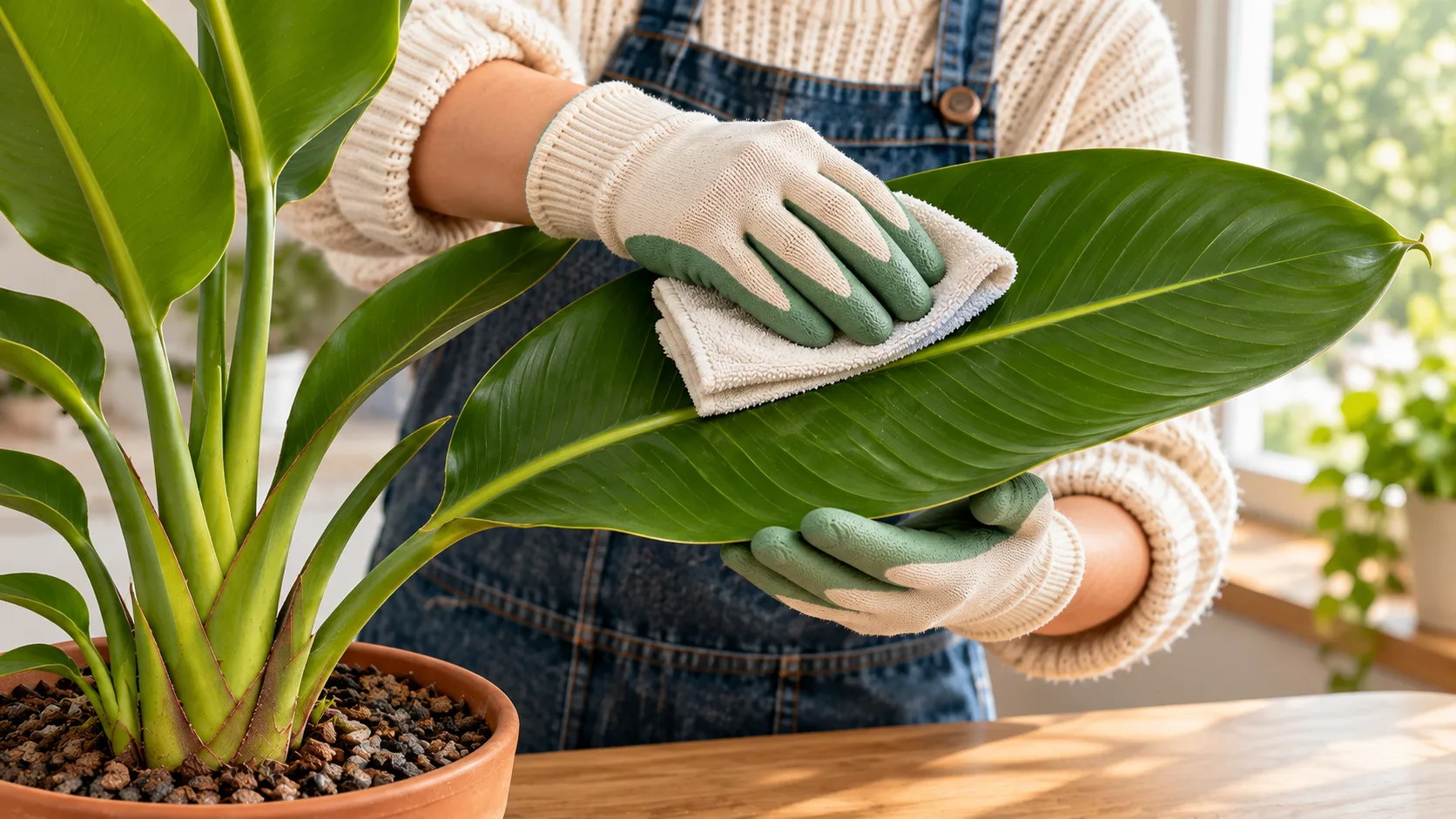
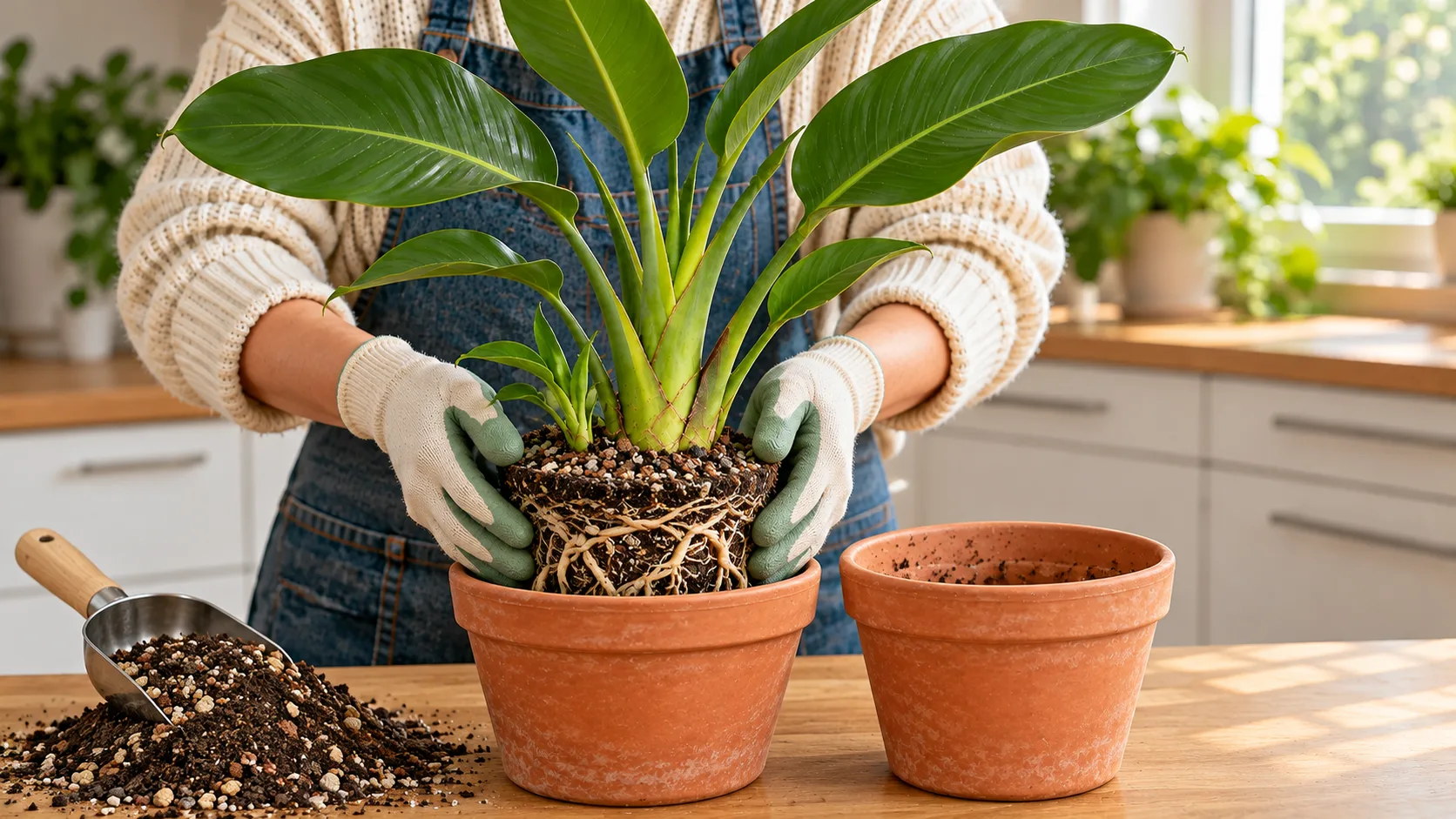
Repot in spring, about every 2 years, into a peat-free loam-based mix. Choose a slightly larger pot with drainage holes and renew the surface compost each year.245
Which fertiliser should you give Strelitzia nicolai?
Apply a balanced liquid fertiliser once a month in spring and summer, to a damp root ball. Follow the label and stop feeding when growth slows.153
- Fertilizer
- BalancedLiquidSource: Royal Horticultural Society
- Feeding
- In springSource: NC State Extension Gardener Plant Toolbox
- Feeding
- In summerSource: NC State Extension Gardener Plant Toolbox
- No fertilizer
- In autumnWhen growth slowsSource: Costa Farms
- No fertilizer
- In winterWhen growth slowsSource: Costa Farms
- Frequency
- Once a monthSource: Royal Horticultural Society
- Avoid
- Applying fertilizer to a dry root ballSource: Royal Horticultural Society
Compare routine feeding in the plant fertilising guides.
Does Strelitzia nicolai need pruning?
Keep green leaves; remove only brown or badly damaged leaves at their base. Wear gloves. A merely split leaf is not a reason to strip the clump.241
The plant pruning guides cover other growth habits.
What minimum winter temperature does it need?
Keep the plant above 10 °C (50 °F), in a bright sheltered place. Reduce watering, avoid cold draughts and ventilate above 20 °C (68 °F). These growing thresholds do not measure survival in frost.12
- Winter conditions
- Under cover, frost-freeSource: Royal Horticultural Society
- Bring indoors
- In autumnBefore nights fall below 10 °C (50 °F)Source: Floralens guide
- Light
- A bright roomSource: Royal Horticultural Society
- Winter watering
- Water less oftenSource: Royal Horticultural Society
Compare other containers in the overwintering guides.
How tall does Strelitzia nicolai grow?
Plan for a large plant: 6 to 9 m (20 to 30 ft) outdoors in a suitable climate, or up to 8 to 12 m (26 to 39 ft) in the RHS profile. Its mature spread is 4 to 8 m (13 to 26 ft), reached in 10 to 20 years; this does not predict its indoor size.12
- Mature height
- 6 to 9 m
- Spread
- 2 to 3,5 m
- Growth
- Moderate to slow; flowering after several years of cultivation
A monstera has a different growth habit and support needs.
When can you expect its white flowers?
Wait for maturity: the first flowers can take 5 to 6 years. Sufficient light and nutrition matter. Flowers remain rare indoors, although tropical profiles describe flowering throughout the year.1263
The month-by-month care calendar
Repot and divide in spring, feed during growth and reduce water as winter approaches. This calendar covers a potted plant in mainland France: actual leaf growth takes priority over a new month. 2 1
| Task | January | February | March | April | May | June | July | August | September | October | November | December |
|---|---|---|---|---|---|---|---|---|---|---|---|---|
| Watering | moderate | moderate | moderate | moderate | high | high | high | high | high | moderate | moderate | moderate |
| Growth | active | active | active | strong | strong | active | active | active | active | active | active | active |
| Feeding | no | no | yes | yes | yes | yes | yes | yes | no | no | no | no |
| Repotting | no | no | favorable window | favorable window | no | no | no | no | no | no | no | no |
From January to February, chiefly preserve light and avoid constantly wet compost. From March to May, observe growth restarting and prepare root work; from June to August, monitor drying and monthly feeding. From September to December, respond to falling light by watering less often and prepare to bring the plant indoors according to forecast nights. These seasonal guides shift with room temperature. 2 5
How do you propagate Strelitzia nicolai?
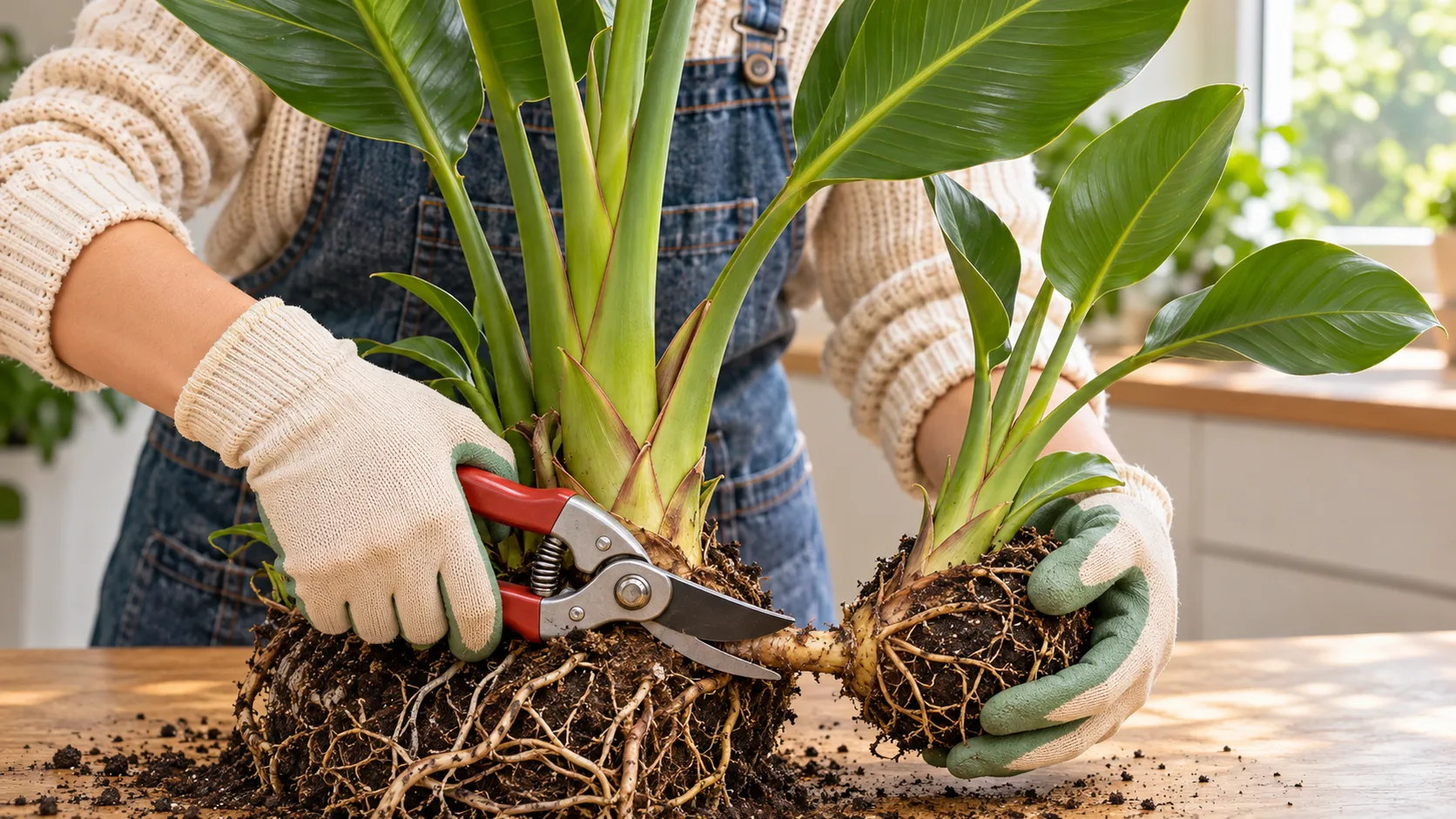
In spring, divide an already rooted offset, keeping healthy leaves and roots. Prepare seed sowing in March–April, after soaking the thick seed coat.24
- Division
- In springOffset that already has its own rootsSource: Royal Horticultural Society
- Sowing seed
- March and AprilSeeds soaked before sowingSource: Royal Horticultural Society
Common problems: diagnosis
Inspect the root ball and leaf undersides before treatment. Overwatering and spider mites need different checks.72
| What you see | Cause to check | First step |
|---|---|---|
| Several yellow leaves, persistently damp compost | Overwatering, waterlogged roots | Empty the outer pot and inspect roots |
| Brown tips, hot dry air | Dry air or irregular watering | Move away from heating and check the root ball |
| Leaf torn along veins | Wind or mechanical injury | Shelter from gusts |
| Small shells fixed to leaf stalks | Scale insects | Inspect then remove accessible insects |
| White cottony clusters, sticky surface | Mealybugs | Isolate the plant and remove colonies |
| Pale feeding marks and fine webs beneath | Spider mites | Rinse leaf undersides and monitor |
| What you see | Likely cause | What to do |
|---|---|---|
| Soil stays soggy, suffocating roots and causing rot. | OverwateringExternal Factors | Treating Waterlogged Soil |
| Tiny arachnids that spin fine webs under leaves. | Spider MitesPests | Eliminate Spider Mites |
| White cottony clumps in leaf axils and on stems. | MealybugsPests | Eliminate Armored Scale Insects |
| Small, immobile waxy shells (1–3 mm) on stems and leaves. | Armored ScalePests | Eliminate Armored Scale Insects |
| The plant stretches, turns pale, and leans toward the window. | Low LightExternal Factors | Increase light |
Is Strelitzia nicolai poisonous?
Keep the plant away from children, cats, dogs and horses; wear gloves. After human ingestion, contact a poison centre without inducing vomiting; for an animal, call a vet.18
See also white bird of paradise risks.
How do you choose without confusing species?
Check the botanical name: nicolai denotes a large-growing species, and quensonii is an old synonym. “Bird of paradise” labels cover plants of different sizes; an orange flower does not predict a nicolai’s future white flowers. 9 10
| Label name | What it denotes | Consequence for choosing |
|---|---|---|
| Strelitzia nicolai | White bird of paradise, accepted species | Large plant for a very bright position |
| Strelitzia alba subsp. nicolai | Synonym of nicolai | Same botanical identity, no guaranteed dwarf character |
| Strelitzia quensonii | Synonym of nicolai | Old name, not a distinct cultivar |
| Strelitzia reginae | Orange-and-blue-flowered species, about 1 to 1.5 m (3 to 5 ft) tall | Different size, to choose as a separate species |
Synonyms refer to the same accepted name; they therefore provide no special colour or cold threshold. Read Strelitzia nicolai botany and look-alikes to recognise its identity before choosing a lasting position. 9 10
Frequently asked questions
Before moving or cutting a damaged plant, distinguish the symptom from the condition of its roots. 7
Why are my Strelitzia’s leaves curling?
How long do Strelitzia nicolai flowers last?
Each individual flower lasts about 3 days, then other flowers open successively from the same bract. An inflorescence therefore lasts longer than a single flower. This succession happens on a mature plant, with flowers renewing within the same inflorescence. 6
How can I save a plant that has lost all its leaves?
Start by looking for living tissue and firm roots. If the root ball is waterlogged, remove soft or rotten roots and restore free drainage; if dry, remoisten without leaving standing water. Return the strelitzia to light and protection from cold, then wait for growth before feeding. An entirely rotten rootstock cannot recover through extra fertiliser. 11 5 1