
Care guide
Aloe vera care
Aloe vera
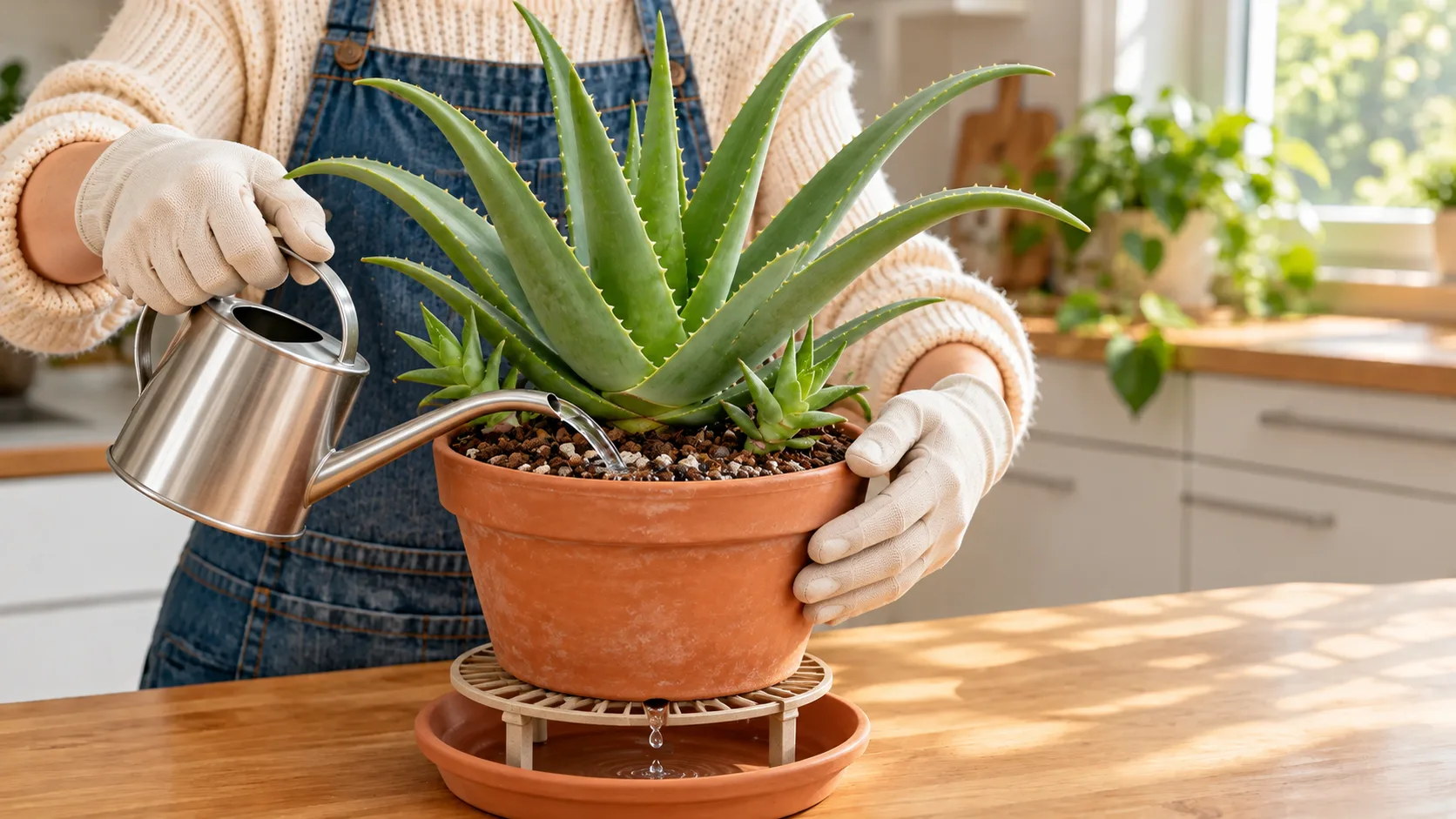
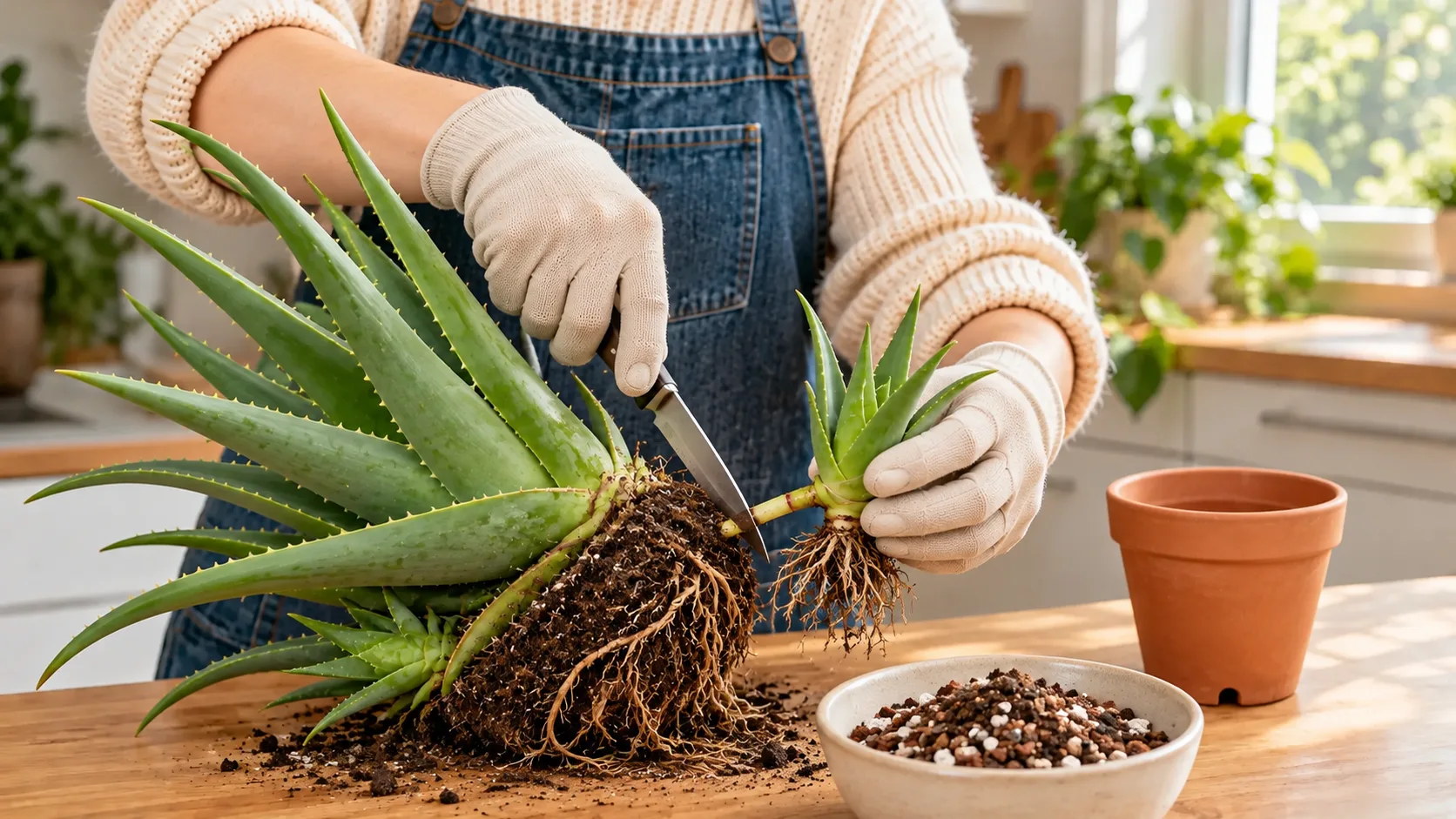
Aloe vera needs a very bright window and compost that dries completely between waterings. Keep it above 10 °C (50 °F) indoors, in a pot with drainage holes, without water in the saucer. To grow a new plant, separate an offset instead of sacrificing a leaf. Keep the pot away from pets.
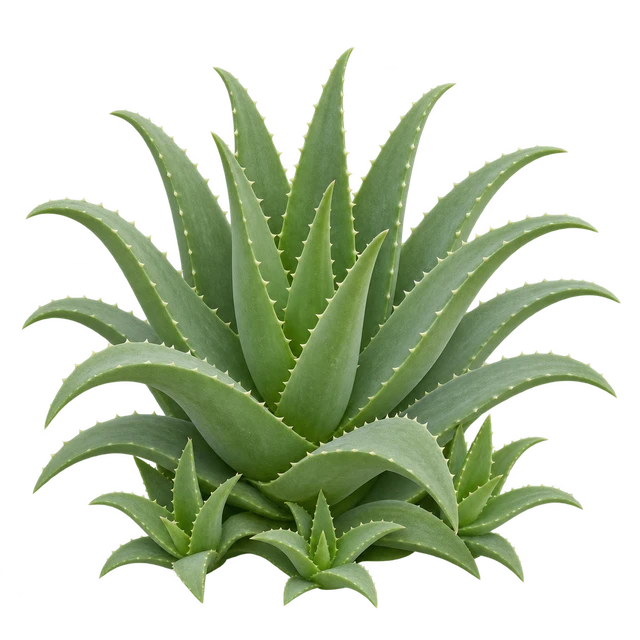
How often should you water aloe vera?
Wait until the whole root ball is dry, then water thoroughly and let it drain. Aloe vera stores water in its leaves; constantly wet roots risk rotting. Empty the saucer afterwards. Guidelines for indoor aloes are 5 to 10 days during growth and 15 to 21 days in winter, and only after the root ball has dried. 1 2 3 4
17 cL every 16 days
Every 5 to 10 days
Every 15 to 21 days
Where should you put aloe vera?
Put aloe near a bright south- or west-facing window; an unobstructed east-facing window can also suit it. A summer move outdoors needs gradual adjustment to sunlight to avoid scorching. Keep foliage away from cold glass too. 3 2 5
Which compost should you choose, and when should you repot aloe vera?
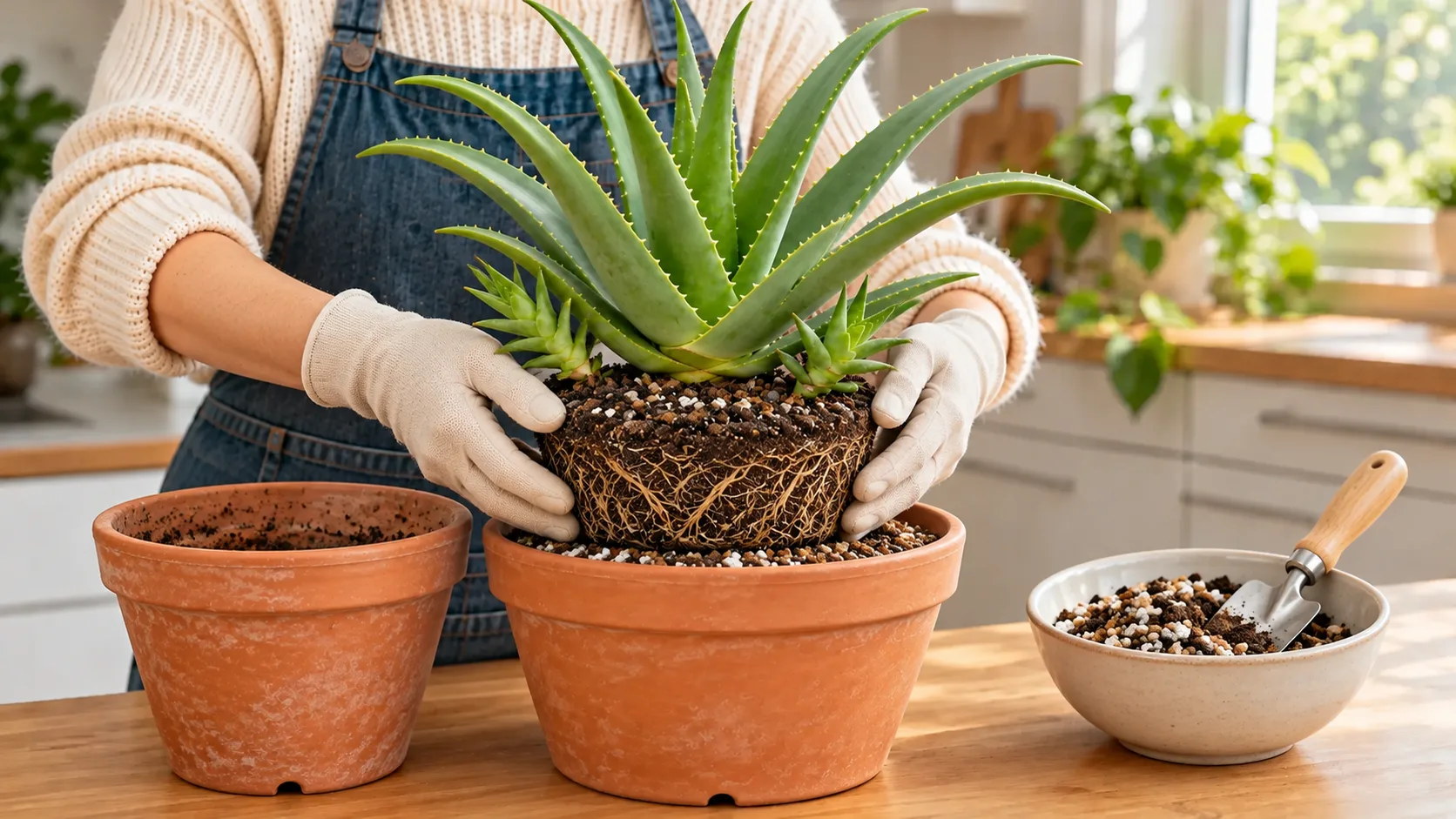
Repot in spring when roots have filled the pot, using a free-draining cactus mix. A check every 2 to 3 years provides a maintenance guideline. Choose a pot with drainage holes and a suitable volume: excess compost around the roots stays wet and encourages rot. 6 7 8 5
- Repot
- Every 2 to 3 yearsSource: Royal Horticultural Society
- When to repot
- In springIf the pot or compost warrants itSource: Royal Horticultural Society
- The new pot
- 2,5 to 5 cm widerOld pot less than 25 cm in diameter and depthSource: Royal Horticultural Society
Which fertiliser should you give aloe vera?
Apply a general liquid fertiliser once a month from May to August, during active growth. A lighter programme uses two half-strength feeds, in spring and late summer: choose one programme without combining them. 8 6
- Feeding
- May to AugustGrowing plantSource: Royal Horticultural Society
- Frequency
- One application per monthSource: Royal Horticultural Society
Does aloe vera need pruning?
Aloe vera needs no formative pruning: remove only dead or damaged leaves at their base. Use a clean, sharp knife or scissors. Leave healthy leaves in place; shortening their tips to even up the rosette is not routine maintenance. 8 6
Cut the unwanted leaf close to its point of attachment, protecting the rosette’s centre. Wear gloves to handle cut parts: the latex can irritate skin. Collect waste out of pets’ reach, because swallowed leaf material presents a poisoning risk. 6 1 9
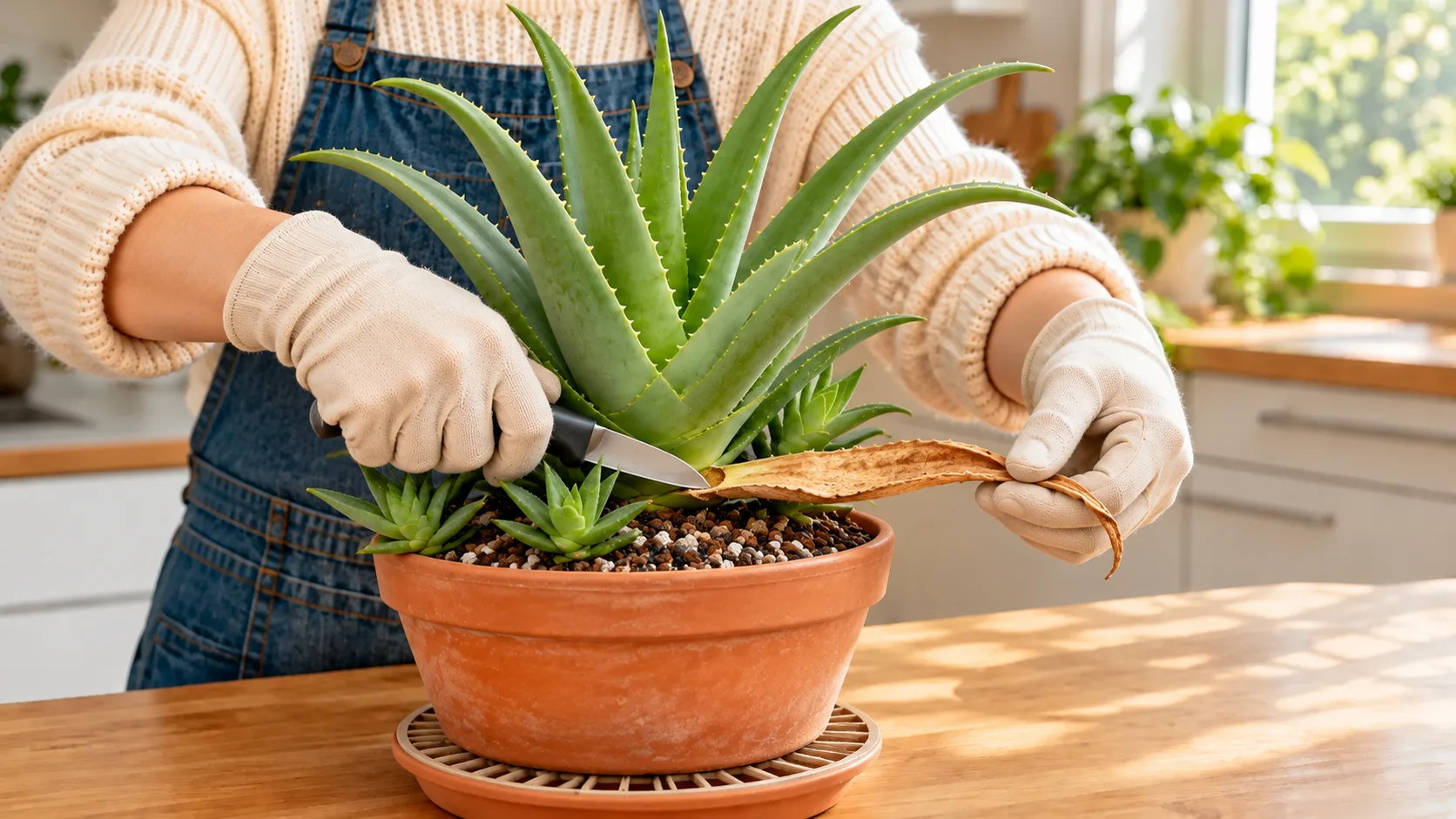
To remove a damaged leaf without cutting into the centre: aloe vera pruning is limited to carefully targeted cuts.
Other cutting techniques are brought together in the plant pruning guides.
What minimum temperature does aloe vera need?
Keep aloe in a bright place that stays above 10 °C (50 °F). Cold near a window can damage leaf tips. If the plant spends summer outside, bring it in before the first frosts, then reduce watering sharply. 3 2 8
Temperatures for aloe vera
In °C, thresholds given by the sources.
- Indoor minimum10 °C
- Ideal: 13 to 27 °C
- Warm, bright position: 13 to 27 °C
- Winter conditions
- Under cover, frost-freeSource: University of Arizona Cooperative Extension
- Bring indoors
- Before the first frostsSource: University of Arizona Cooperative Extension
- Light
- A bright roomSource: University of New Hampshire Extension
- Winter watering
- Very little water, after dryingSource: Royal Horticultural Society
How large does a mature aloe vera grow?
Allow 50 cm to 1 m (20 in to 3 ft) in height and the same width for a well-established mature aloe vera. Reaching its final size may take 5 to 10 years. A small garden-centre plant therefore needs room to widen its rosette without leaves being pressed against glass or neighbouring pots. 8
- Mature height
- 0,5 to 1 m
- Spread
- 0,5 to 1 m
- Growth
- Slow to moderate
Offsets gradually enlarge the clump around the parent. Root space also influences development: a larger container encourages growth, but an excessive jump in volume increases rot risk. To keep the plant manageable, separate offsets when repotting and keep the pot proportionate to the roots. 1 5
When does aloe vera flower?
A plant at least 3 years old may form a flower spike if it gets enough light; flowering remains rare indoors. Flowers open from the bottom upwards. Do not try to induce flowering with cold or an abrupt change of exposure. 1 3 5
- What triggers flowering
- Plant maturitySource: NC State Extension
- Flowering
- In winterOutdoor cultivation in Florida · Late winter; observed in a Florida climateSource: University of Florida IFAS
- Flowering
- In springOutdoor cultivation in Florida · Spring outdoors in Florida; rare indoorsSource: University of Florida IFAS
The month-by-month care calendar
From May to August, support growth; through winter, give less water while maintaining a bright position. Calendar periods remain guidelines for a plant grown in France: actual root-ball dryness determines watering. 8 1
| Task | January | February | March | April | May | June | July | August | September | October | November | December |
|---|---|---|---|---|---|---|---|---|---|---|---|---|
| Watering | reduced | reduced | moderate | high | high | high | high | high | moderate | moderate | reduced | reduced |
| Growth | resting | resting | active | active | active | strong | strong | active | active | resting | resting | resting |
| Feeding | no | no | no | no | yes | yes | yes | yes | no | no | no | no |
| Repotting | no | no | no | favorable window | favorable window | no | no | no | no | no | no | no |
In January and February, chiefly check moisture and cold near windows. In March and April, use spring growth to inspect roots and repot if necessary. From May to August, feed a growing plant and gradually acclimatise any plant moved outdoors to sunshine. In September and October, prepare to bring it inside before frost; in November and December, water less often. 3 7 8 2
How do you propagate aloe vera?
Separate offsets in spring or early summer, retaining those that already have roots. If a connection has to be cut, let the wound dry for about a week before planting; an unrooted offset may develop roots in about a month. 8 2
- Offset
- In springSource: Royal Horticultural Society
- Offset
- In summerIn early summerSource: Royal Horticultural Society
Common problems: diagnosis
When aloe vera declines, check the root ball, recent light exposure and insects before treating it. Soft foliage alone cannot distinguish thirst from rot. The table gives possible causes to check, with signs that guide inspection. 10 1
| What you see | Cause to check | First step |
|---|---|---|
| Soft or rotten roots, damp compost | Overwatering and poor drainage | Empty the outer pot, examine roots and remove rotten parts before repotting. 17 |
| Wrinkled leaves and a dry root ball | Underwatering | Water thoroughly, let it drain, then resume checking dryness. 102 |
| Weak or distorted growth in shade | Insufficient light | Move nearer a bright window, acclimatising gradually to sun. 105 |
| Browning after being moved into sun | Scorch from changed exposure | Protect from intense sun and resume gradual acclimatisation. 5 |
| White cottony clusters in crevices | Mealybugs | Isolate the pot and inspect hidden areas and neighbouring plants. 111 |
| Small shells on leaves | Scale insects | Confirm insects are present before choosing control measures. 812 |
| Black deposit on sticky foliage | Sooty mould on sap-feeding insects’ honeydew | Look for scale insects and other honeydew-producing insects. 111 |
Mealybugs produce white wax and can hide at leaf bases. Scale insects are also aloe vera pests. Honeydew feeds sooty mould, a dark deposit that signals insects to look for. 8 11
Inspect a new plant before adding it to your collection. If it carries mealybugs, isolate it; quarantining new purchases for at least a month makes monitoring this pest easier. Remove dead leaves around pots too, where insects or their eggs can survive. 11
| What you see | Likely cause | What to do |
|---|---|---|
| Soil stays soggy, suffocating roots and causing rot. | OverwateringExternal Factors | Treating Waterlogged Soil |
| The plant wilts and yellows while the soil stays wet. | Root RotDiseases | Treating Waterlogged Soil |
| White cottony clumps in leaf axils and on stems. | MealybugsPests | Eliminate Armored Scale Insects |
| Small, immobile waxy shells (1–3 mm) on stems and leaves. | Armored ScalePests | Eliminate Armored Scale Insects |
Is aloe vera poisonous?
The leaves pose a risk to people, cats, dogs and horses. Yellow latex is strongly laxative; extracting gel at home does not guarantee removal of unwanted substances. After ingestion, promptly contact a vet for an animal or a poison centre for a person: 01 45 42 59 59 in France. 9 13 14
Which aloe vera variety should you choose?
Choose a clearly identified plant: Barbadensis and Chinensis are names associated with aloe vera, while Variegata refers to variegated forms sold for their foliage. Trade names guarantee neither a distinct mature size nor better cold tolerance. 1 15
Barbadensis
Horticultural name
Trade name derived from Aloe barbadensis, a synonym of Aloe vera.
Chinensis
Horticultural name
Name present in historical synonymy as Aloe barbadensis var. chinensis.
Variegata
Variegated
Variegated form whose pale pattern varies between plants.
Varieties documented in the botanical profile.
| Name | What it refers to | What matters when buying |
|---|---|---|
| Barbadensis | Aloe barbadensis, a synonym of Aloe vera | The species’ identity, rather than a supposedly more productive variety. 8 |
| Chinensis | A name in the old combination Aloe barbadensis var. chinensis | Full identification, without assuming special care from the name alone. 1 |
| Variegata | A variegated form with paler areas, varying from plant to plant | The leaf pattern and abundant light, protected from the strongest sun. 15 |
Stable variegation needs distinguishing from a leaf turned brown after abrupt exposure. Keep this variegated form in strong light all year while avoiding direct sun at the hottest times. Its decorative appearance does not make the leaves edible. 15 5 13
Frequently asked questions
Keep aloe vera after flowering and dust its leaves gently. This perennial can flower several times; its tender leaves break easily. 1
How long does aloe vera live?
Aloe vera is a perennial, kept from year to year. It can flower several times during its life: a flower stem therefore does not mean the rosette will die after flowering. 1