
Care guide
Rhododendron care
Rhododendron
Garden rhododendrons need acidic soil that stays moist, filtered light and roots that are never waterlogged. Summer watering also prepares the next flowering season. In chalky soil, choose a container. This guide covers garden rhododendrons; azaleas sold for indoors need different conditions. The whole plant is poisonous if swallowed.
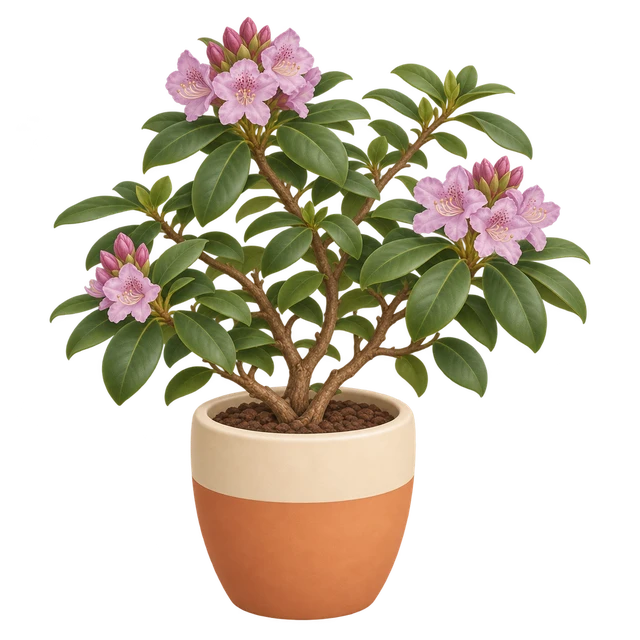
How often should you water a rhododendron?
Keep the root ball moist and water generously when it starts to dry, rather than giving small amounts daily. The shallow roots of rhododendron (Rhododendron) tolerate neither drought nor standing water well. Water needs to moisten the entire root ball, then drain away. Limp, dried foliage is a warning, but check the soil before filling the watering can. 1 2
10 L every 30 days
25 L per m² about every 7 days
About every 7 days
Keep the root ball moist, never waterlogged
Water generously when the root ball starts drying
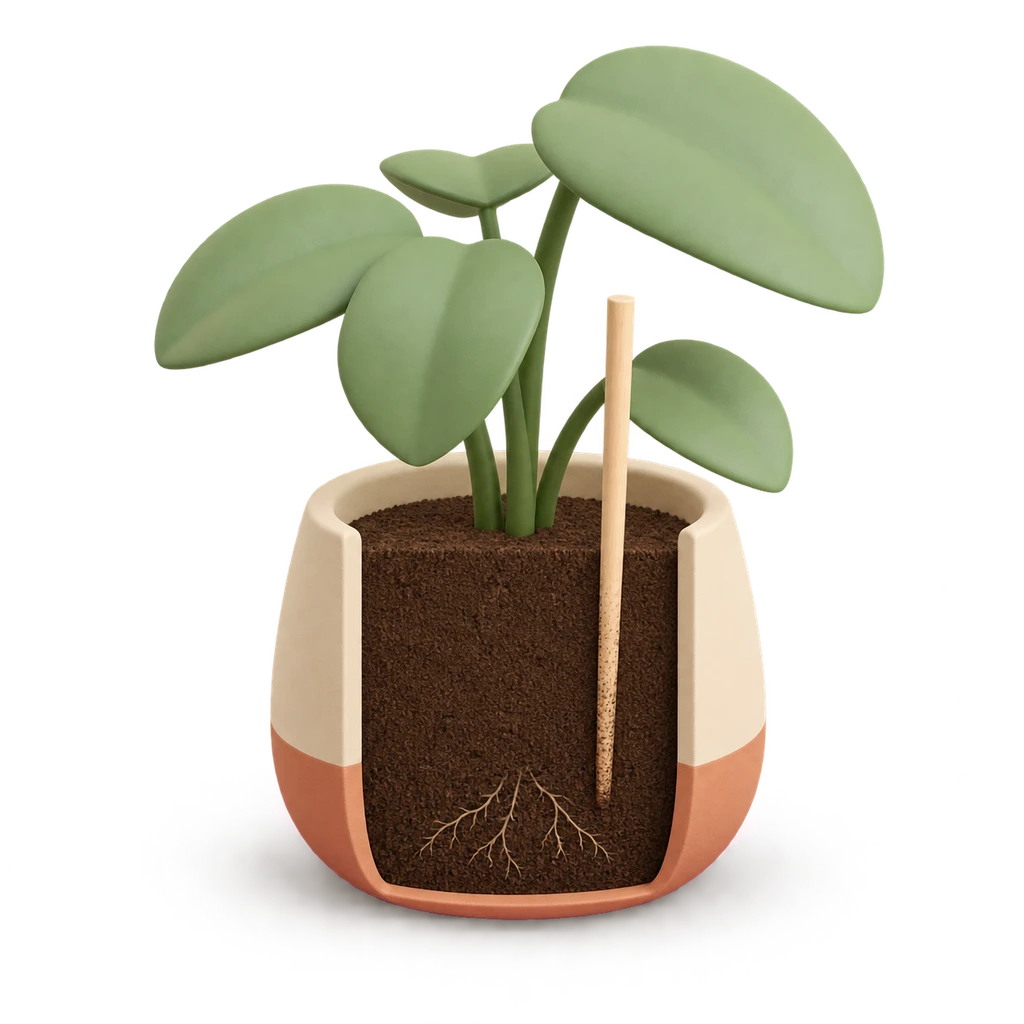
Potting mix dry to 1,3 cm: still moist
The finger test
Push a finger or wooden skewer 2,5 cm into the potting mix: if it is dry, water; if it is still moist, wait. The condition of the mix decides, not the calendar.
In the ground, during prolonged drought or in sandy soil, deep watering about once a week is a guide, adjusted to rainfall and actual soil moisture. A recently planted shrub needs closer monitoring: its roots have not yet explored the surrounding soil. 3
In a pot, lift the mulch slightly and feel the mix. If the top 2.5 centimetres (1 in) is dry, water gently across the surface; if the compost remains moist, wait. 4 This hands-on check needs repeating after weather changes. Clear the drainage outlet and do not leave the container in a permanent reservoir of water. 1
For an established shrub in the ground during a hot, dry summer, the guideline of an inch of water a week is about 25 litres per square metre (roughly 1 in over the watered area). This is the combined total of rain and watering: subtract rainfall and do not add this amount if the soil is already damp. 5
Prefer rainwater. Repeated hard-water use makes container cultivation more difficult; during a summer shortage, tap water remains better than letting the plant dry out. Other watering guides let you compare plants’ needs. Keep watching after the flowers: next season’s buds develop during summer and autumn. 6 1
To distinguish a dry root ball from waterlogged roots, adjust rhododendron watering to soil condition and the garden’s weather.
Where should you plant a rhododendron?
Choose light shade, sheltered from the hottest rays and cold, drying winds. Too much shade reduces flowering; alpine forms and some species tolerate more sun if their roots stay moist. Check the needs of the identified plant rather than giving the whole genus the same exposure. 6 7
Garden exposure
Choose the side of the house where rhododendron will grow.
When should you plant and repot rhododendrons?
Plant in October or March–April in moist, well-drained, acidic soil with a pH of 5 to 6, without deeply burying the root ball. In a container, refresh the compost every two years in early spring; in the intervening year, replace the top 5 cm (2 in). 6
Growing rhododendrons in a container
Choose a compact form and an airy, peat-free ericaceous compost. A container also makes it possible to grow a rhododendron where garden soil is alkaline; water and compost renewal then need particular attention. 6
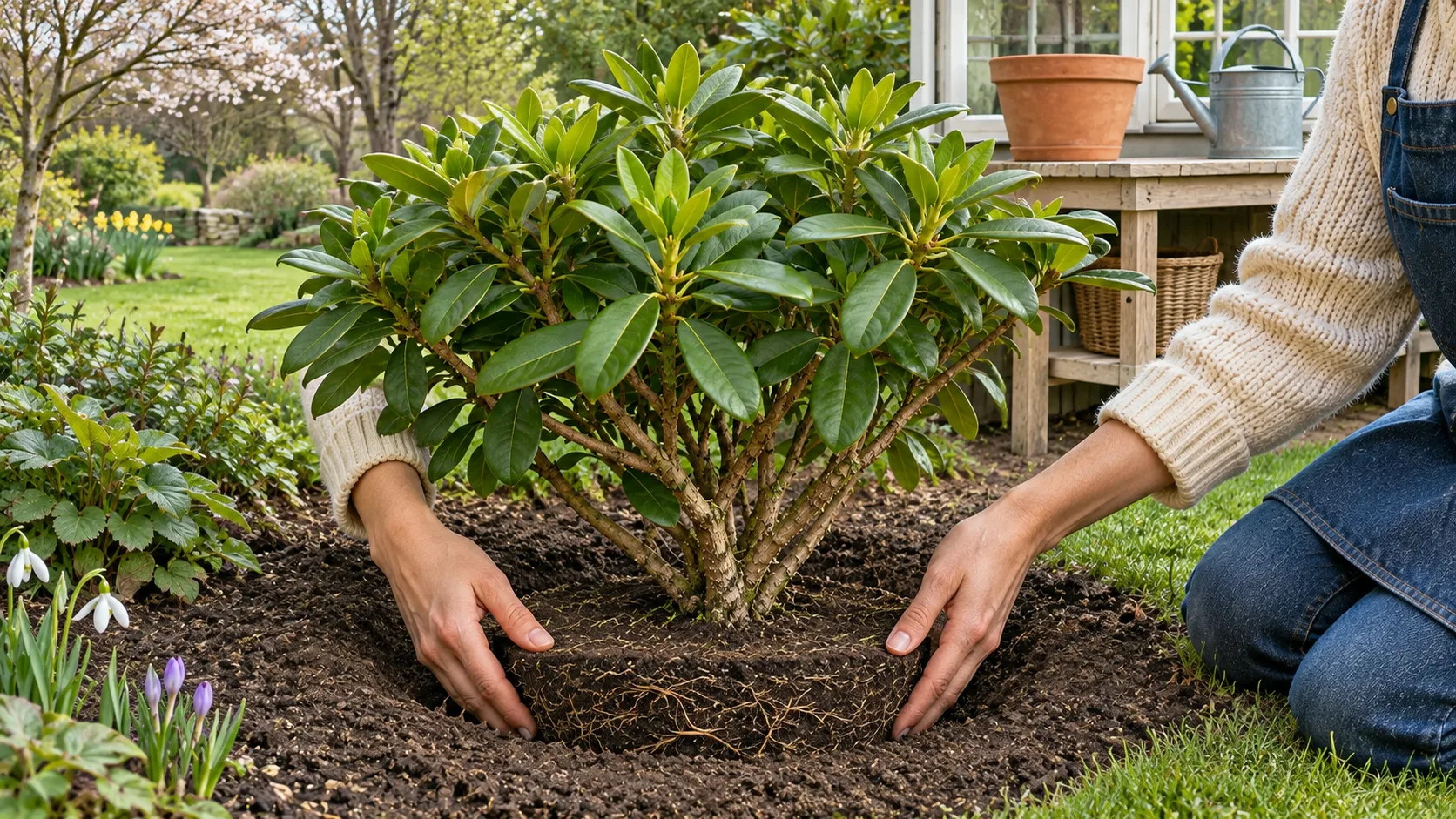
Which fertiliser should you give a rhododendron?
A healthy rhododendron in good acidic soil needs little fertiliser. In a container, slow-release granules in spring or a liquid feed for acid-loving plants can suit it. Follow the label rate: excess can scorch roots and leaves. 6
- Fertilizer
- For acid-loving plantsSlow-release, liquidSource: RHS
- Feeding
- In springat the labelled dose · in a potSource: RHS
- No fertilizer
- August to Decemberno fertiliser after JulySource: RHS Rhododendron Camellia & Magnolia Group
- Avoid
- Exceeding the dose on the label, fresh manureSources: RHS; RHS Rhododendron Camellia & Magnolia Group
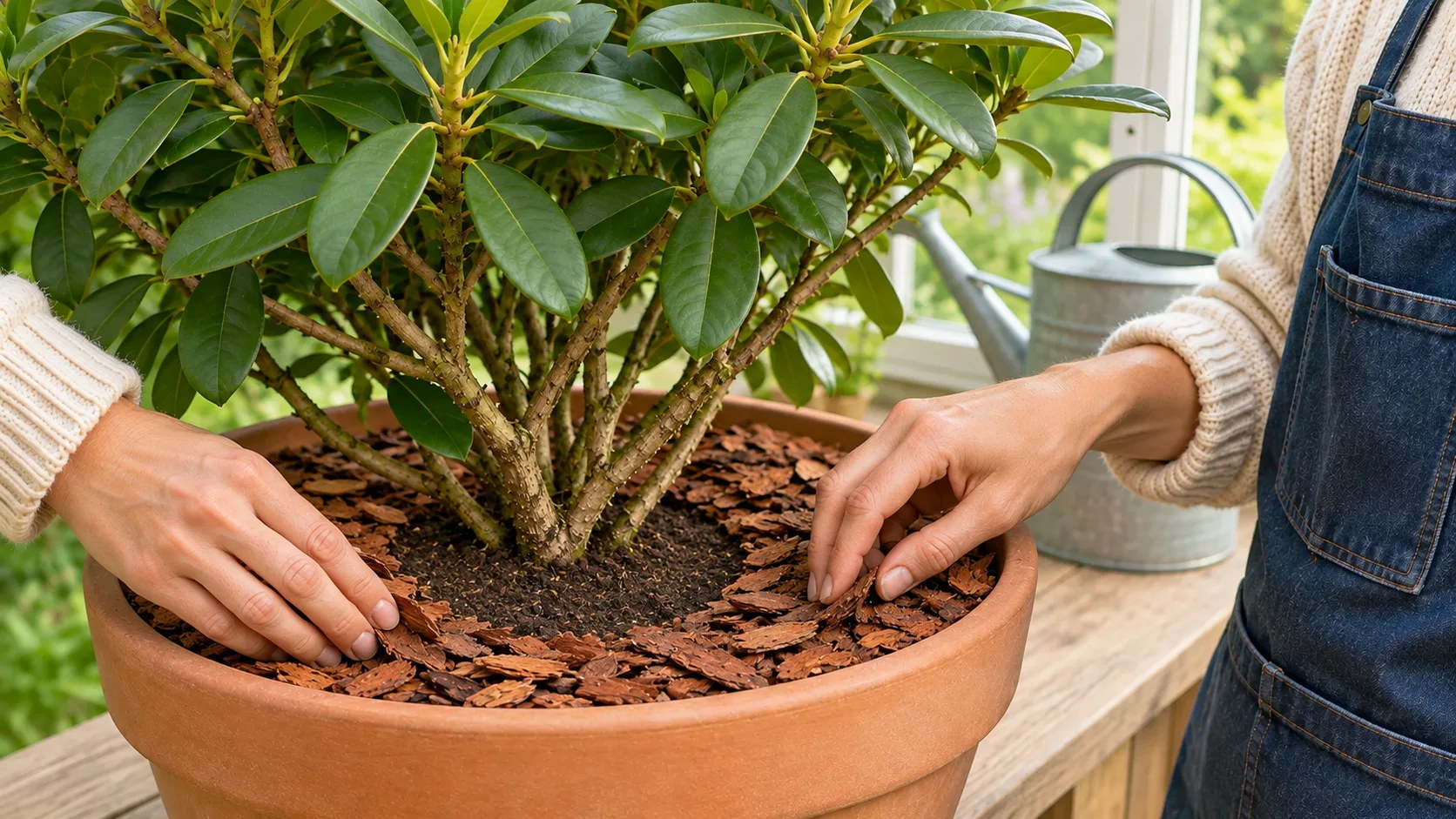
When and how should you prune a rhododendron?
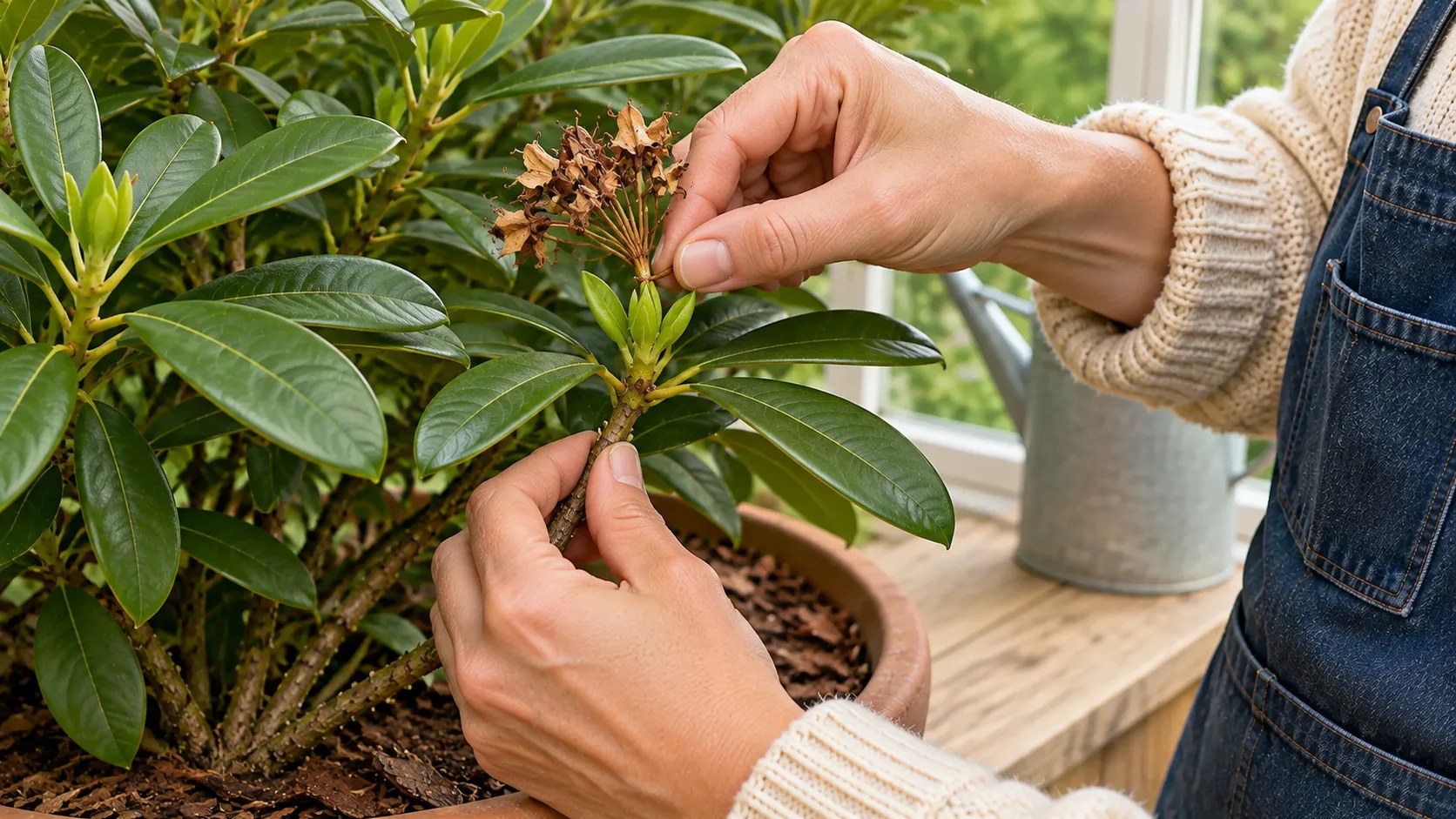
Pruning is not routine. Remove dead wood and accessible faded flowers, then correct only branches that get in the way. Cutting in summer or autumn can remove next season’s buds; the ability to regrow after hard pruning varies between groups. 6 8
How should you protect rhododendrons from cold?
Check the cultivar’s hardiness and protect it particularly from cold, drying winds. Keep roots moist with mulch held away from the trunk. A tender species and a hardy garden hybrid need different protection; avoid frost pockets for early flowers too. 6 7
- Winter conditions
- Outdoors, protectedSource: Gouvernement du Nouveau-Brunswick
- Protect
- In winterprotection from drying windsSource: Gouvernement du Nouveau-Brunswick
How much space will a mature plant need?
Allow enough room for the cultivar you buy, checking spread as well as height. A compact rhododendron has different space requirements from a large hybrid. The genus even includes trees exceeding 15 m (49 ft): the height on the cultivar label is therefore more useful than an average size for “rhododendron”. 9
‘Cunningham’s White’ is listed at 1.5 to 2.5 m (5 to 8 ft) tall and 2.5 to 4 m (8 to 13 ft) wide eventually; ‘Catawbiense Grandiflorum’ Group reaches 2.5 to 4 m (8 to 13 ft) in both dimensions. Keep them far enough from paths and small neighbouring shrubs to avoid constantly restricting their branches. 10 11
For a container or small bed, compact Yakushima-derived forms offer a different scale. Choose the variety before the container: buying a large hybrid and then trying to keep it miniature by pruning creates much more demanding maintenance. 9
When should you add a stake?
Temporary support can help a tall or poorly rooted plant that lacks stability. Specialist guidance suggests considering a stake above about 1 m (3 ft) or where the root system is poorly developed; it does not mean staking every shrub of that height. 12
Why is your rhododendron not flowering?
Check the light, the previous summer’s water supply and the buds. Flowering is mainly in spring but varies with the plant; buds start forming in late summer and even a short drought can compromise them. Dense shade or late pruning can also prevent flower clusters. 6 7
The rhododendron care calendar
In spring, monitor new growth and flowering; in summer, protect roots from drought; in autumn, prepare for planting. This pattern suits garden rhododendrons in temperate Northern Hemisphere climates. Local weather and the cultivar’s earliness determine the timing. 6 1
| Task | January | February | March | April | May | June | July | August | September | October | November | December |
|---|---|---|---|---|---|---|---|---|---|---|---|---|
| Watering | reduced | reduced | reduced | moderate | moderate | moderate | high | high | moderate | reduced | reduced | reduced |
| Growth | resting | resting | active | strong | strong | strong | strong | active | active | resting | resting | resting |
| Feeding | no | no | yes | yes | yes | no | no | no | no | no | no | no |
| Repotting | no | no | favorable window | favorable window | no | no | no | no | no | no | no | no |
In late winter, observe branches and drainage without confusing cold-rolled leaves with thirst. As growth returns, repot plants that need it and apply suitable fertiliser if necessary. After flowering, remove accessible spent clusters and prune only what is in the way. 6 2
During summer and autumn, check moisture beneath the mulch, including after flowering has ended. October or March-April are the reference planting windows; avoid moving a root ball during hot, drying weather. 1 6 7
How do you propagate rhododendrons?
A cutting or layer preserves the cultivar; seedlings do not reproduce it faithfully. Take cuttings from the current year’s shoots in late summer or autumn. Layering keeps a branch attached to the parent until it has enough roots, generally after fifteen months to two years, sometimes longer. 6
What should you do about yellow leaves or spots?
Inspect vein colour, leaf undersides and root-ball moisture before treating. Yellowing has more than one cause: lime, waterlogged roots, scorching, ageing and pests need different responses. An already scorched leaf will not turn green again after moving. 13 6
| What you see | Cause to check | First step |
|---|---|---|
| Yellow young leaves with veins still green | Chlorosis linked to excessively high pH | Measure pH, check water and drainage before fertiliser. 13 |
| Dull foliage, wilted from morning despite damp soil | Waterlogged roots or Phytophthora root rot | Stop automatic watering, inspect drainage and roots. 13 14 |
| Dry spots in the centre of exposed leaves | Sun scorch | Provide light shade during hot hours. 13 |
| Regular semicircular notches at leaf edges | Adult vine weevils | Look for adults and monitor roots, which larvae attack. 13 |
| Stippled leaves with small black deposits beneath | Rhododendron lace bugs | Inspect leaf undersides to confirm insects. 13 |
| A few old leaves yellow then fall, healthy young shoots | Normal leaf replacement | Monitor without routine treatment. 6 |
Lime-related chlorosis requires correcting root conditions. Iron treatment can temporarily mask the problem without making the ground suitable. Persistent wilting in damp soil calls for investigating root damage; symptoms alone do not prove Phytophthora. 13 14 The iron deficiency and root rot guides explain useful checks.
Diagnosis of yellow rhododendron leaves distinguishes chlorosis, normal leaf fall and root distress.
For pests, black buds and rots, recognising rhododendron diseases helps you choose the right action before treating.
Are rhododendrons poisonous?
The whole plant is poisonous if swallowed: keep it away from children and animals. For a person in France, call ORFILA on 01 45 42 59 59 without waiting for symptoms, inducing vomiting or giving a drink. For an animal, contact a vet promptly. 15 16
Which rhododendron varieties should you choose?
Choose according to available space, colour and cultivar hardiness, then check your soil type. The variety name makes size and cold guidance meaningful. The large evergreen hybrids below share a need for moist, acidic, free-draining soil; their dimensions differ. 11 10 17
Catawbiense Grandiflorum
Stable cultivar
Evergreen horticultural group with mauve-lilac flower clusters, rated RHS H7.
Cunningham's White
Stable cultivar
Evergreen hybrid with white flowers opening from mauve buds, rated RHS H6.
Nova Zembla
Stable cultivar
Evergreen hybrid with dark red flowers, rated RHS H5.
Varieties documented in the botanical profile.
| Rhododendron | Flowers | Eventual dimensions | Published hardiness rating |
|---|---|---|---|
| 'Catawbiense Grandiflorum' Group | Mauve-lilac, late spring and early summer | 2.5 to 4 m (8 to 13 ft) tall and wide | H7. 11 |
| 'Cunningham's White' | White from mauve buds, late spring | 1.5 to 2.5 m (5 to 8 ft) tall; 2.5 to 4 m (8 to 13 ft) wide | H6. 10 |
| 'Nova Zembla' | Dark red, mid- to late spring | 1.5 to 2.5 m (5 to 8 ft) tall and wide | H5. 17 |
A Yakushima-derived form may suit a container better. Check its full name and stated development: horticultural parentage alone does not give the exact height of every cultivar. To understand differences between species, azaleas and hybrids, also see the rhododendron botanical profile. 9 Before planning the bed, compare these constraints with the Japanese camellia profile.
Frequently asked questions about rhododendrons
Start by distinguishing garden rhododendrons from flowering azaleas sold for indoors. Their temperature and position guidance is not interchangeable. 18
How do you care for an indoor rhododendron?
Indoor azaleas, usually derived from Rhododendron simsii, enjoy a bright, cool, humid room away from heating. Keep their root ball moist without letting it dry completely. They are frost-sensitive: do not apply the hardiness advice for a large garden rhododendron. A bright, unheated conservatory can work if it remains frost-free. 18
Are coffee grounds good for rhododendrons?
Used coffee grounds do not usefully acidify rhododendron soil: their pH is close to neutral. Nor do they replace a complete fertiliser. Avoid piling them around the base to “make” ericaceous soil; use suitable compost and a moisture-conserving mulch instead. Grounds can go into compost mixed with other materials. 19
Where do rhododendrons originate?
The genus Rhododendron originates from North America, Europe and Asia. It includes evergreen and deciduous shrubs and numerous cultivars. The name “rhododendron” alone cannot determine cold tolerance or space requirements: also find the name of the variety you bought. 2