
Rhododendron problems: diagnosis and treatment
Rhododendron problems: recognising symptoms
A rhododendron with hanging leaves may lack water or have damaged roots in damp soil. Pale leaves may carry mites, bugs or disease. Examine the root ball, leaf undersides and buds before acting: colour alone cannot provide a diagnosis.
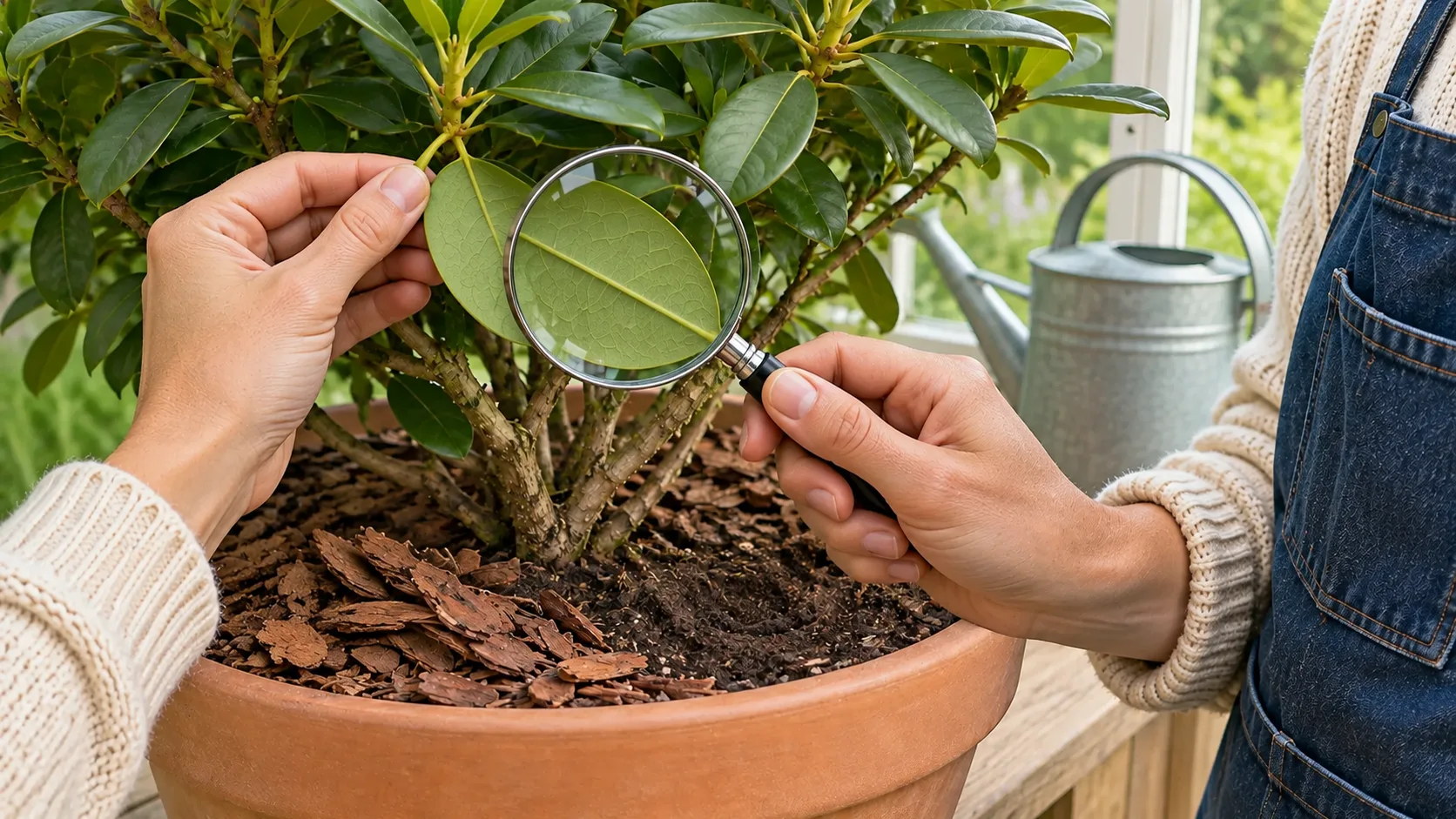
Diagnosing rhododendron diseases
Check root-ball moisture and turn leaves over before treating. Garden rhododendrons belong to the genus Rhododendron, which also includes azaleas. Their problems overlap, but some pests and diseases affect one group more than another. 12
Compare still-healthy parts with affected ones. A single drying branch suggests something different from an entire collapsing shrub; notches in a leaf edge need a different response from pale stippling. 34
| Observed sign | Possible cause to check | Useful check |
|---|---|---|
| Hanging leaves, dry root ball | Water shortage | Feel the root ball and check watering 5 |
| Wilting despite damp soil | Waterlogged roots or root rot | Inspect roots and crown 6 |
| Brown leaves after frost or intense exposure | Weather damage | Review weather and exposure 4 |
| Purple or brown spots | Leaf spots, possible powdery mildew | Also watch the undersides and progression 7 |
| Rounded notches at leaf edges | Adult vine weevils | Inspect foliage at night 8 |
| Pale stippling, black dots underneath | Lace bugs | Look for insects beneath the leaf 2 |
| Bronzed foliage, fine webs | Mites | Tap leaves over white paper 42 |
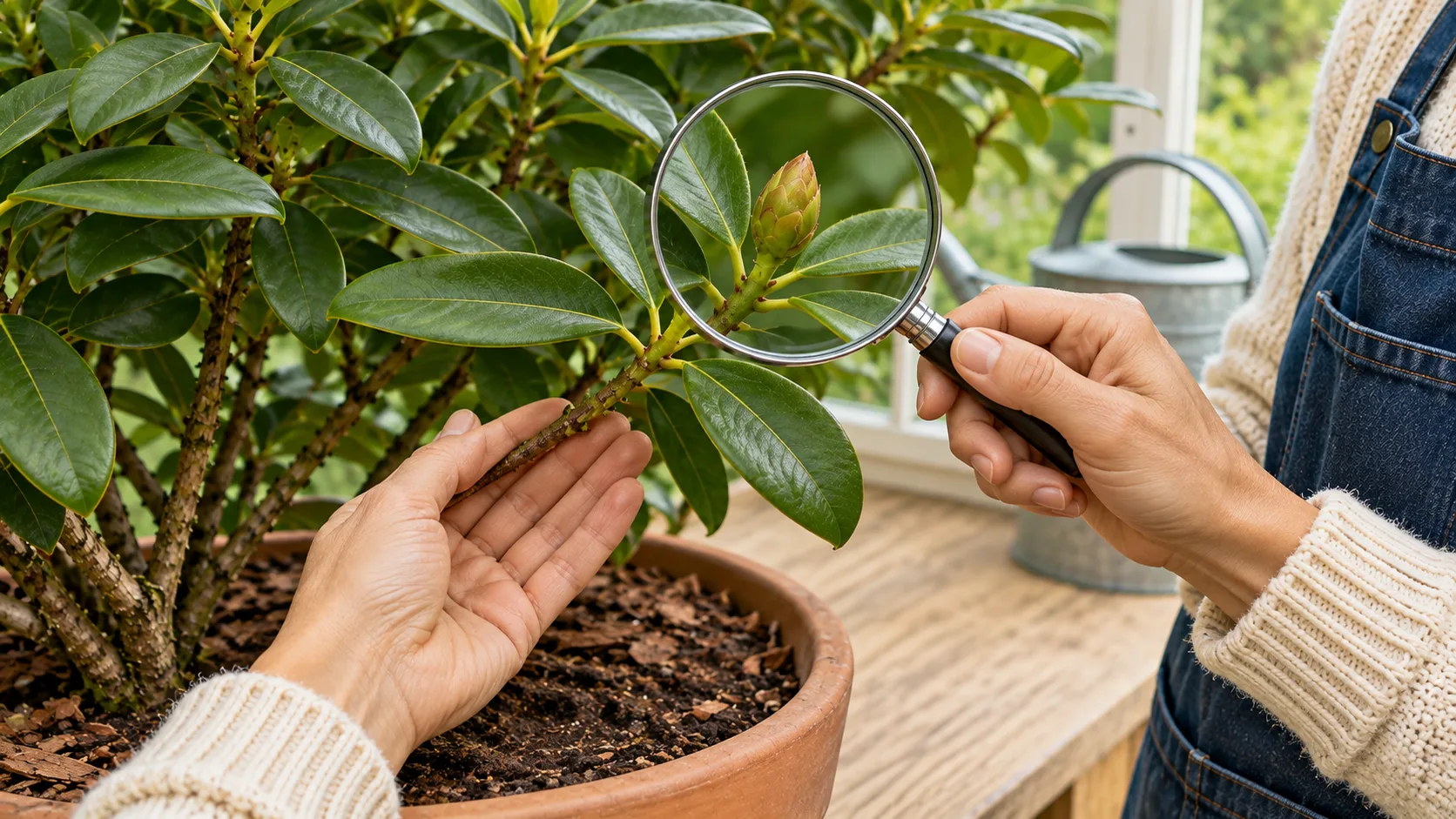
| Persistent brown buds, tiny black bristles | Fungal bud blast | Inspect the bud with a magnifying glass 7 |
If yellowing dominates without visible insects, the causes of yellow rhododendron leaves help narrow the diagnosis further, particularly towards chlorosis.
Hanging leaves and damaged roots
Do not add water to an already saturated root ball. Rhododendrons need moist, free-draining soil: waterlogging deprives roots of air. 9 Phytophthora rot can also cause wilting, with blackened roots whose outer layer slips off. 3
In pots, check drainage then gently ease out the root ball to inspect roots. In the ground, look for water collecting around the base. The crown may show browning beneath the bark. These signs call for examination: foliage alone cannot confirm Phytophthora, and laboratory analysis may be needed to distinguish it from waterlogging. 36
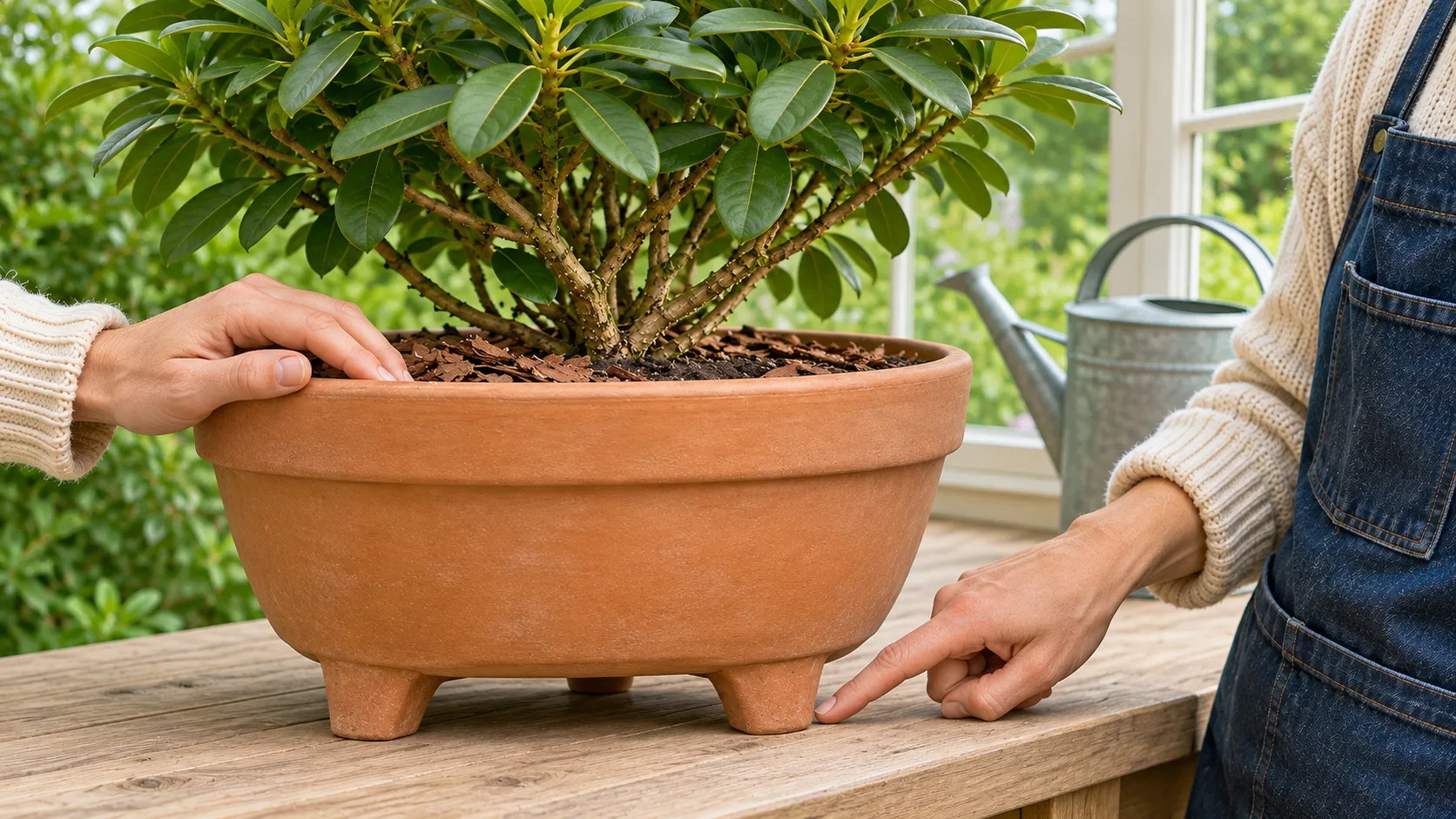
Correct drainage before any new planting. If root infection is confirmed, consider removing the affected plant and choosing a less susceptible replacement; replanting a rhododendron in the same spot risks recurrence. 6 The general root rot guide explains below-ground signs.
A dying branch on an otherwise vigorous hybrid rhododendron may also have Botryosphaeria dieback. Cut below all discoloured wood and clean tools between cuts with 70% alcohol. Azaleas with similar dieback may harbour other fungi. 3
To keep the root ball moist without waterlogging it, adapt rhododendron watering to rain, the container and actual soil moisture.
Brown leaves after cold or sun
Put browning in its weather timeline before looking for a fungus. In severe cold, rhododendron leaves may lower, then return to position as temperatures rise. This reversible drooping differs from a leaf whose tissue has turned brown and died. 54
Overly intense sun can scorch an area, often towards the leaf centre, leaving a lasting mark. Brown edges on older leaves can also follow excess fertiliser or accumulated salts. Dead portions cannot turn green again. 4 Protect the pot from scorching sun and stop excessive feeding: roots and leaves are sensitive to overfertilisation. 15
After a windy winter, brown leaves and dry tips can appear as growth begins. Shelter from drying winds and moist soil reduce this risk. 4 Compare these symptoms with weather damage.
Spots, white powder and galls
Keep leaves with simple spotting while damage remains limited. Fungal leaf spots are often chiefly cosmetic; collect fallen leaves and avoid overhead watering. 3 Removing every marked leaf can severely defoliate the shrub. 7
Powdery mildew looks different according to the plant. On evergreen rhododendrons, it can leave pale, yellow or purple patches with inconspicuous growth underneath. Deciduous azaleas more often carry visible white powder. 7 Examine both surfaces: no obvious powder does not rule it out. See the powdery mildew guide.
A gall, by contrast, produces a thickened, fleshy, pale leaf, especially on azaleas. Remove accessible galls before their white spore layer appears. 7
Eaten, pale or web-covered leaves
Find the pest before choosing control measures. Vine weevils notch leaf edges, while lace bugs and mites empty cells and discolour the blade. 4
Notches and vine weevils
Collect adults by torchlight in the evening, or shake a branch over a container. Their bites are often tolerable; root-eating larvae are more dangerous, particularly in pots. White, legless and curved, with brown heads, they reach 10 mm (0.4 in). 8
If a potted rhododendron declines, inspect its root ball too and remove larvae during repotting. Beneficial nematodes can target identified larvae; their use depends on the species sold and compost temperature. Follow supplier instructions. 8 See vine weevil.
Pale stippling and lace bugs
Lace bugs leave pale stippling above and black droppings beneath. Rhododendron lace bug (Stephanitis rhododendri) and azalea lace bug are distinct. Preserve their predators, including lacewings and spiders, and monitor new damage. 2 The lace bug guide helps recognise them.
Bronzing and mites
Tap a branch above white paper and watch whether tiny dots move. A water jet directed beneath leaves can dislodge present mites. 4 Avoid insecticides used without a target: removing predators can worsen mite populations. 2
Black buds and rotting flowers
Distinguish a dead bud from a flower that has turned soft. Fungal bud blast, caused by Seifertia, leaves attached brown buds, sometimes later greyish and covered in tiny black bristles. Remove accessible affected buds. 7
Rhododendron leafhopper, blue-green with orange stripes, measures 8 to 9 mm (0.3 to 0.35 in). Its presence does not justify treatment: it does not visibly reduce shrub vigour and its role in spreading this disease remains debated. 10
Ovulinia petal blight mainly affects azaleas, but also rhododendrons. Small spots become soft and wet, then flowers stick to foliage. 3 In mild, damp weather, deterioration can take 2 to 3 days. 4 Remove infected flowers and avoid wetting them when watering. 3
Preventing recurrence
Maintain airy roots, a moist root ball and foliage protected from scorching sun. Rhododendrons tolerate waterlogged ground and drying out poorly. Planting in acidic, free-draining soil matters more than repeatedly treating leaves. 9
Keep mulch away from the trunk and protect the shrub from cold, drying winds. 11 Do not bury the root ball deeply: rhododendron roots remain shallow. 5 Before buying a new plant, look beneath its leaves and avoid specimens wilted in the morning or with unusually dark roots. 3
See rhododendron care to correct its growing conditions, and the rhododendron botanical profile to identify the main groups. The plant diseases and pests list lets you compare a problem affecting several plants.
Frequently asked questions
How do you treat rhododendron leaf diseases?
How do you treat eaten or holed leaves?
On a rhododendron with notched edges, first search for adult vine weevils after dark. Collecting them reduces insects present. A wilting pot also needs root inspection: underground larvae can do much more damage than visible bites. 8