
Anthurium plant problems: diagnosis
Anthurium plant problems: finding the cause
A yellowing anthurium does not always need treatment: wet compost, direct sun or too much fertiliser can damage its leaves. Wet lesions that spread, soft roots or a blackening spadix do call for isolating the pot and investigating an infection.
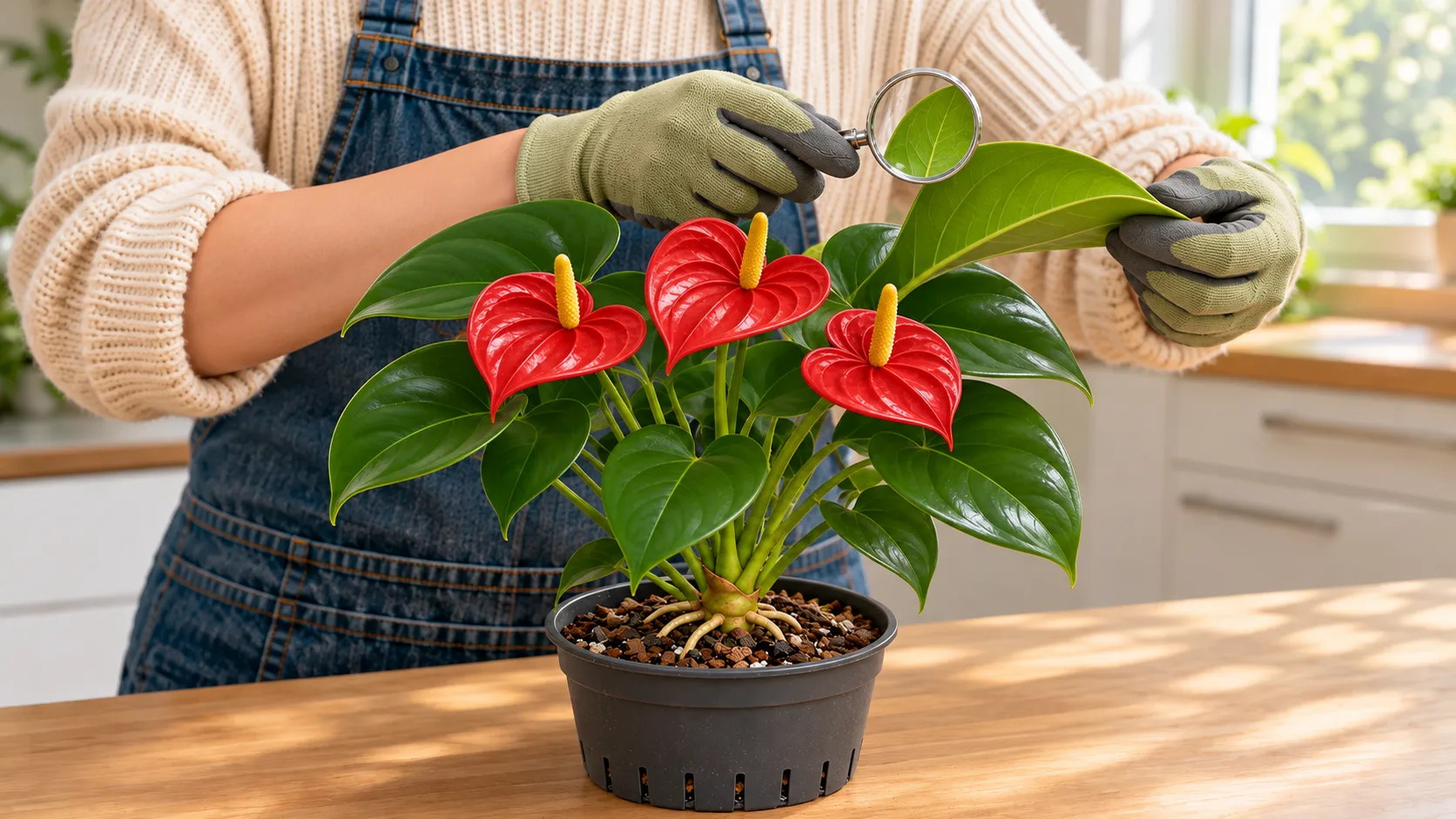
Start diagnosis with the root ball and leaves
Isolate an anthurium with spreading spots, then compare the condition of its compost, roots and foliage before watering or treating it. Diseases of florist’s anthurium (Anthurium andraeanum) include bacterial infections, root rots and spadix diseases; overwatering and pests also damage leaves. 1 2
First look at where the damage starts. A dry patch facing the window suggests scorching; a wet lesion spreading from the leaf edge calls for different action. Then turn the leaves over: insects and mites can stay hidden while their damage is visible on the upper surface. 3 4
Signs of an unhealthy anthurium: possible causes to check and the first step. A single symptom cannot confirm the organism responsible.
| What you see | Possible cause | First step |
|---|---|---|
| Yellow older leaves, damp root ball and damaged roots | Overwatering | Check drainage and water less often 3 |
| Brown tips after repeated fertilising | Salt accumulation | Reduce feeding and flush the compost, letting it drain 3 |
| Wet patch at the margin, followed by V-shaped dead tissue | Xanthomonas | Isolate, keep foliage dry and seek confirmation 1 |
| Plant wilted despite damp compost, bronze veins | Possible vascular bacterial disease | Separate the pot and take no cuttings from it 1 |
| Soft brown roots with a slipping outer layer | Waterlogging or root rot | Unpot to inspect the roots; do not add water automatically 5 1 |
| Small spots on the spadix turning black and wet | Colletotrichum | Isolate and avoid splashing 1 |
| White waxy clusters or small fixed shields | Scale insects | Inspect crevices and neighbouring plants 6 7 |
| Pale stippling and fine webs underneath | Spider mites | Examine with a magnifying glass and isolate the affected plant 4 |
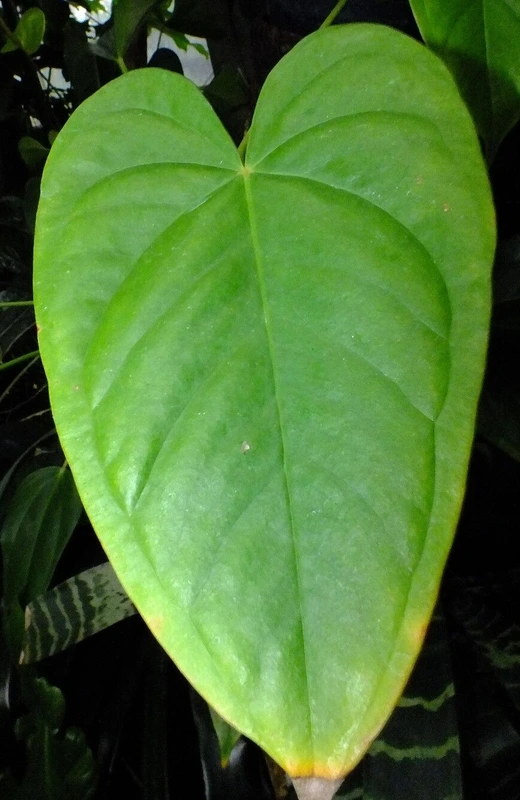
Yellow leaves and brown tips: check growing conditions
A root ball that stays wet and yellow lower leaves first suggest overwatering, without proving an infection. Too much fertiliser can also yellow lower leaves and burn their tips. 3 Review recent care: water left in the outer pot, repotting into an oversized container or frequent feeding.
An oversized pot leaves a volume of damp compost that the roots do not yet use. The mix needs to be airy, with water flowing freely through the holes. 8 If the root ball is waterlogged, stop watering until the surface dries and check the roots. The overwatering guide explains why wilted foliage can accompany an overly wet root ball.
When symptoms follow repeated feeding, flush water through the compost, let it drain and reduce fertiliser. Check the roots as well. 3 Flushing removes salts; it cannot cure rot or a bacterial infection.
A large, dry beige patch on a leaf exposed to sun suggests a different problem. Protect the anthurium from direct sunlight and monitor new leaves. 3 The anthurium care guide gives light, watering and feeding advice to restore stable conditions.
Wet V-shaped spots: possible bacterial blight
A yellow, wet area at the leaf edge that spreads and dies in a V shape is a warning sign of Xanthomonas bacterial blight. 1 A single dry brown spot, without this progression, is not enough to make that diagnosis.
The bacterium can enter through hydathodes and wounds. Cuts, tears and some insect punctures provide entry points. When infection spreads throughout a plant, the foliage may take on a bronze colour before the plant wilts. 1
Keep leaves dry and avoid watering in a way that splashes neighbours. Space pots to allow air circulation; disinfect tools between plants and stop taking cuttings. 1 A division can carry the bacterium in infected tissue.
Keep a strongly suspected plant separate while seeking confirmation. Once infection is confirmed, the sanitary response is to discard the affected plant. 1 The bacterial leaf spot guide helps compare lesions without automatically assigning a bacterial species from a photograph.
Wilting and brown veins: suspected Ralstonia
An anthurium that wilts despite a damp root ball, with veins turning brown or bronze, may have vascular bacterial disease caused by Ralstonia solanacearum. 1 Yellowing often comes before wilting; bacteria then obstruct water movement through the tissues.
These signs can also resemble root rot. Examine the veins and roots together, without cutting into stems to look for an ooze. Photograph the whole plant, affected leaves and root ball, then seek advice to confirm the cause. Damp compost does not guarantee that a plant can absorb the water it holds. 1
Contamination can spread through water, soil, tools or the hands of people handling plants. A cutting from an affected pot can transmit the disease. 1 Do not use cuttings as a rescue measure before diagnosis.
After confirmation, discard the plant and contaminated potting mix together. Reused pots need cleaning to remove adhering soil, followed by suitable disinfection. 1 Fertiliser or a randomly chosen fungicide cannot restore water circulation in an infected plant.
Soft roots: waterlogging or root rot?
Soft brown roots and a wilted anthurium mean you need to check the root ball; appearance alone does not always distinguish waterlogging from infection. 5 Anthuriums can develop rots caused by Rhizoctonia, Pythium or Phytophthora. 1
The last two are oomycetes. They cause root decline, yellowing and wilting even when the root ball contains water. The outer layer of some roots may slip away; brown or black leaf lesions sometimes appear in severe cases. 1
Rhizoctonia solani can also cause brown roots and a collapsed plant. Saturated conditions encourage these diseases, and their symptoms overlap. 1 Laboratory testing may be necessary to distinguish Phytophthora root rot from damage caused by waterlogging alone. 5
If the problem is an overly wet mix without established infection, remove soft roots and repot the healthy portion into a suitably sized container with an airy mix. 9 If damage is extensive or infection confirmed, discard the diseased plant and avoid reusing its compost. 1 The root rot guide explains the signs that call for unpotting.
A blackening spadix: anthracnose
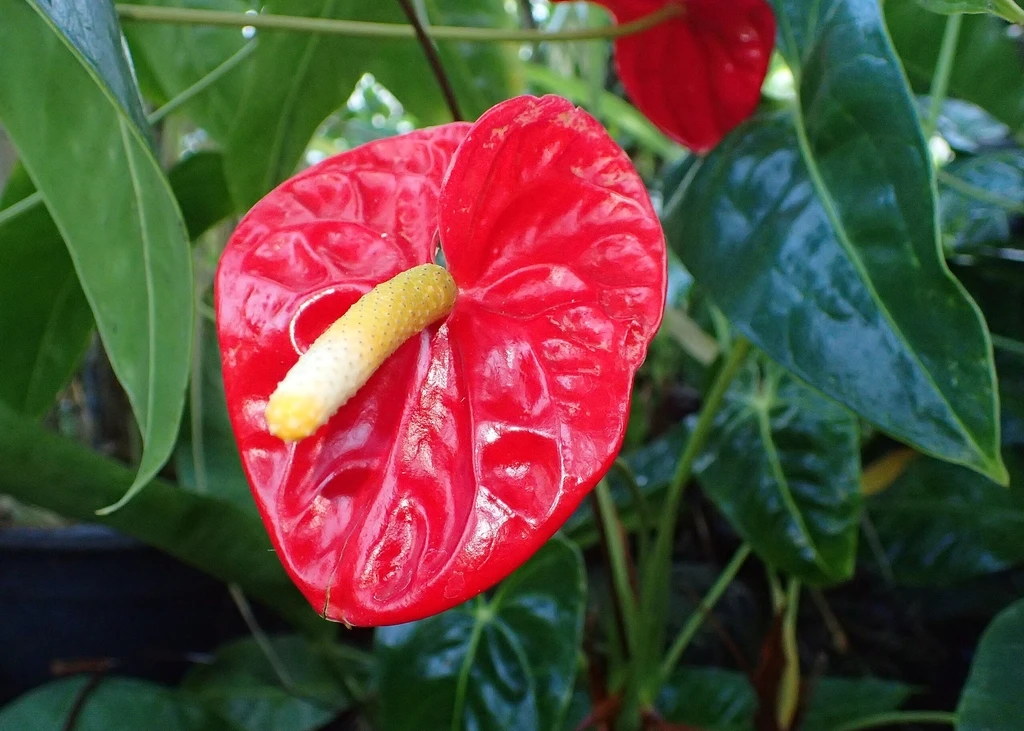
Brown or black spots on the spadix that enlarge, become wet and blacken the spike suggest anthracnose caused by Colletotrichum gloeosporioides. 1 The central organ is the key: this anthurium disease specifically affects the spadix and can cause it to drop.
Watch the small central column rather than just the colour of the large spathe. A spreading black lesion on this organ needs a different response from a dried leaf edge. Warm, humid conditions encourage infection; splashes move the spores. 1
Isolate the suspect plant, avoid wetting inflorescences and disinfect the tool after every cut. Tissue already damaged by fertiliser, other products or bacterial disease can be more vulnerable. 1 Repeated spraying without diagnosis can therefore add injuries to the original problem.
White fluff, shields or stippling: pests
Check leaf axils for scale insects and undersides for spider mites; these pests are among the possible problems of anthuriums. 2 Confirm their presence before choosing a response: a spot alone is not an insect.
Mealybugs gather in sheltered parts and produce white, cotton-like wax. Other scale insects have a small shield fixed to the plant. 6 7 Separate the affected plant, check crevices and inspect other pots before putting them close together.
Spider mites, including Tetranychus urticae, cause fine pale stippling. A magnifying glass helps reveal mites, eggs and shed skins beneath leaves; webs appear in heavy infestations. 4 Warm, dry air encourages their development.
Improving air humidity can reduce conditions favourable to spider mites, but cannot control an infestation on its own. 4 Do not repeatedly mist a plant with suspicious leaf lesions: keep foliage dry and deal with the identified problem. A heavily infested pot may be better discarded than kept in contact with an entire collection. 1 7
How can you limit spread to other plants?
Keep new purchases separate for at least a month and disinfect tools between plants. 6 1 This observation period helps reveal hidden insects before they reach established pots.
Water onto the potting mix, let water drain away and leave space between the leaves of neighbouring pots. An airy mix reduces the risk of continually saturated roots; avoiding splashes limits the movement of some pathogens. 8 1
To monitor a spot, keep photographs of the same leaf and watch its progression instead of immediately cutting off every marked part. If lesions advance or the plant stays wilted despite suitable watering, maintain isolation and seek a more precise diagnosis. The different plant problem guides let you compare symptoms, pests and growing conditions.
Frequently asked questions
Distinguish droplets at leaf edges, threads on the compost and small flying insects: they do not indicate the same problem. 1 10 11
Why is my plant weeping?
Droplets can form at the edges of anthurium leaves at night when the air is very humid and the root ball warm and wet: this is guttation. A single droplet cannot confirm infection. On an infected plant, however, the liquid can carry bacteria; avoid contact with the leaves of neighbouring pots. 1
Why are fungi growing in my potting compost?
Decomposer fungi can grow in the organic matter in compost; their threads do not prove that anthurium roots are diseased. Check for persistent dampness, poor drainage and inadequate air circulation. If the plant remains healthy, this alone does not require repotting: remove the affected surface layer and replace it with fresh mix. 10