
Care guide
Silver wattle care
Acacia dealbata
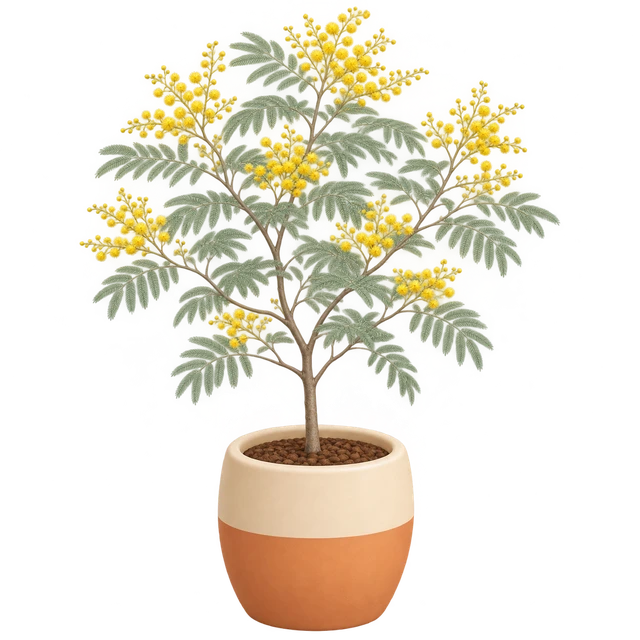
Silver wattle flowers in sun in well-drained soil. In a pot, its root ball needs water even in winter; in the garden, the rootstock largely determines lime tolerance. Before planting, also check available space, frost and proximity to sensitive natural habitats.
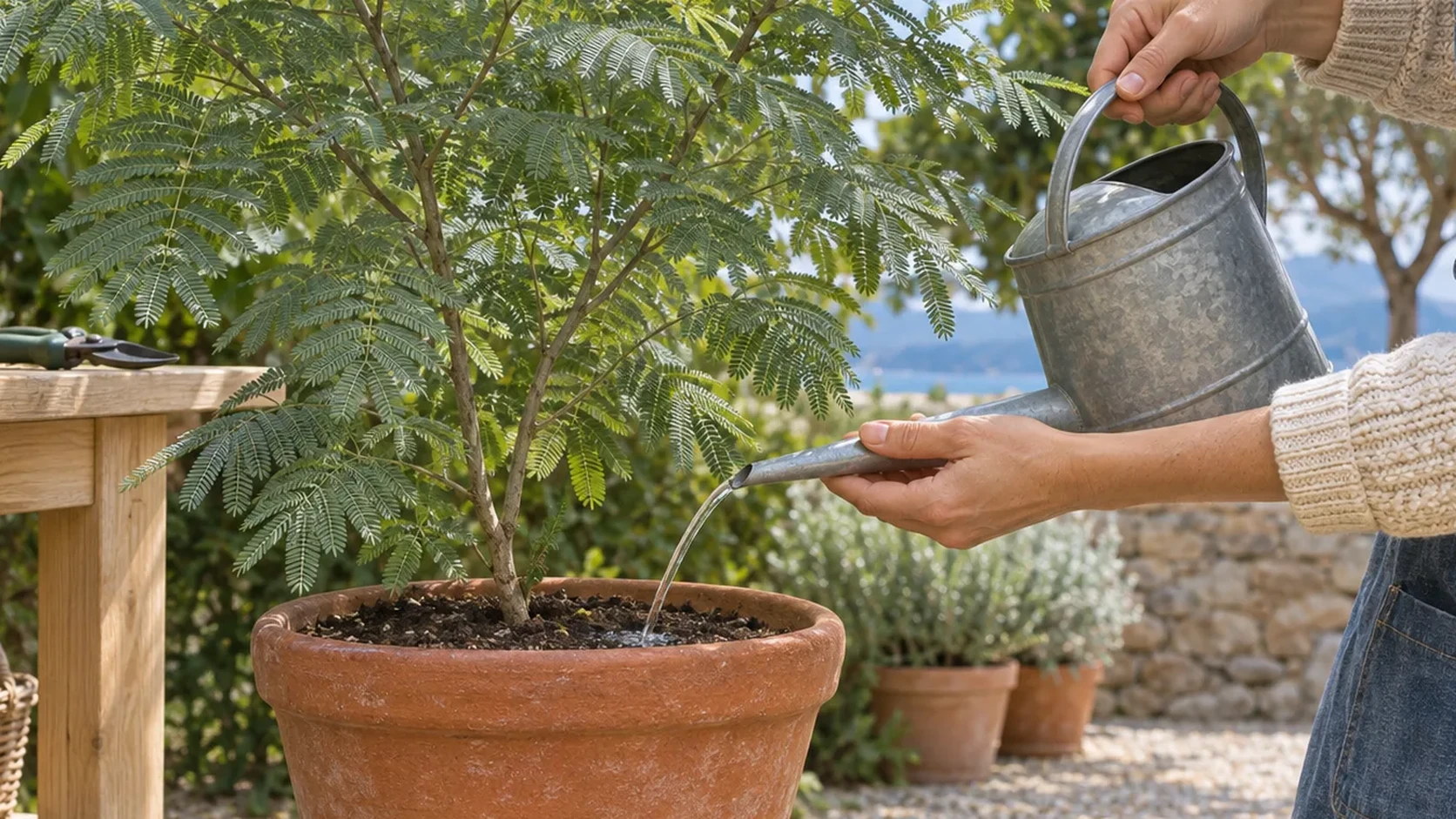
How should you water silver wattle?
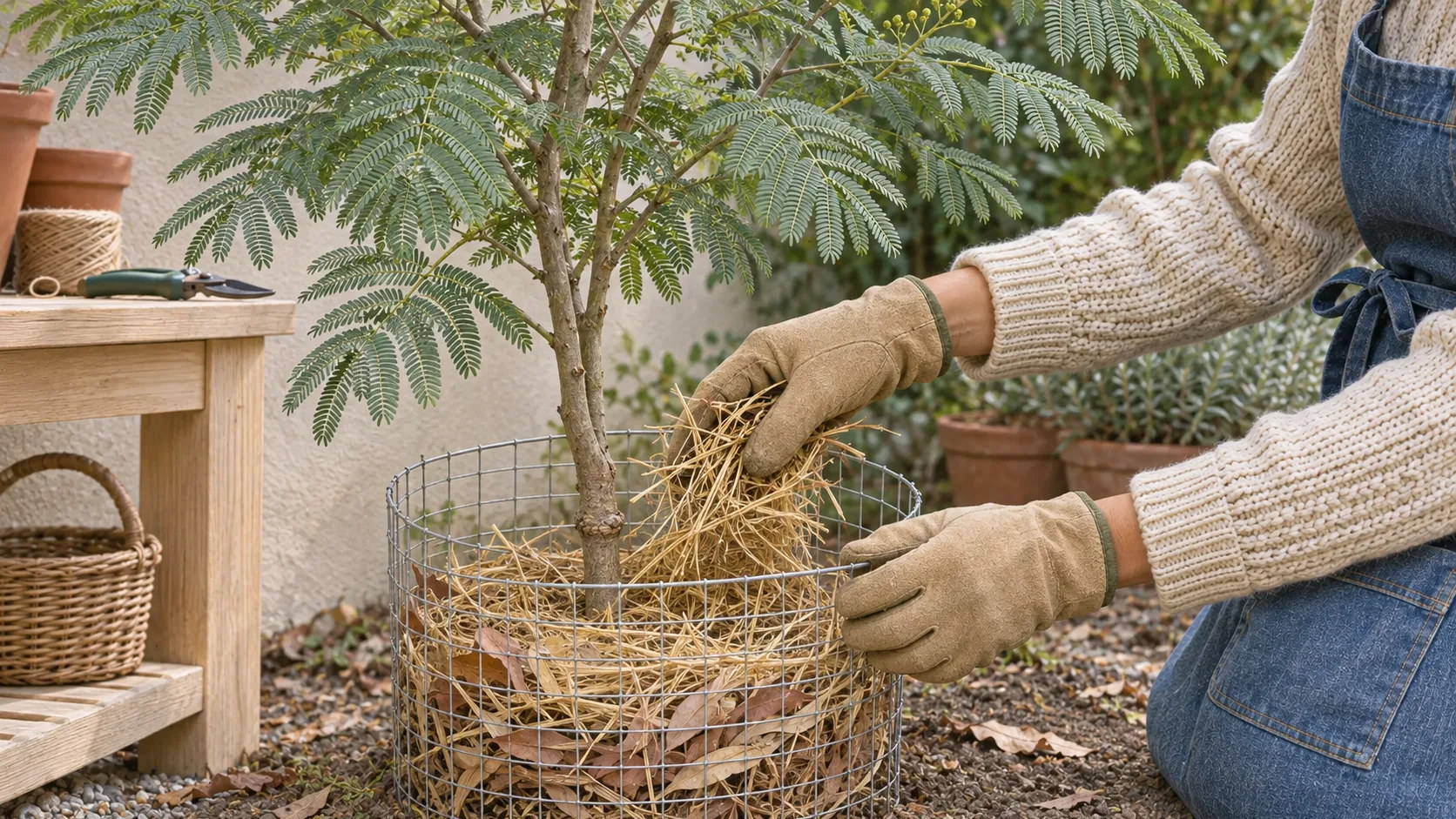
Check the root ball all year in a pot; support garden plants through their first summers. Water must drain away, and mulch should be moved aside to inspect the mix. 1
10 L every 30 days
Every day
At least weekly
20 L per plant Once or twice weekly
What exposure suits it?
Choose full sun in a sheltered position. The soil must remain free-draining; winter shelter also needs enough light. 2
4 h of direct sun per day: minimum reached
Sources: Pépinières Cavatore
Garden exposure
Choose the side of the house where silver wattle will grow, then count the hours of direct sun on a clear day.
How do you plant and repot it?
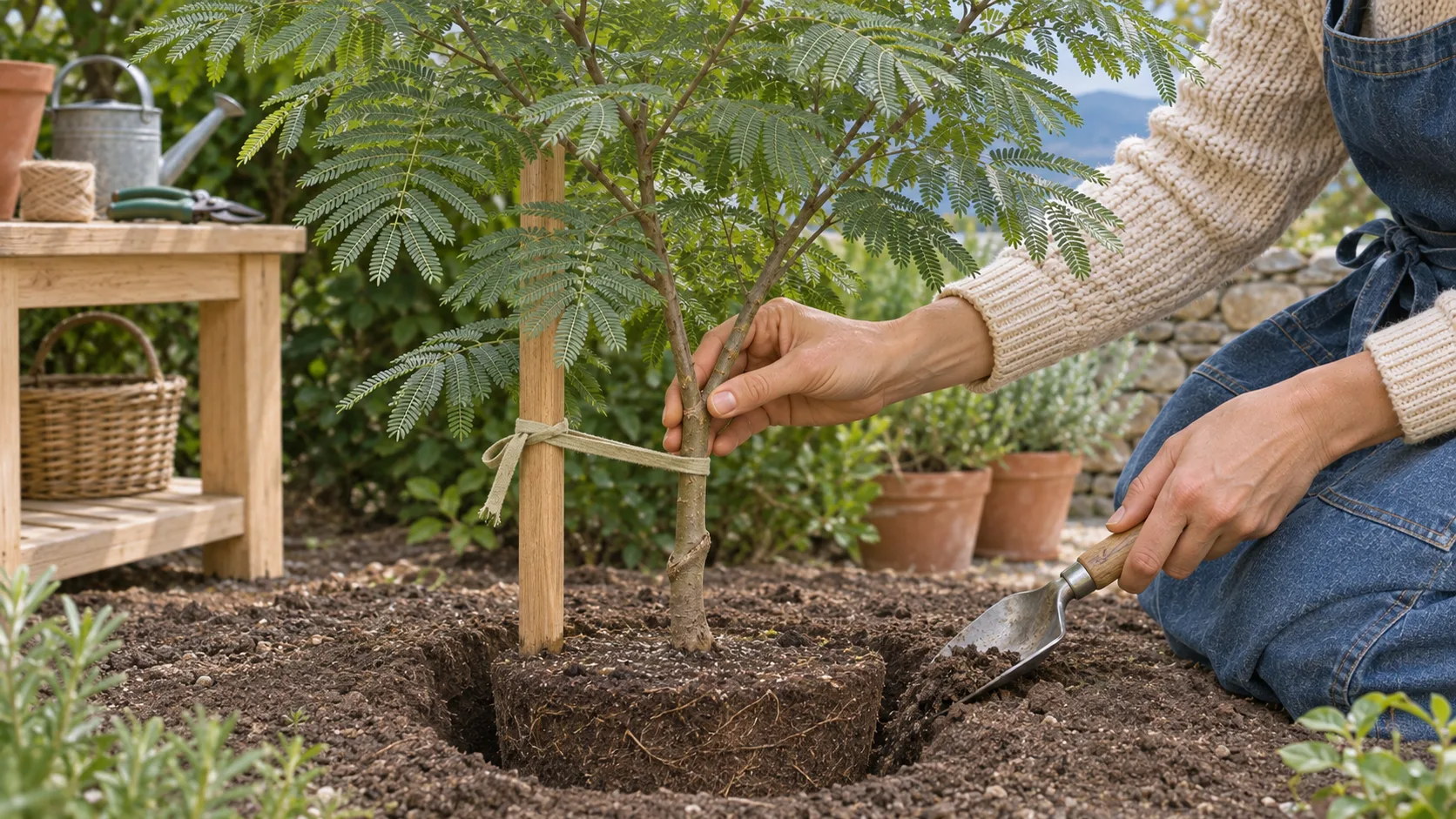
Keep the root ball intact and the graft union uncovered. The rootstock determines lime tolerance; the container must let water drain away. 1 3
Should you add fertiliser?
Distinguish pot and garden care; fertiliser is unnecessary when repotting. Feed a potted plant according to the product label and the growing protocol. 1
- Feeding
- June to SeptemberLabelled dose · in a potSource: Pépinières Cavatore
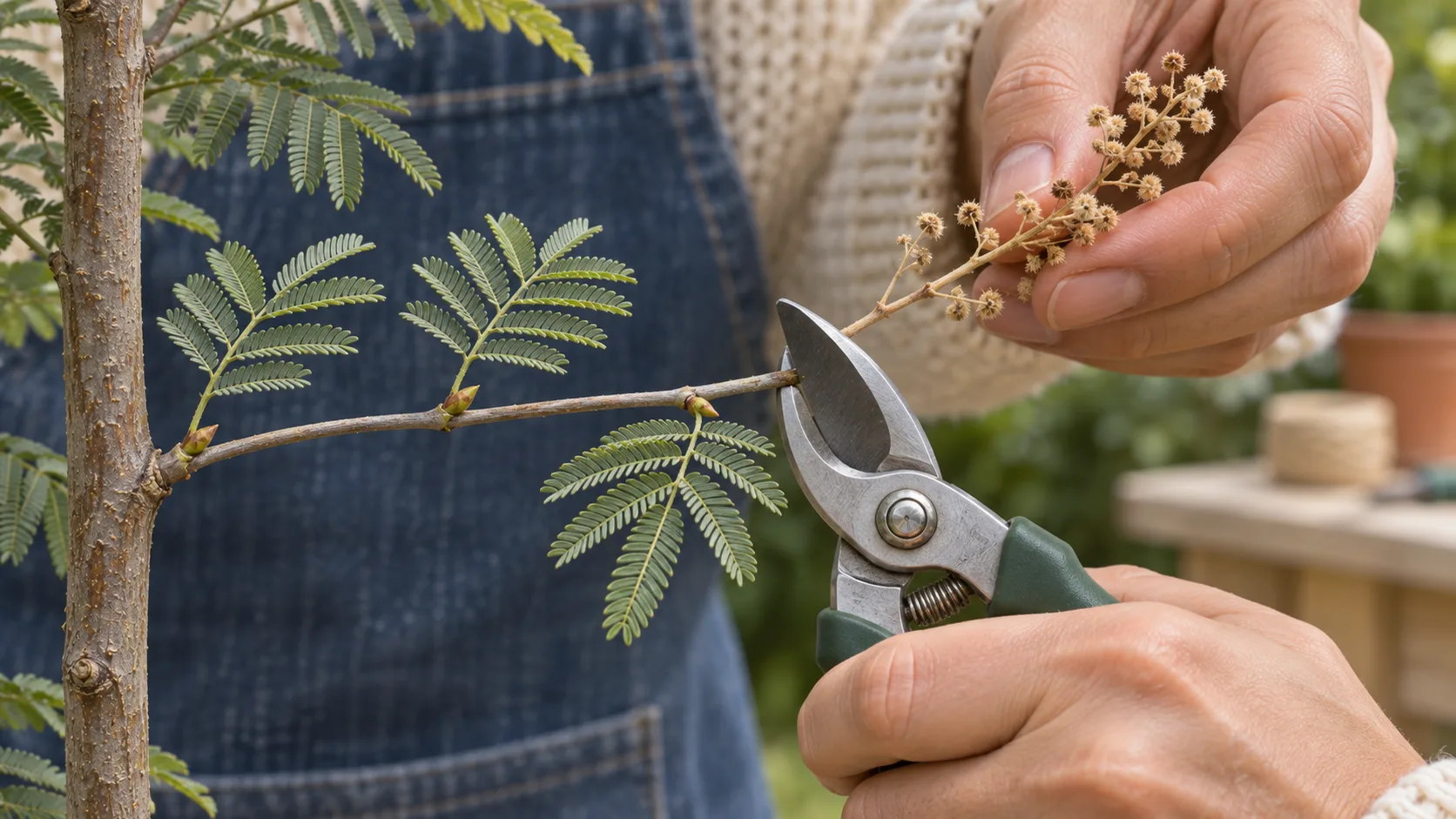
When should you prune silver wattle?
Prune after flowering and frost, without cutting an adult tree back hard. Keep the leader when training a tree form; brittle wood needs suitable support. 4 1
How do you protect it from frost?
Protect the graft union in the garden and prepare bright, unheated shelter for the pot. The ability to regrow after frost does not guarantee that the whole plant survives. 1 3
- Winter conditions
- Under cover, frost-freeSource: Pépinières Cavatore
- Bring indoors
- Before the first frostsin a potSource: Pépinières Cavatore
- Protect
- Before the first frostsProtect the graft union · in the groundSource: Pépinières Cavatore
- Light
- A bright roomSource: Pépinières Cavatore
- Winter watering
- At least weeklyWithout rain; check the root ballSource: Pépinières Cavatore
How much space should you allow for the mature tree?
Allow the space of a tree, even if it arrives flowering in a small pot. In garden cultivation, the RHS range is 8 to 12 m tall (26 to 39 ft) and 2.5 to 4 m wide (8 to 13 ft), reached in ten to twenty years. In its Australian range, the species can become much larger. 2 5
- Mature height
- 8 to 12 m
- Spread
- 2,5 to 4 m
A potted silver wattle rarely exceeds two metres (7 ft), according to the grower, but then requires regular watering, repotting and pruning. For ‘Gaulois’, pruning after flowering can maintain a height of about four metres (13 ft); it is not a miniature variety. Allow at least three metres (10 ft) from another tree, the nursery's planting guide, without treating this distance as a guarantee for foundations or buried services. 1 6
When does it flower?
Silver wattle generally flowers from January to March in France. According to its grower’s description, ‘Mirandole’ may begin around Christmas. 3 7
- Flowering
- January to MarchFrance, speciesSource: SNHF
| Conditions | January | February | March | April | May | June | July | August | September | October | November | December |
|---|---|---|---|---|---|---|---|---|---|---|---|---|
| France, species | Flowering | Flowering | Flowering | no flowers | no flowers | no flowers | no flowers | no flowers | no flowers | no flowers | no flowers | no flowers |
What care should you plan through the year?
Organise the year around winter flowering followed by summer growth. From January to March, monitor buds, cold spells and container root balls together. Prune after flowering and outside frost; repot after flowers or in late April. 3 1 4
| Task | January | February | March | April | May | June | July | August | September | October | November | December |
|---|---|---|---|---|---|---|---|---|---|---|---|---|
| Watering | reduced | moderate | high | high | high | high | moderate | moderate | moderate | moderate | reduced | reduced |
| Growth | active | active | strong | strong | strong | strong | active | active | active | active | resting | resting |
| Feeding | no | no | no | no | no | yes | yes | yes | yes | no | no | no |
| Repotting | no | no | no | favorable window | no | no | no | no | no | no | no | no |
From June to September, closely follow water needs in young plantings and pots; fertiliser is for containers. In autumn, prepare shelter and graft protection before frost arrives. The calendar remains a guide for metropolitan France: soil condition and local weather determine actual work. 1
How do you propagate Acacia dealbata?
Propagate silver wattle from prepared seed or semi-ripe cuttings. A seedling lacks the rootstock of a grafted plant and does not acquire its lime tolerance. 2 3
- Semi-ripe cutting
- In late summerGeneral guide for semi-ripe cuttingsSource: Royal Horticultural Society
Why does its foliage turn yellow?
Check leaf age, water and soil before treating the plant. Old foliage may renew itself in summer; chlorosis or a pest needs further checks. 1 2
| What you observe | Useful check | First intervention |
|---|---|---|
| Yellowing on chalky ground | Own-root or grafted plant? | Reconsider soil suitability; have chlorosis confirmed before treating. |
| Declining foliage, soil waterlogged for a long time | Blocked holes, full saucer, ground drainage | Remove standing water and correct the cause. |
| White cottony or ribbed clusters | Examine shoots and foliage undersides | Identify the scale insect before choosing control. |
| Old yellow leaves in summer, healthy young shoots | Leaf age and season | Monitor without increasing fertiliser. |
| Brown branches after frost | Timing of cold and extent of damage | Wait for frost-free pruning time to remove damaged wood. |
| What you see | Likely cause | What to do |
|---|---|---|
| Soil stays soggy, suffocating roots and causing rot. | OverwateringExternal Factors | Treating Waterlogged Soil |
| Tiny arachnids that spin fine webs under leaves. | Spider MitesPests | Eliminate Spider Mites |
| Small, immobile waxy shells (1–3 mm) on stems and leaves. | Armored ScalePests | Eliminate Armored Scale Insects |
What precautions should you take with children and pets?
Identify the plant after a concerning exposure and contact the appropriate professional. Reports concern three cats; they establish neither a dose nor a time to symptoms. For a person in France, contact the poison centre. 8 9
Which variety should you choose?
Choose flowering time and rootstock first, then outline. Similar names do not make plants interchangeable.
Le Gaulois
Horticultural name
Widely used winter-flowering mimosa selection with abundant flowers.
Mirandole
Horticultural name
Early, free-flowering cultivar common in the French trade.
Acacia dealbata subsp. subalpina
Espèce botanique
Australian infraspecific name according to taxonomic references; does not replace the usual horticultural mimosa.
Varieties documented in the botanical profile.
| Name | Documented difference | Consequence for growing |
|---|---|---|
| ‘Gaulois’, often sold as “Le Gaulois” | Large pompoms, brittle branches, a tree of four metres (13 ft) or more | Allow space and protect from wind; check grafting in chalky soil. |
| ‘Mirandole’ | Smaller pompoms than ‘Gaulois’, flowers around Christmas and in January, sometimes early February | Choose this name for earlier flowers, without confusing it with Mirandole X. |
| Acacia dealbata subsp. subalpina | Generally smaller upland subspecies, sometimes up to ten metres (33 ft) | This botanical name does not denote a dwarf balcony cultivar. |
The rootstock Acacia retinodes is another species, not a dealbata variety. For a frost-prone garden, also compare the requirements of oleander before choosing the shrub: different flowering does not remove the need for a suitable position.
Frequently asked questions
Can you cut the top off a silver wattle?
On a young silver wattle trained as a tree, retain the central leader to form its framework. Removing the top is not the recommended formative pruning; work instead on side branches and structural faults. An old specimen tolerates hard pruning poorly. 4
How do you keep cut mimosa flowers fresh?
Recut the stems at an angle and put them in plenty of lukewarm water with the preservative sachet supplied by the florist. Keep the bouquet in a cool place, away from heating: a hot, dry room quickly dries the pompoms. 11