
Rhododendron watering: a practical guide
Watering rhododendrons
Rhododendrons keep their roots near the surface: their soil needs to stay moist without becoming waterlogged. Move mulch aside before deciding to water, then moisten the root ball slowly. In the garden, rainfall counts towards the total; in pots, monitor drainage too. Rainwater remains the best choice.
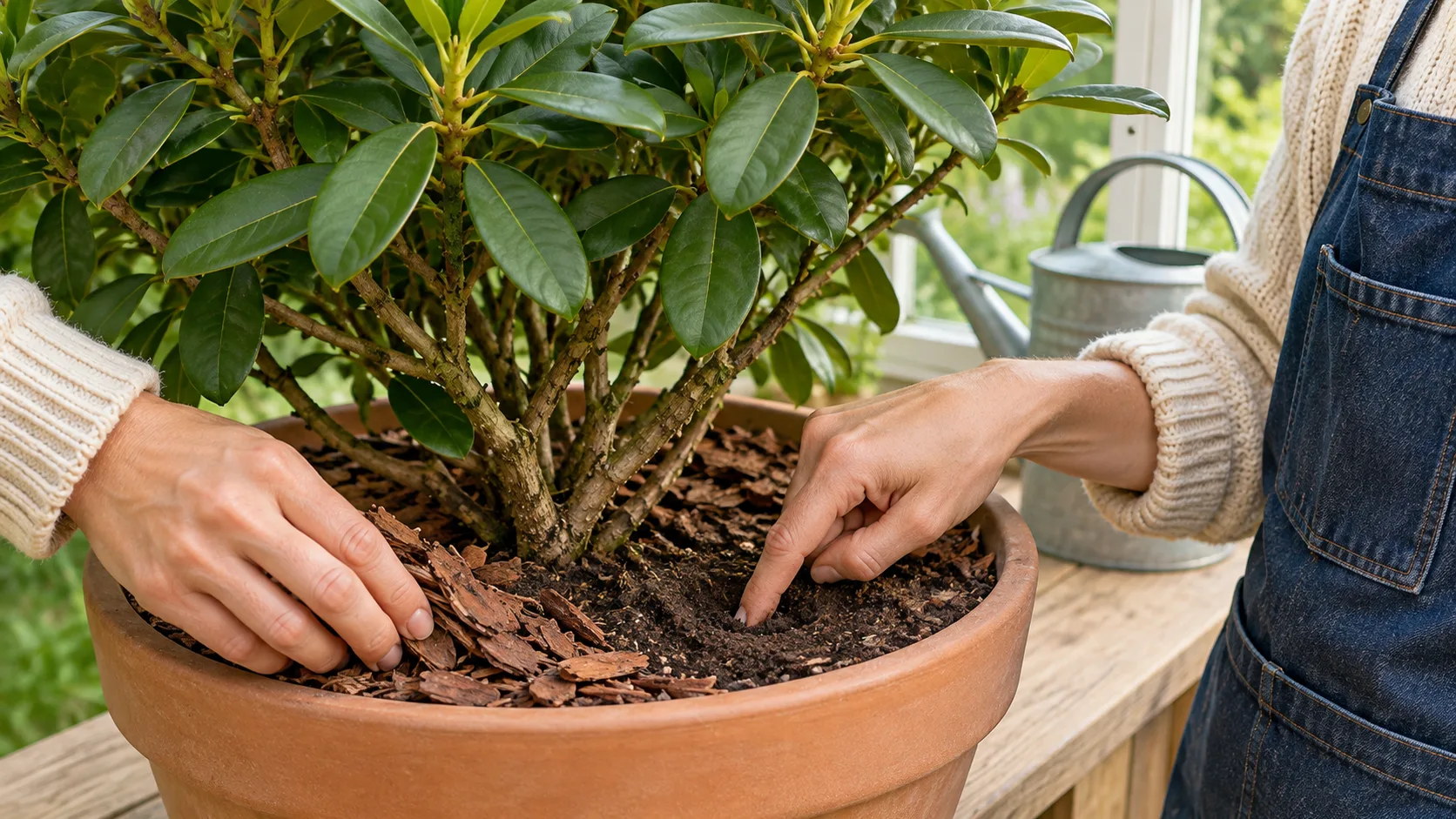
How to tell if a rhododendron needs water
Move mulch aside and feel the soil: if it is dry to around 2.5 cm (1 in), it needs water. This test covers the first inch of soil; it avoids waiting until leaves curl, an already visible sign of water shortage1. Rhododendrons have shallow roots that dry quickly in summer but tolerate waterlogged soil poorly2.
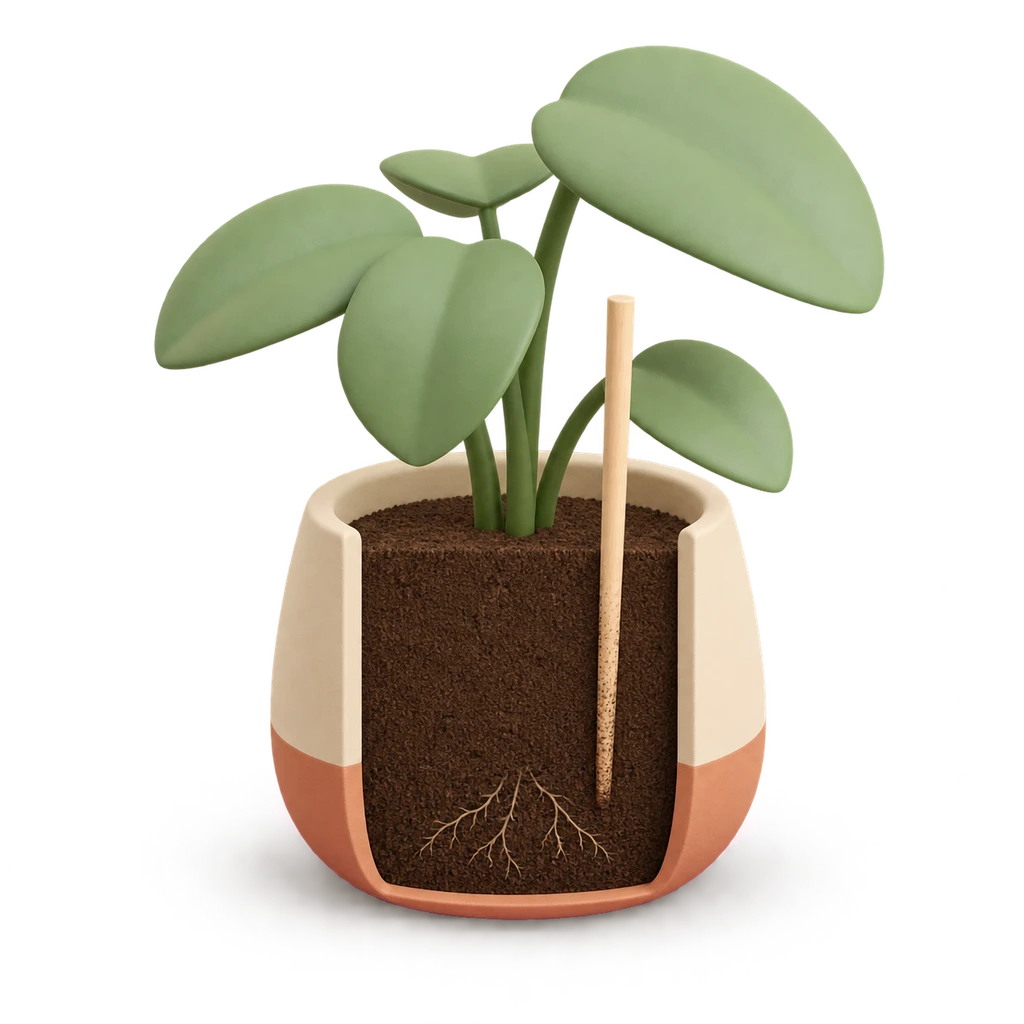
Potting mix dry to 1,3 cm: still moist
The finger test
Push a finger or wooden skewer 2,5 cm into the potting mix: if it is dry, water; if it is still moist, wait. The condition of the mix decides, not the calendar.
Hardy garden rhododendrons (Rhododendron) grow outdoors in beds or containers. Indoor azaleas, often cultivars of Rhododendron simsii, need cool, humid conditions; a hot, dry room causes decline34.
Under bark mulch, check the soil itself rather than the mulch. A recently planted root ball needs to stay damp, never spongy5. A brief shower guarantees little in a pot: it may wet only the top few centimetres of compost6.
In severe cold, leaves may also hang down, then recover their position as temperatures rise3. Foliage alone therefore does not determine watering: damp soil beneath lowered leaves does not need another dose of water.
How to water a rhododendron
Pour slowly onto the soil to moisten the whole root ball, without letting water stagnate. A generous watering that penetrates is better than daily small sips wetting only the surface7. Direct water beneath leaves: water intercepted by foliage does not reach roots6.
- Check moisture beneath mulch and, in pots, ensure no water is retained underneath.
- Pour gently close to the soil, distributing water around the root ball. Let it soak in before continuing6.
- In containers, stop just before or as water first drains through the holes. Further flooding wastes water and washes out nutrients6.
- Check that drainage remains free: a blocked hole or broken-down compost can retain water at the bottom8.
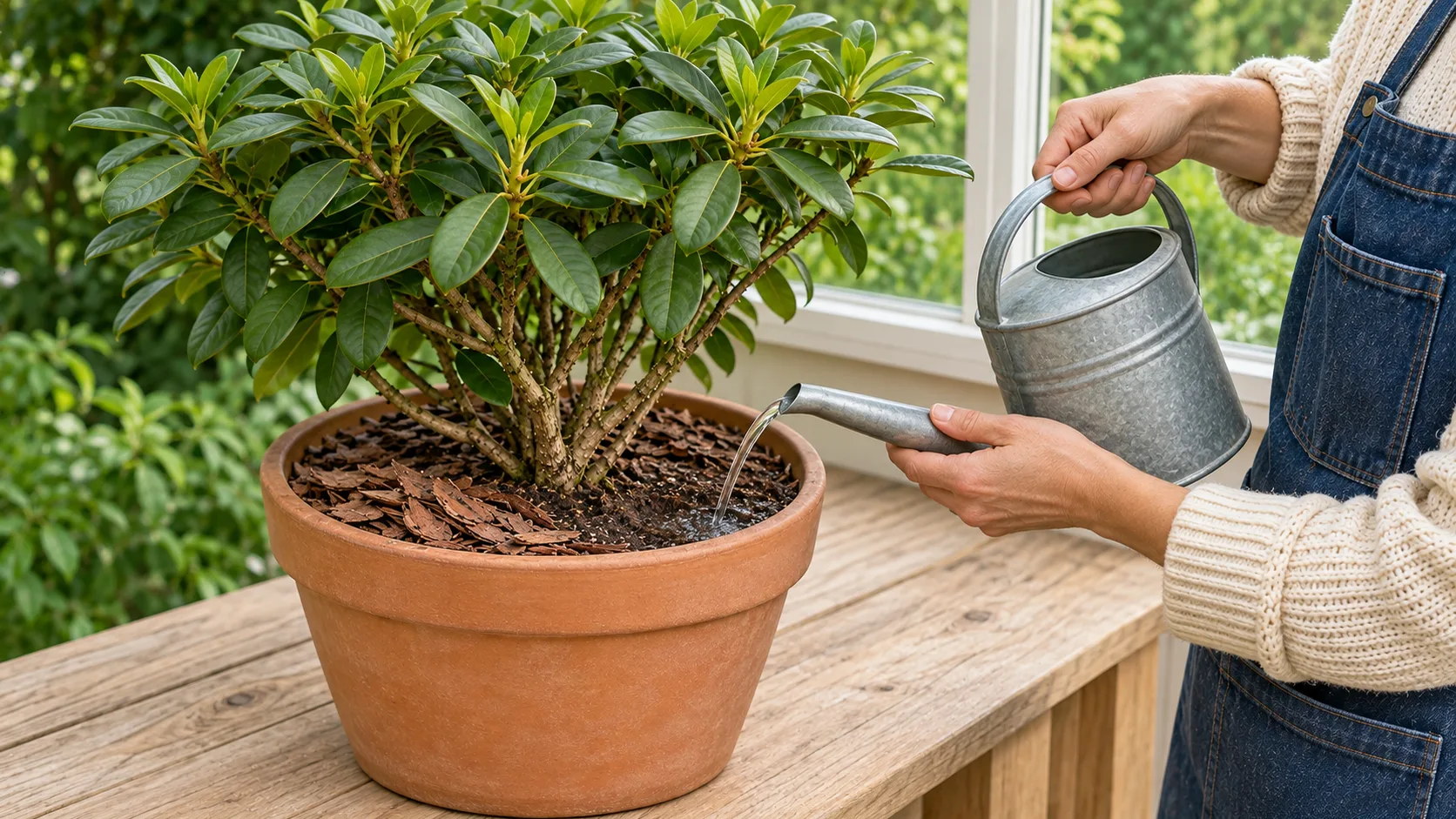
How much water in the garden and in pots
In the garden, for an established rhododendron during a hot, dry summer, use around 25 L/m² a week, including rain, as a guide. This is a water depth of about 25 mm (1 in): subtract rainfall before supplementing, and always check the soil9. This guideline applies to the watered area around the shrub, not an amount to pour each time at the stem alone.
In a pot, adjust the amount to what the root ball absorbs, then stop at the first drainage. A large container holds moisture longer than a small one, while terracotta dries quickly6. If water immediately runs down the sides of a dried root ball, do not assume it is rehydrated: dry compost can let water bypass its edges without absorbing it1.
Should you leave water in the saucer?
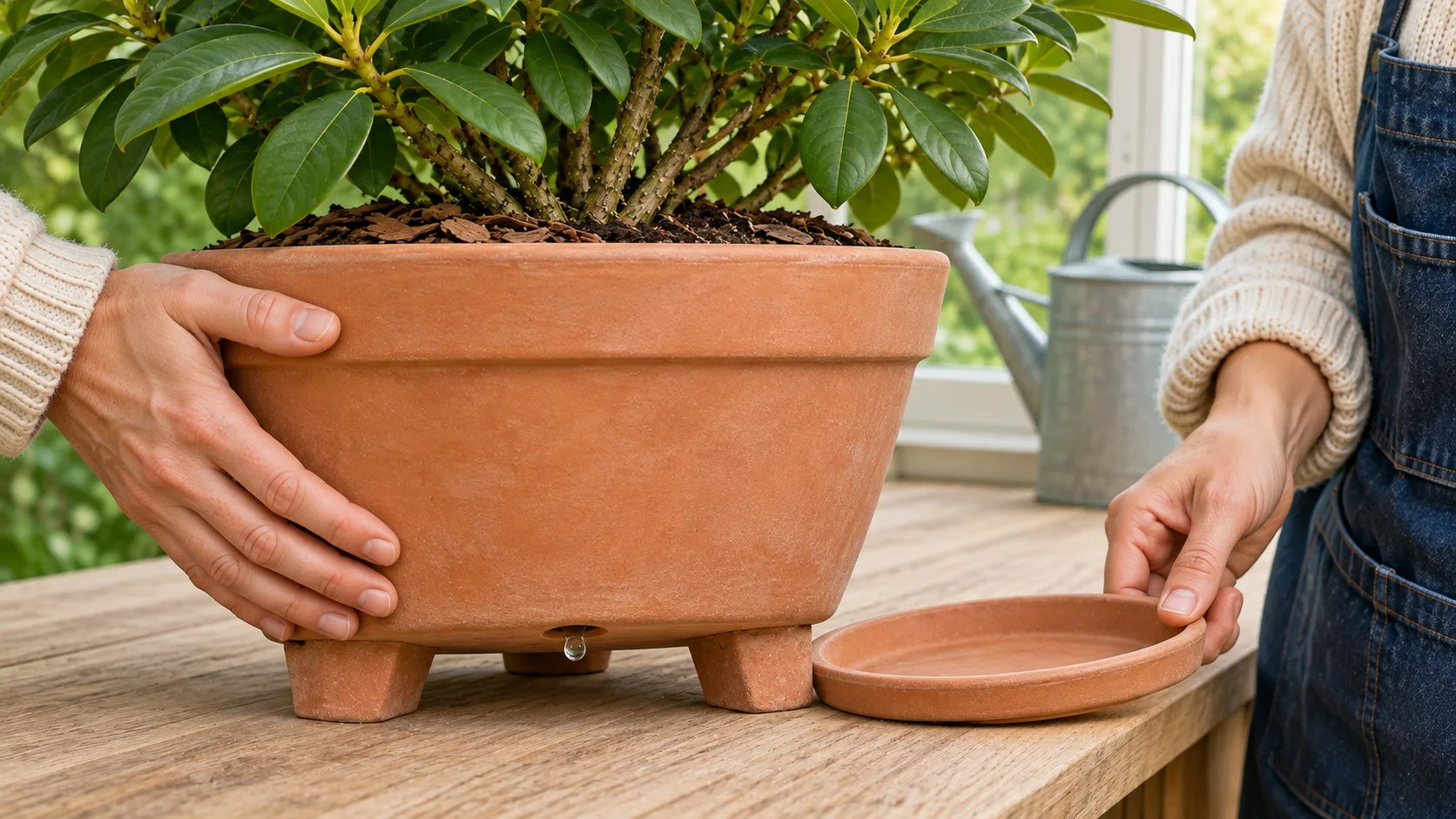
The saucer must not keep the pot’s base standing in water. In summer, it can catch runoff, but empty it a few hours after watering; remove it in winter6. Rhododendron roots need moist, airy soil: waterlogging deprives them of air10.
A pot that is still heavy and wet does not need refilling because leaves hang down. Inspect drainage first: a mix that loses its structure becomes dense, wet and airless8. For container rhododendrons, replacing compost every two years in early spring helps preserve that structure3.
How often should you water rhododendrons?
In the ground during prolonged drought, a thorough watering about once a week is a guide; in pots, check more often. An established, well-mulched shrub needs little extra water when rain keeps soil moist5. Frequency needs to follow actual drying.
10 L every 30 days
25 L per m² about every 7 days
About every 7 days
Keep the root ball moist, never waterlogged
Water generously when the root ball starts drying
| Task | January | February | March | April | May | June | July | August | September | October | November | December |
|---|---|---|---|---|---|---|---|---|---|---|---|---|
| Watering | reduced | reduced | reduced | moderate | moderate | moderate | high | high | moderate | reduced | reduced | reduced |
| Growth | resting | resting | active | strong | strong | strong | strong | active | active | resting | resting | resting |
| Feeding | no | no | yes | yes | yes | no | no | no | no | no | no | no |
| Repotting | no | no | favorable window | favorable window | no | no | no | no | no | no | no | no |
| Situation | Monitoring and watering |
|---|---|
| Established shrub, prolonged drought or sandy soil | Water thoroughly about once a week if soil dries5. |
| Recent planting | Keep the root ball damp at all times, never waterlogged5. |
| Pot in hot or windy summer weather | Check daily, or twice daily in intense heat; water according to the soil test8. |
| Evergreen pot under shelter in winter | Check at least once a week, then water only if needed8. |
Daily checking does not mean daily watering. Move the container away from scorching sun during very hot, dry weather to slow water loss6. In the garden, protect the shrub from drying winds10.
Summer water prepares the next flowers
From July, watch for dry spells: flower buds begin forming in late summer. A water shortage then can prevent formation or cause buds to drop before opening in spring3. The end of flowering does not mark the end of watering.
An airy conifer-bark mulch at least 7.5 cm (3 in) deep in the garden limits losses; renew it in spring while soil is still moist3. Keep mulch away from stem bases, however2.
Winter checks without waterlogging
Evergreen rhododendrons in pots can still lack water during dry weather, especially beneath a roof that excludes rain8. Do not water when frost is forecast8. A frozen root ball can no longer supply water lost through leaves in sun or wind1.
Plan soil, position and mulching with the rhododendron care guide. To compare other plants’ needs, see the watering guides.
Too much or too little water: reading the leaves
A rhododendron wilted in wet soil may have damaged roots: adding water then makes matters worse. Drought, waterlogging and root rot can produce similar symptoms11.
| What you see | What to check before watering |
|---|---|
| Drooping or curled leaves, dry soil | Drought can precede browning edges and old leaf fall3. |
| Wilted or yellow leaves, persistently waterlogged soil | Waterlogging and root rots also cause wilting11. |
| Lowered leaves during marked cold | Wait for warmer weather and check soil: the habit can recover without water3. |
| Yellowing despite correct moisture | Check pH: insufficiently acidic soil encourages deficiencies3. |
First distinguish underwatering from overwatering. Brown or black, soft and brittle roots can accompany rot; specialist examination is often needed to distinguish waterlogging from Phytophthora infection11.
When wilting persists in damp soil, rhododendron disease guidance helps you examine roots and other symptoms.
If yellowing is the main symptom, yellow rhododendron leaves also call for checking soil and water quality.
Which water should you use for rhododendrons?
Prefer rainwater; if supplies run out, tap water can cover one to two summer months. Hard water supplies calcium and reduces acidity around roots3. Rhododendrons grow in acidic soil at pH 5 to 610.
Repeated hard-water use can eventually hinder plant nutrition even if compost stays moist: excessive pH encourages iron, manganese or magnesium deficiencies3. Yellowing with green veins then warrants checking soil rather than automatically increasing watering.
Frequently asked questions
Can rhododendrons tolerate drought?
What time of day should you water plants?
Can you water plants with tap water?
For rhododendrons, favour rainwater. If it runs out in summer, tap water remains a temporary option for one to two months; hard water used long-term reduces acidity around roots3.