
Rhododendron yellow leaves: what to do
Why rhododendron leaves turn yellow
A few old yellow leaves can accompany a rhododendron’s normal leaf replacement. Young yellow leaves with green veins instead suggest chlorosis; wilting foliage first calls for checking the soil. Observe leaf age, the colour pattern and root moisture before adding water or fertiliser.
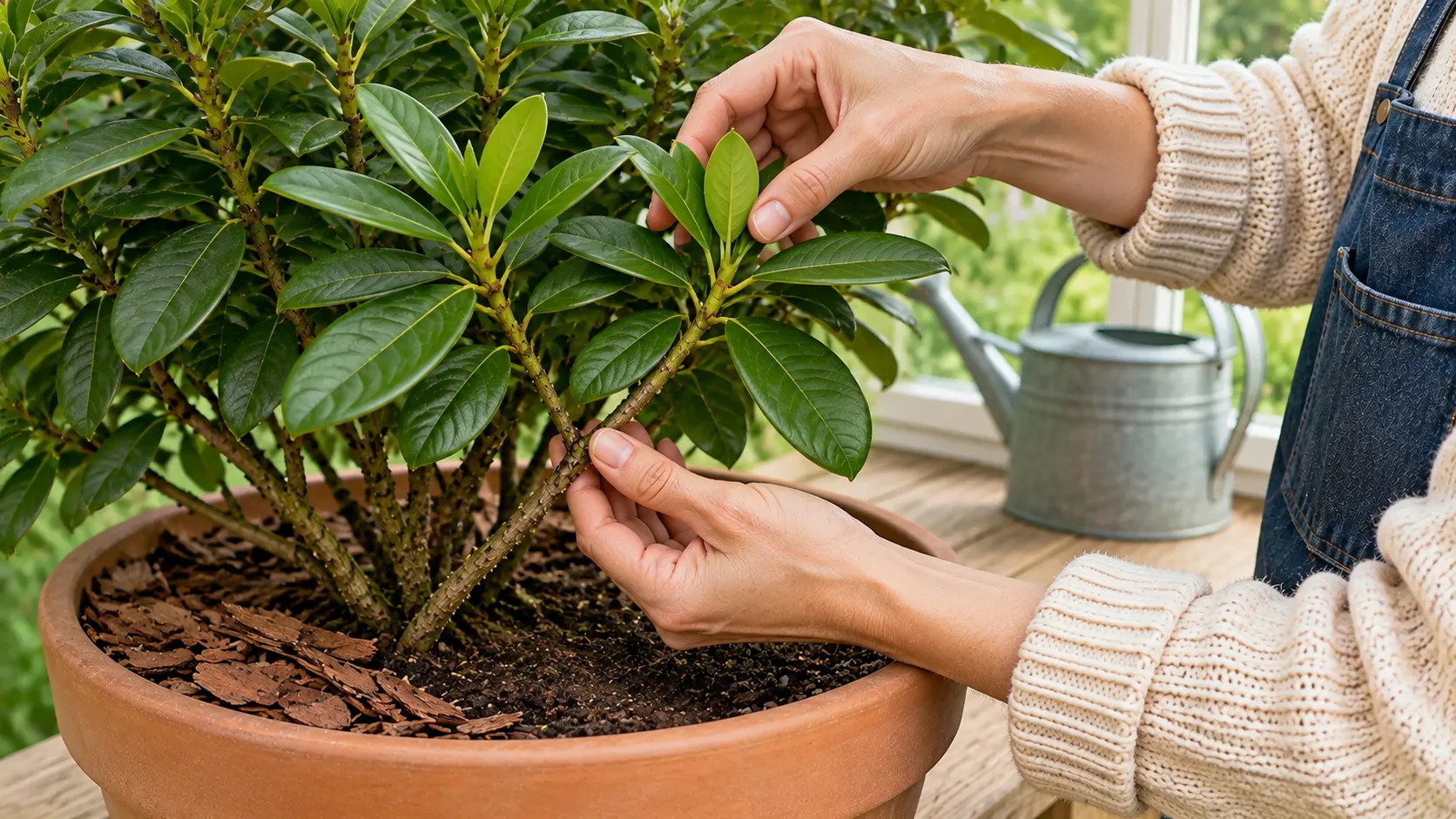
Yellow leaves: signs that guide diagnosis
Compare an old leaf with a young shoot, then check the soil. Evergreen rhododendrons (Rhododendron) replace some of their leaves, but can also yellow through a lack of available iron or root distress12. Colour alone cannot decide: note wilting, spots and slowed growth too3.
| What you see | Likely cause | First check |
|---|---|---|
| Old leaves fall in spring or summer; the rest stays healthy | Normal leaf replacement1 | Observe shoots and check there is no wilting |
| Young leaves yellow between green veins | Poor iron uptake32 | Measure pH, check drainage |
| Uniformly pale old leaves, weak growth | Possible nitrogen shortage4 | Check root condition and feeding history |
| Yellowing between veins on old leaves | Check magnesium or manganese3 | Avoid applying iron alone without diagnosis |
| Drooping or rolled leaves after a dry spell | Water shortage1 | Check root-ball moisture |
| Dull, yellow, wilted foliage despite wet soil | Waterlogged roots or root rot52 | Check drainage and look for dieback |
| Scorched edges on old leaves after feeding | Possible excess salts2 | Check product, dose and drainage |
| Stippled, mottled leaves with marks beneath | Sap-feeding insects or mites2 | Turn leaves over and inspect with a magnifying glass |
A few old leaves turn yellow and fall
On a healthy evergreen rhododendron, let old leaves detach. Some old foliage falls naturally in spring and summer1. This remains reassuring if new leaves are healthy, without wilting or dying branches3.
Leaf fall after drought can resemble this replacement: old leaves also go first, but hanging or rolled leaves preceded it1. Consult the yellowing old leaves guide with that history in mind. If yellow spreads to young shoots, continue checking.
Young yellow leaves with green veins: measure pH
Measure soil acidity before applying a chlorosis treatment. Rhododendrons prefer pH 5 to 6 in moist, well-drained soil5. When pH rises too far, roots struggle to absorb iron already present: young leaves turn yellow between their veins23.
Iron chlorosis occurs particularly near masonry or after excessive liming2. Use a pH test on the soil where roots grow. Check the water too: very hard tap water gradually reduces acidity around roots1.
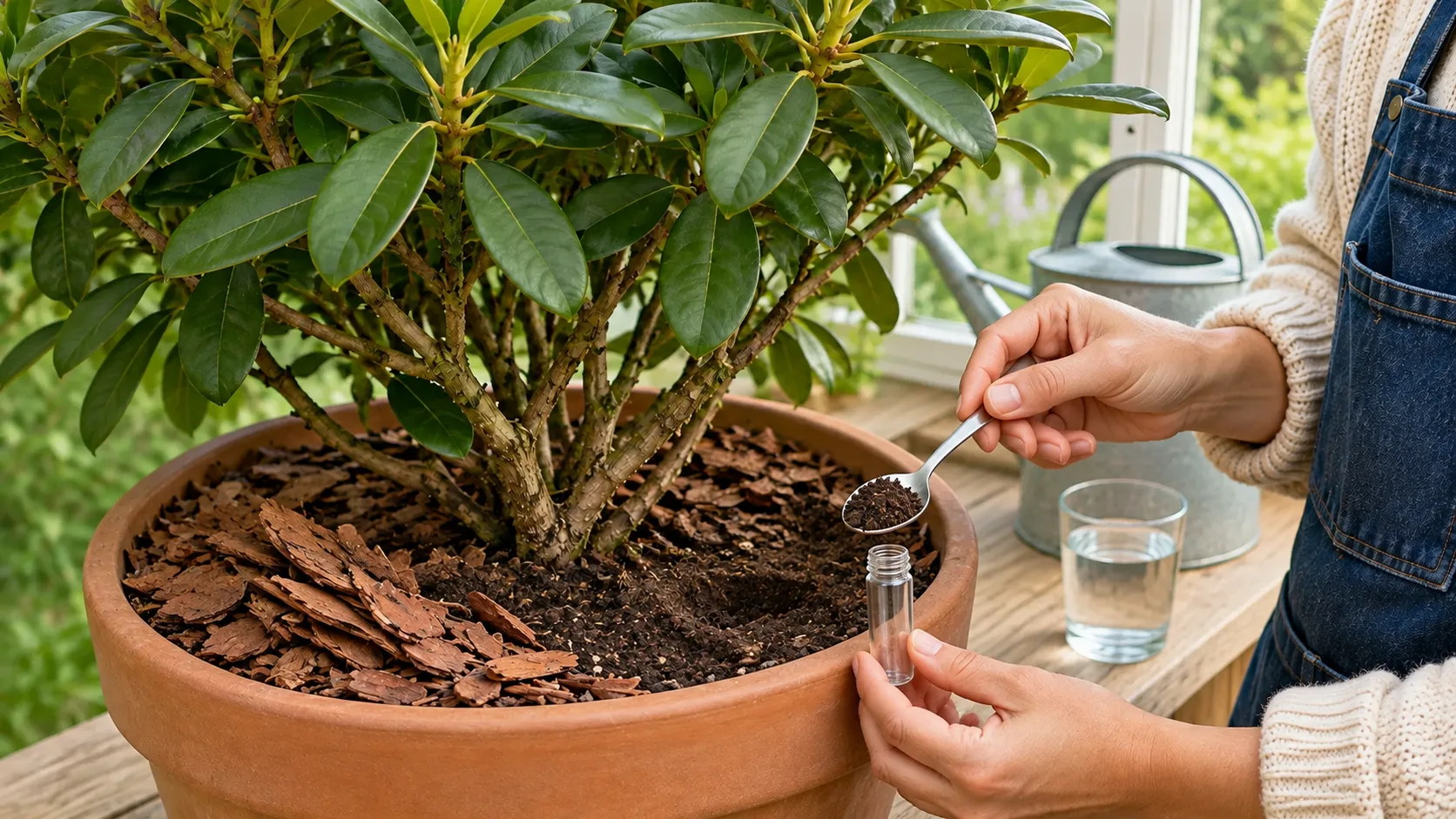
Applying iron can correct symptoms without resolving the cause. Iron chelates provide a temporary correction; roots injured by soil cultivation may also absorb iron poorly2. In chalky soil, container growing with a suitable mix is often simpler than repeatedly acidifying the bed1. The iron deficiency and correcting iron chlorosis pages explain this choice.
For confirmed chlorosis, Algoflash Naturasol’s ready-to-use greening treatment explicitly lists rhododendrons. Spray without runoff during growth; its curative instructions specify an application every 5 days, preferably in the evening between 5 and 25 °C (41 to 77 °F)6. Follow your bottle’s label: this interval applies to that precise formulation.
Old leaves pale and growth slows
Do not confuse nutrient deficiency with a few ageing leaves falling. Nitrogen shortage pales older leaves first and accompanies weak growth; magnesium or manganese shortage can produce yellowing between veins on older leaves43.
Check the root ball first: drought, waterlogging and poor establishment can mimic deficiency4. In good acidic soil, rhododendrons generally need no extra fertiliser. In pots, an ericaceous fertiliser is suitable at the manufacturer’s dose: excess burns roots and leaves1.
Yellow, soft leaves: feel the soil
Wet soil does not rule out a water-supply problem. Waterlogged soil deprives rhododendron roots of air5. Ageing compost can also lose structure and become poorly aerated1. Check that water drains from the pot before watering again.
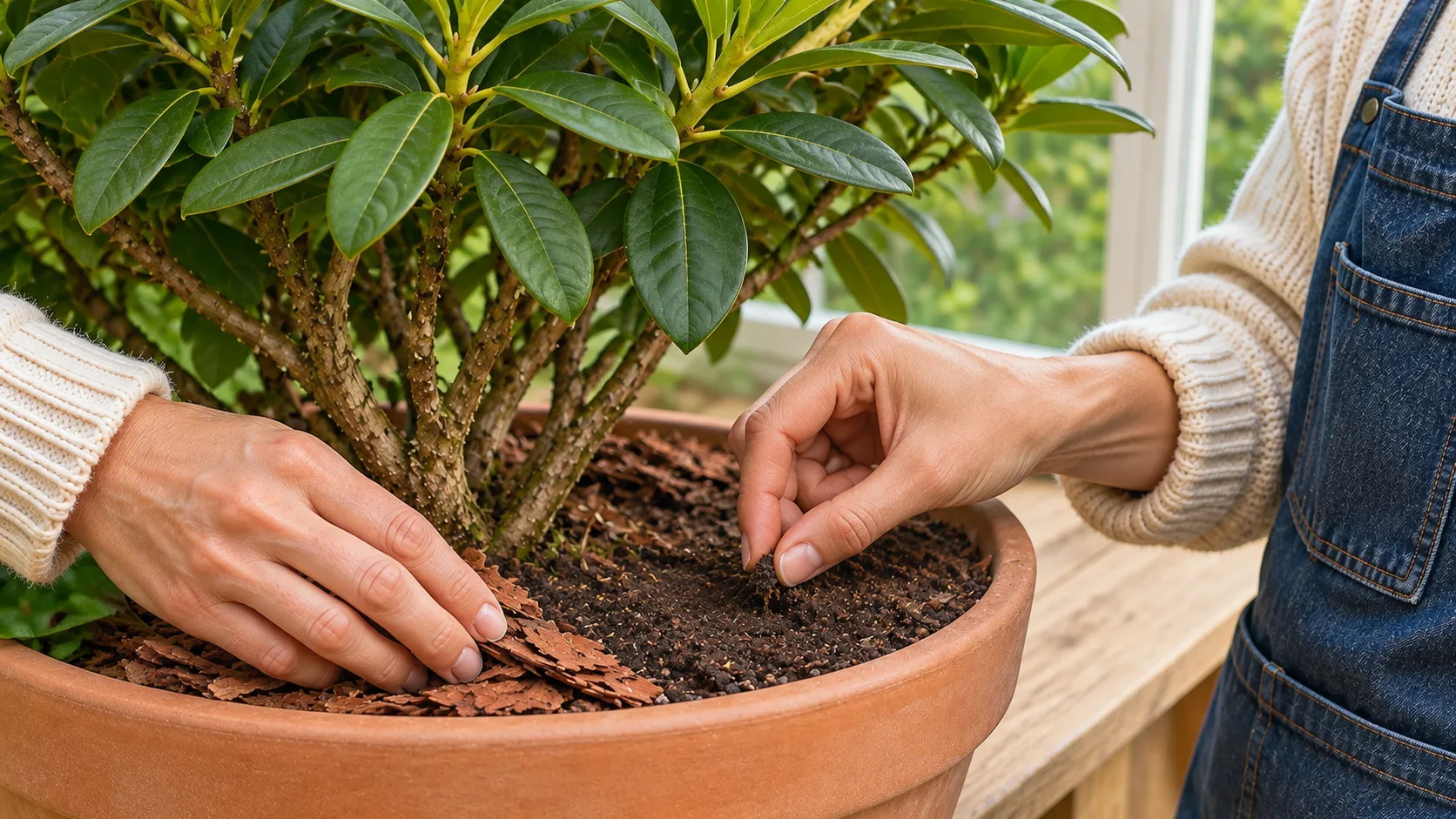
A dry root ball after hot weather suggests thirst, especially if leaves hung and rolled before falling1. Conversely, a rhododendron remaining wilted early in the morning despite damp soil may have root or crown rot2. This sign needs examination, not more fertiliser.
To choose water and match amounts to the root ball, rhododendron watering guidance details checks in pots and the garden.
Brown edges after feeding or winter
Look for scorch if yellowing comes with dry edges. Salts accumulated after excessive feeding, particularly with little rain or poor drainage, can burn older leaf margins. Destroyed tissue cannot recover2. Stop feeding and check drainage before attempting to flush salts from compost.
Cold and drying winds can also brown rhododendron tips, margins or branches2. Leaves hanging in severe cold can rise as temperatures warm1. Do not conclude thirst from this appearance alone in winter; investigate wind exposure and check soil before watering.
When to look for disease or pests
Yellowing with spots or dieback needs closer examination. Root rots can yellow and wilt young leaves despite watering; lace bugs and mites instead discolour foliage in small areas or feeding marks2. Inspect undersides, branches and the plant base.
If marks accompany the yellowing, rhododendron diseases and pests help distinguish leaf damage from root damage.
Checks to make in order
Correct the identified growing condition before adding more products. To prepare a useful diagnosis:
- Identify affected leaves: old or young, uniformly yellow or green-veined.
- Check root-ball moisture and water drainage.
- Measure pH if young shoots yellow between veins.
- Note recent fertiliser applications, dry spells and cold.
- Photograph the whole plant, a recent shoot and a leaf underside.
These observations complement each other: a single photograph measures neither pH nor root condition. Growing conditions can mimic deficiencies, so keep these checks together4. The rhododendron care guide then helps restore care, while the plant problems list helps compare symptoms.
Frequently asked questions
How can you make a rhododendron green again?
First find why it is yellowing: a dry or waterlogged root ball, excessively high pH or insufficient nutrition. If iron is locked up by overly chalky soil, a chelate can temporarily correct chlorosis, but the ground also needs adapting2. Extra fertiliser on waterlogged roots cannot replace good drainage5.
Should you cut off yellowing leaves?
How do you treat chlorosis?
Check pH and drainage, then choose a treatment matching the deficiency. Affected young leaves suggest iron; yellowing between older leaves’ veins can also involve magnesium or manganese3. A ready-to-use product differs from a concentrate needing dilution: follow the instructions for the formulation you bought6.