
Jade plant propagation: stem or leaf cuttings
Jade plant propagation from a stem or leaf
A jade plant can be propagated from a stem tip or a whole leaf. Let the cut dry first, then place the cutting in a free-draining mix with very little water. The first roots take a few weeks; a leaf must then form its new shoot.
When should you take jade plant cuttings?
Take cuttings in spring or summer, during growth. Spring suits both stem and leaf cuttings; summer makes jade plant (Crassula ovata) rooting particularly easy. A cutting can also take at another time of year, but available light and warmth determine its progress.12
- Stem segment cutting
- In summerLet heal for a few days; fairly dry potting mixSource: University of Wisconsin Extension
- Leaf cutting
- In springSource: Royal Horticultural Society
- Leaf cutting
- In summerLet heal for a few days before pottingSource: University of Wisconsin Extension
- Sowing seed
- In springSource: University of Wisconsin Extension
For a leaf, spring and early summer allow an early start in the growing season. Keep cuttings in a bright room, around 20 °C (68 °F): cold slows the formation of new plantlets.3 A cold window and constantly damp potting mix therefore make establishment harder.
A stem cutting retains an already formed leafy tip. A leaf must instead produce roots, then a new shoot at its base.4 Choose a stem to rebuild a small shrub from a branch; a leaf lets you multiply the plant while removing little material.
Before taking a cutting, check the parent plant's identity using the jade plant botanical profile.
Which stem or leaf should you take?
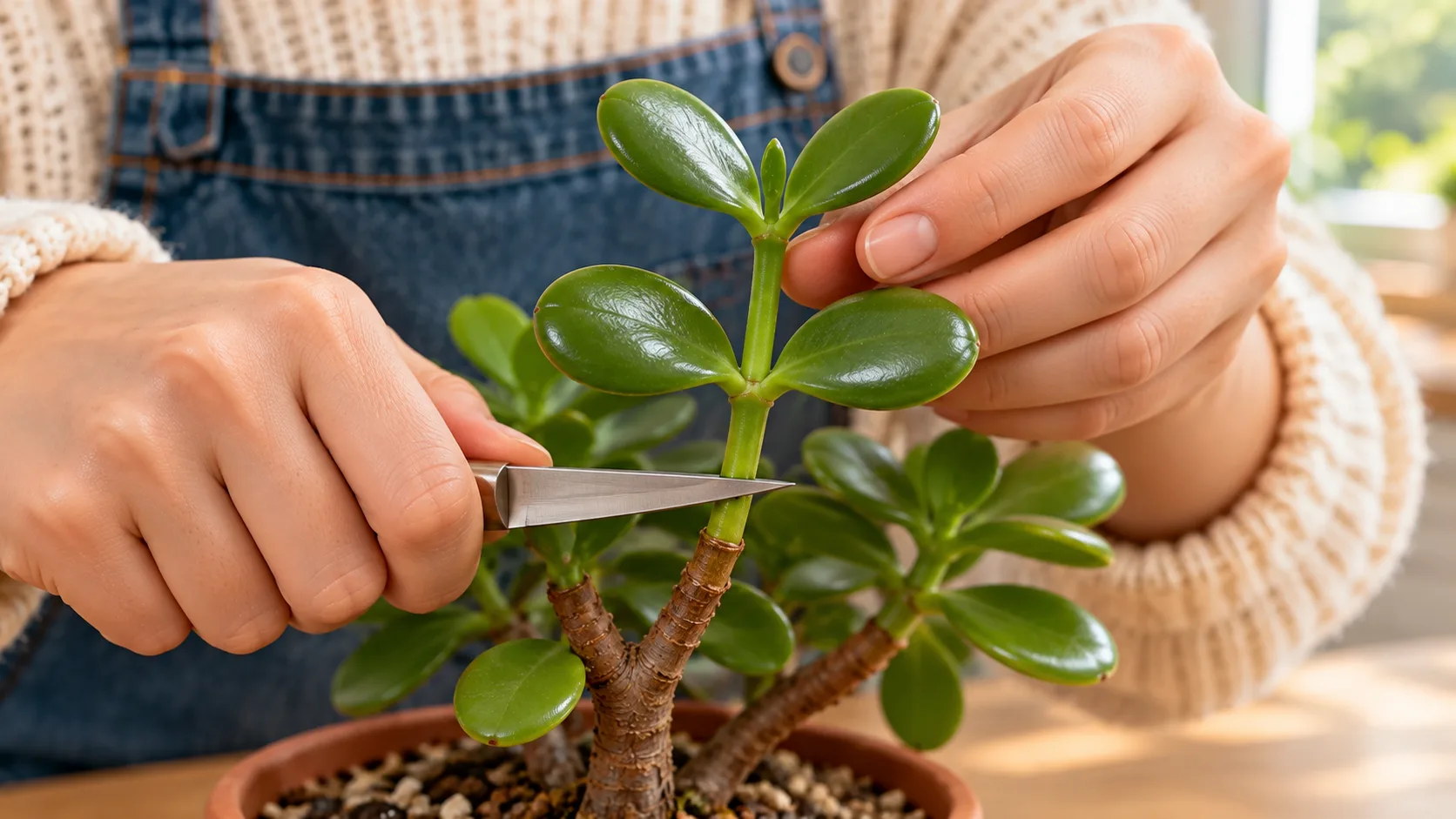
Take healthy tissue: a tip about 10 cm long (4 in) or a whole leaf. This stem length is a practical guide for Crassula, without requiring you to sacrifice a large branch.5 Exclude softened or infested parts and use a clean, sharp blade.6
On a stem, locate the node, visible at the leaf attachment. Cut just below a leaf. The tip-cutting method applicable to jade retains three or four leaves; remove those on the part that will sit in the mix.4 Because Crassula leaves grow in opposite pairs, the cutting point is easy to find.2
For a leaf, gently detach a well-developed leaf at its attachment point. A whole-leaf cutting retains its base: roots and new leaves form there. It can be gently detached rather than cut through the middle of the blade.4 A single leaf does not need to include a piece of stem.
Also inspect the leaf axils before taking cuttings. White cottony clusters suggest mealybugs, common on jade: choose pest-free material for propagation.2
Why let the cut dry before planting?
A dry cut rots less readily than a fresh wound. Leave the pieces in the air while the cut surface heals. Jade pieces take a few days to heal; for Crassula leaves, the guide is one to two days before potting.23
The callus forms at the wound. Wait for this dry surface before placing the base in contact with the mix. The fleshy leaf and stem contain water reserves; soaking them to make up for missing roots mainly exposes the wound to moisture.2
This step also applies to a broken branch. Preserve the healthy part, let its cut dry, then root it in fairly dry, well-drained mix.2 A healthy branch can thus become a new plant instead of being discarded with the debris.
Which mix should you prepare for cuttings?
Mix two parts cactus compost with one part fine horticultural grit. This recipe suits Crassula leaves. Fill the pot three-quarters full with this mix, then top the surface with grit.3 Use the same container as a measure to maintain the proportions.
A stem cutting can root in a free-draining mix of potting compost, pumice and sand. Keep watering to a minimum: waterlogged mix rots the cutting.5 A small container keeps the base accessible and easier to monitor, without burying the foliage.
Prepare a clean pot that lets water escape. The growing medium must support the cutting while remaining airy. Compact garden soil is poorly suited to propagation in pots; fresh potting compost also avoids introducing potentially contaminated soil.6
How do you plant a stem cutting?
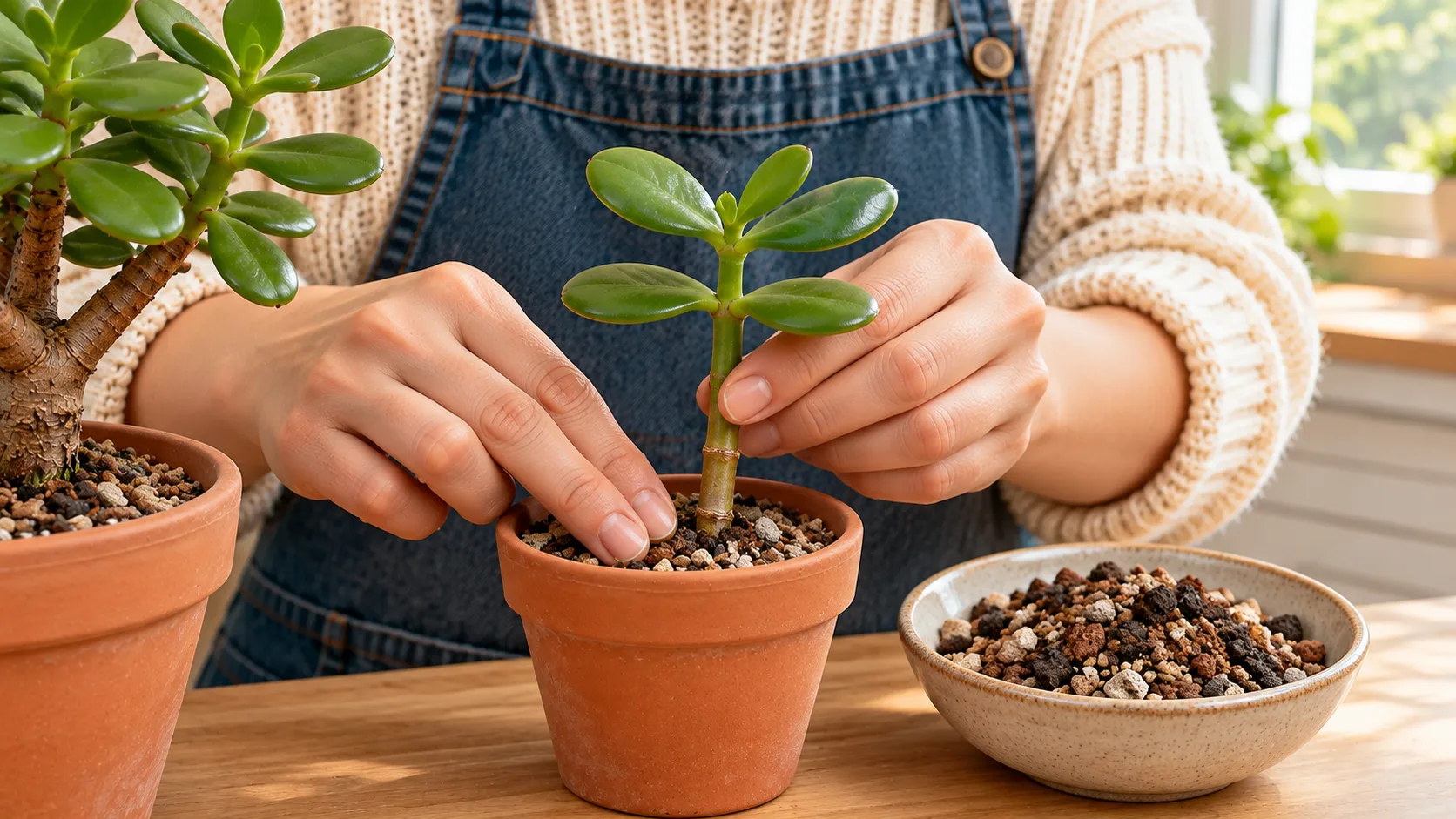
Set the healed base into the mix, with all leaves above it. Make the hole before inserting the cutting to avoid forcing its base.4 The leafless section provides anchorage; the tip stays clear.
- Take a healthy tip about 10 cm long (4 in) and remove the lower leaves.54
- Let the cut dry for a few days, until healed.2
- Place the base in the well-drained, fairly dry mix. Gently bring the medium around the stem to support it.24
- Keep the cutting in good light, protected from direct sunlight while rooting. Water very little, without soaking the pot.35
A glass of water is unnecessary: jade produces roots directly in growing medium and can even start rooting out of the soil.2 Starting in free-draining mix avoids later moving water-grown roots, which can be difficult to establish in a pot.4
How do you position a leaf to grow a new plant?
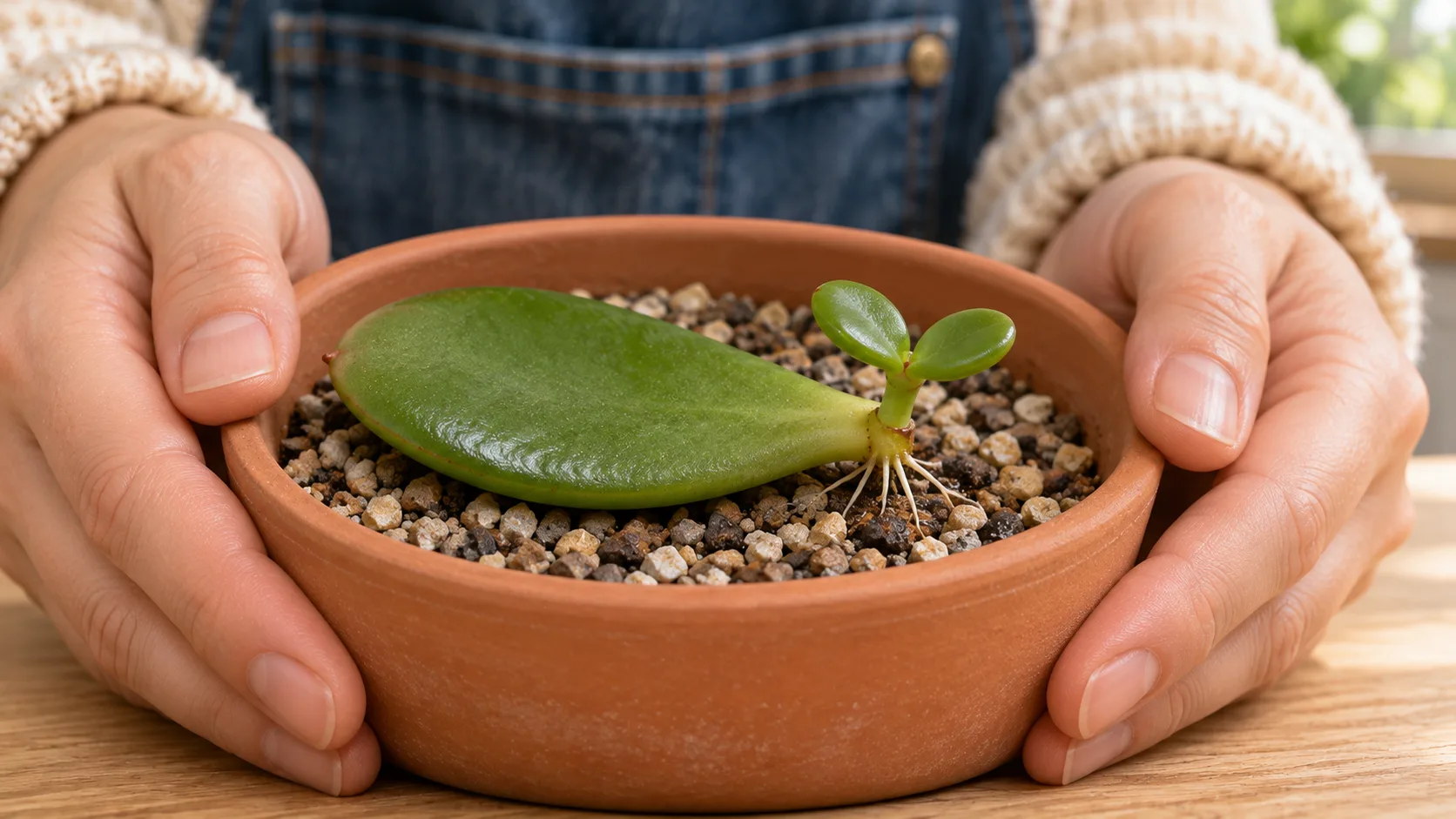
Place the whole leaf on the surface, with its base touching the mix. Gently detached succulent leaves can be laid on the growing medium: new roots and leaves appear at their base.4 Do not confuse this method with a tip cutting, which already has a stem.
First let the leaf heal for one to two days, then place it on the cactus mix enriched with grit. Do not cover the pot with a plastic bag. Keep it warm, in good light, with the mix barely moist.3 Leave the blade clear so you can monitor its firmness and condition.
Do not bury the whole leaf or cut it into sections like a snake plant leaf: jade is propagated here using a whole leaf.4 Roots appearing are one stage; then wait for a plantlet developed enough to pot individually.3
How do you monitor rooting and recognise failure?
Wait a few weeks and focus on the base of the cutting. Jade pieces form roots within this time, establishing more easily in summer.2 A rooting leaf still has to build its new stem; it does not immediately become a small shrub.4
| What you observe | What it indicates | Useful action |
|---|---|---|
| Soft or blackened base, damp mix | Excess moisture encourages rot.5 | Remove decayed tissue and reduce moisture; start again with healthy material.3 |
| No plantlet, cold room | Cold slows development.3 | Place the pot around 20 °C (68 °F) and maintain good light.3 |
| Whole leaf with roots but no new tip | Roots and a new shoot are separate stages.4 | Leave the leaf in place so the plantlet can develop. |
| White cottony deposits at attachment points | Possible mealybugs.2 | Isolate the pot and examine the parent plant too. |
Once the young plant is established, space out waterings so the mix dries between them; empty water collecting beneath the pot.2 The jade plant care guide then covers its light, watering and growth. To compare techniques, explore the plants to propagate.
Frequently asked questions
How do you grow a jade plant from a leaf?
Can a jade plant branch grow roots?
Can you put jade plant cuttings straight into soil?
Yes. Jade cuttings can go directly into a free-draining mix once healed: they do not need time in water. The essential point is to keep little moisture around the cut to avoid rot.2